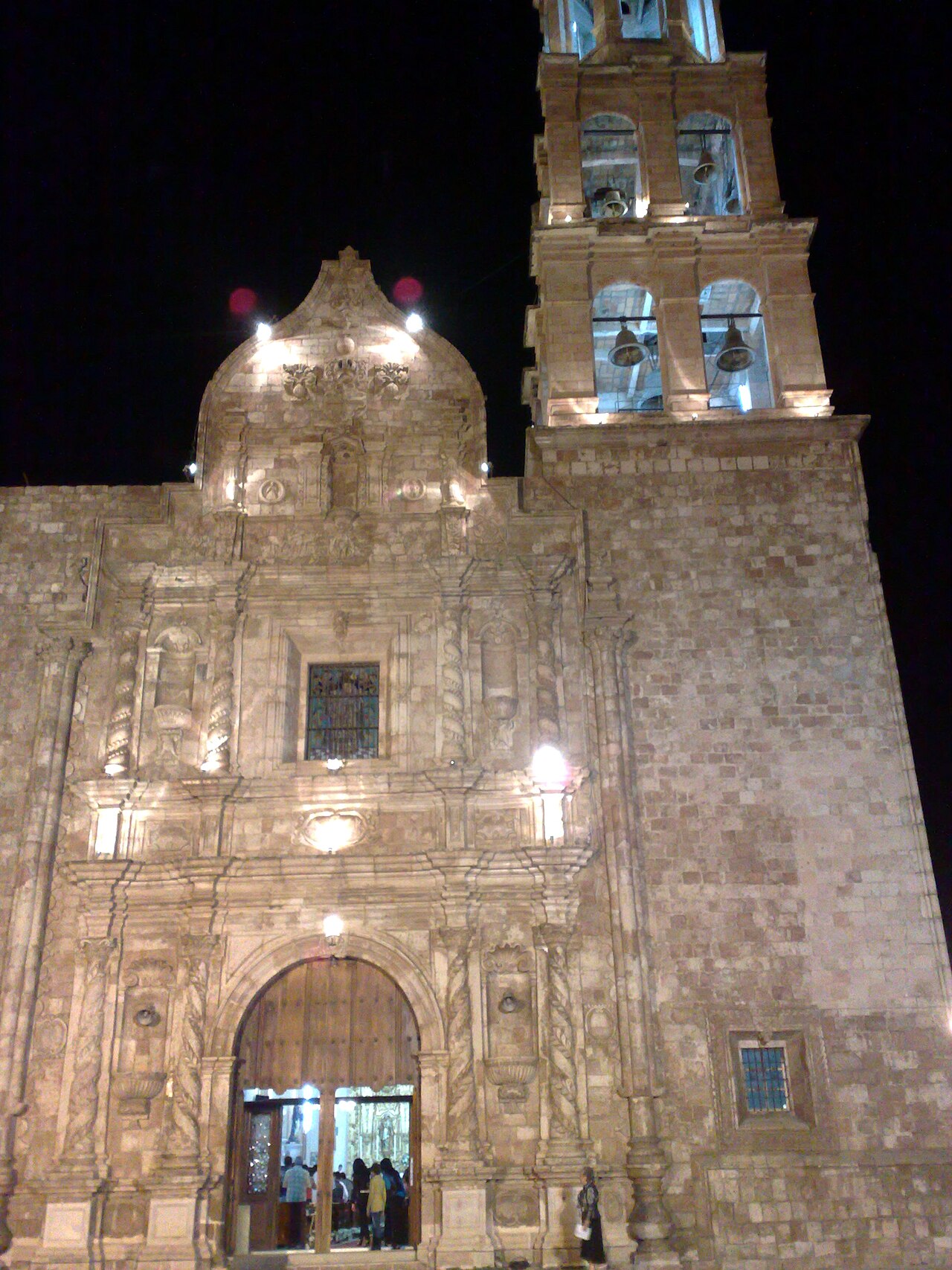
El Rosario Church is a striking red and white neogothic church built in the late 1800s, El Rosario features intricate exterior tilework and a serene interior. It is in San Salvador, El Salvador. Most visitors spend 30–40 min here. The free Lokali audio guide runs 5 minutes.
✓ Verified August 2026 · how we write these guides
Visitor facts
| Time needed | 30–40 min |
|---|---|
| Lokali audio guide | 5 min · free |
| Type | Church |
| Best for | History |
| Location | San Salvador, El Salvador |
| Coordinates | 13.6939, -89.2245 |
| Languages | 45, in the Lokali app |
The story
From the outside, this building may surprise you. There are no tall towers. There are no carved saints above the door. You see a long curve of plain gray concrete, low and heavy against the sky. Many travelers walk past without a second glance. But step through the entrance of El Rosario Church, and the plain shell opens into one of the most moving interiors in San Salvador.
The church stands on the edge of Plaza Libertad, in the old center of the city. This square has been a gathering place for generations. People cross it on their way to work, to market, and to rest on the benches. The church faces this daily life directly. Its simple outer wall gives no hint of the color and light that wait inside.
The design came from a Salvadoran artist named Ruben Martinez. He was both a sculptor and an architect. He finished the church in 1971, after years of work. He made a bold choice for his time. Instead of copying old European cathedrals, he shaped a single great arch of concrete. The whole roof and walls form one continuous curve, like the inside of a wave.
Step inside and look up. The concrete vault rises above you in one smooth sweep. There are no columns down the center to block your view. The space feels open and calm. At first the gray surface seems bare. Then you notice the windows, set in patterns across the curved wall, and you begin to understand the architect's true plan.
The windows are filled with colored glass. As sunlight passes through them, it scatters across the floor and walls. Red, blue, green, and gold spill into the gray space. The colors are not fixed. They move slowly as the sun crosses the sky. Morning light and afternoon light paint the room in different ways. No two visits ever look exactly the same.
Walk slowly along the inside of the curve. Watch how the light falls on your hands and clothes. The effect is quiet and almost musical. The plain concrete makes the color feel even brighter by contrast. This was the architect's idea all along. The dull shell outside exists to protect a glowing world within. Hardness on the outside, softness and light at the center.
Look closely at the artwork inside. Much of it is made from simple, humble materials. Iron rods, plain metal, and basic shapes form the figures and the scenes along the walls. There is little gold and no heavy decoration. The style matches the building itself. It speaks of a faith that values meaning over riches, and feeling over show.
The church also holds an important grave. Jose Matias Delgado rests here. He was a priest and a leader in the early movement for independence in Central America. Many people honor him as a father of the nation. An earlier church once stood on this same ground, linked to his memory. The modern building carries that long thread forward into the present.
Because of this history, the church is more than a work of art. It is a place where the country's past and present meet. Schoolchildren visit to learn. Worshippers come to pray. Travelers arrive with cameras. All of them share the same colored light. The space holds memory and daily life together, under one curving roof.
Notice the sounds inside. Footsteps echo softly against the concrete. A door closes somewhere and the sound rolls through the curve. Quiet voices blend into a gentle murmur. The shape of the building gathers these sounds and softens them. Even on a busy day, the room encourages you to slow down and lower your voice without being asked.
The church was built during a difficult and uncertain period in the country's story. Yet it was made to lift the spirit, not to overwhelm it. There is something hopeful in that choice. A heavy gray box from the street becomes a chamber of light within. The contrast feels almost like a quiet message about what lies beneath plain surfaces.
Take time before you leave. Find a seat near the middle of the space. Let your eyes adjust. Watch a single beam of color creep slowly across the floor. There is no rush here. The building was made for exactly this kind of patient, unhurried attention, and it rewards anyone willing to simply sit and look.
When you finally step back outside, the plain wall will look different to you. You now know what it protects. The contrast between the dull shell and the bright interior stays in the mind. El Rosario is a reminder that beauty does not always announce itself. Sometimes you must walk through a humble door to find the light waiting inside.
Key facts
What to look for
Practical tips
Common questions
How long do you need at El Rosario Church?
Plan 30–40 min. That is the time most visitors spend at El Rosario Church. The free Lokali audio guide adds about 5 minutes of narration you can listen to as you walk, so it fits inside your visit rather than adding to it.
Is there a free audio guide to El Rosario Church?
Yes — the Lokali app narrates El Rosario Church free of charge in 50+ languages. It covers the history, what to look for on site and practical tips, and it works offline once downloaded.
Where is El Rosario Church?
El Rosario Church is in San Salvador, El Salvador, at 13.6939, -89.2245. Tap the map link on this page for directions from where you are.
What should you know before visiting El Rosario Church?
Visit on a sunny morning for the strongest color.
What is El Rosario Church known for?
Completed in 1971 on Plaza Libertad downtown.
What is the best time to visit El Rosario Church?
The red and white ceramic tile facade is unique in the city.
On the map
Opens directions to El Rosario Church from your location.
Reference
More to see in San Salvador


Hear El Rosario Church in your language
The full story, narrated, in 50+ languages. Download it before you go and it plays offline, at your own pace, with no ticket and no tour group.