
Pyramid of Teti
29.8753° N · 31.2216° E · Archaeological Site
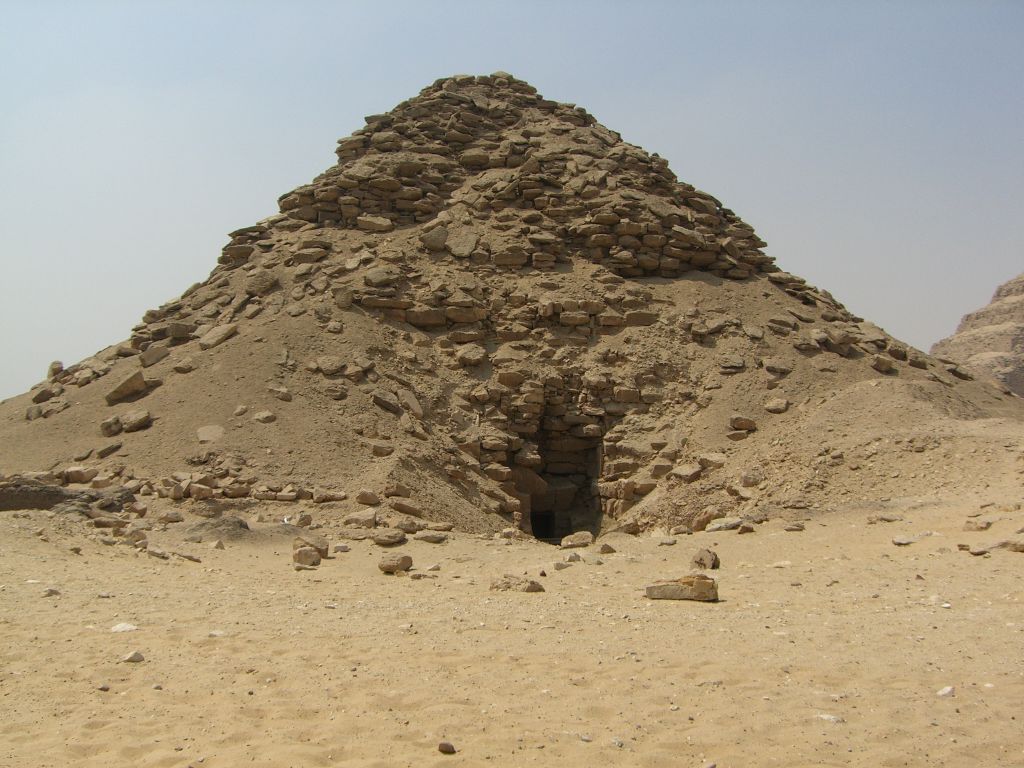
Photo: Wknight94 talk · CC BY-SA 3.0 · Wikimedia Commons
Pyramid of Teti is a smooth-sided pyramid. It is near Saqqara, Egypt. Teti was the first king of the Sixth Dynasty. The free Lokali audio guide runs 7 minutes.
✓ Published October 2026 · how we write these guides
Visitor facts
| Lokali audio guide | 7 min · free |
|---|---|
| Type | Archaeological Site |
| Location | Saqqara, Egypt |
| Coordinates | 29.8753, 31.2216 |
| Languages | 50+, in the Lokali app |
The story
Start with the ground under your feet. It is loose and pale, a mix of sand, chalky dust and broken limestone that crunches with every step. Ahead of you stands a low, rounded hill of rubble. It does not look like a pyramid from a postcard. It looks more like a natural mound. But this heap of stone is a royal tomb, and inside it the walls are covered with some of the oldest religious writing in the world.
This is the Pyramid of Teti, at Saqqara, the great desert cemetery of ancient Memphis. Teti was the first king of the Sixth Dynasty. He ruled during the Old Kingdom, more than four thousand years ago, in the twenty-fourth century before Christ. His pyramid stands in the northern part of the site. If you look around, you can find the Step Pyramid of Djoser to the southwest. That older monument was already centuries old when Teti's builders arrived here.
So why does this pyramid look so worn? The answer is in its construction. The outer layer was once a casing of fine white limestone, smooth and bright in the sun. Behind that casing, the core was built from smaller, rougher local stone. Over the centuries, people took away the good casing blocks to use in other buildings. Without that protective skin, the core slowly slumped and spread. What you see now is the inner body of the pyramid... exposed to wind and time.
Here is the first surprise. The outside is plain, but the inside is not. In 1881, the French Egyptologist Gaston Maspero entered this pyramid and found its inner rooms covered with carved hieroglyphs. These inscriptions are called the Pyramid Texts. They are spells and prayers meant to help the dead king rise into the sky and join the gods. Only one earlier pyramid, the tomb of King Unas nearby, has this kind of writing. Teti's tomb is the second.
The Pyramid Texts are not a story with a beginning and an end. They are closer to a collection of recitations. Some speak of the king climbing to the stars. Some protect him from snakes and other dangers. Some describe offerings of bread, beer and incense. Scholars treat them as one of the oldest large bodies of religious writing known anywhere. Standing in front of them, you are reading ideas about death and the afterlife that Egyptians carved before most of the world had any writing at all.
When the interior is open to visitors, the way in is from the north side. A sloping corridor runs down into the bedrock. It is narrow and low, so expect to bend forward as you walk. The air grows still and warm. Then the passage levels out and leads into the inner rooms. This northern entrance is no accident. Egyptian kings of this period faced their tombs toward the northern stars, the ones that never set below the horizon. People saw them as a symbol of life without end.
Inside, look up. The burial chamber has a pointed, gabled roof made of huge limestone blocks set against each other. On the underside, carved stars cover the stone. They turn the ceiling into a night sky above the king. Below, the walls carry column after column of hieroglyphs. Many signs still hold traces of blue-green colour. In the burial chamber stands a large sarcophagus of dark, hard stone. It was cut to hold the royal body, and it still sits where it was placed.
Teti's story has a darker side. A much later Egyptian historian named Manetho wrote that this king was murdered by his own bodyguards. This claim comes from a source written many centuries after Teti's death, so historians treat it with caution. There is no clear evidence in the tomb itself. Still, the tale shows something important. Even in a time of great pyramids, power at the royal court was not always safe or stable.
A pyramid was never a lonely building. It was the centre of a larger complex. On the east side stood a mortuary temple, where priests made offerings to the dead king. Today you see only low walls and the outlines of rooms. Nearby, smaller pyramids belonged to royal women, including queens linked to Teti's family. Like the main pyramid, they are now low, broken mounds. Walk slowly here, and the pattern of the old complex starts to appear in the stones.
Here is the second surprise. Many visitors spend more time in the tombs of Teti's officials than in the king's own pyramid. Just to the north lie the large mastabas of Kagemni and Mereruka. A mastaba is a flat-topped tomb with a stone chapel above ground. Both men served as vizier, the highest official below the king. Mereruka married one of Teti's daughters. His tomb has dozens of rooms, and the walls show daily life in fine detail.
In these officials' tombs, the carvings show fishermen pulling nets, craftsmen working metal, animals being fed and herded, and dancers in motion. Some scenes have small, human moments, such as a worker speaking to a friend or a calf calling for its mother. Put the two together in your mind. The king's tomb speaks about the stars and the gods. The officials' tombs speak about bread, cattle and the river. Together they give a fuller picture of this society.
This cemetery stayed in use for a long time. People continued to remember Teti for generations, and later burials filled the ground around his pyramid. Archaeologists have worked here many times since Maspero, clearing sand, recording inscriptions and mapping the complex. The work is not finished. Saqqara is so large that new tombs still come to light in different parts of the site. The plain mound in front of you is one piece of a landscape that people still study today.
Before you leave, stand still for a moment and look at the stone. Notice how the rubble core differs from the smooth blocks in the corridor walls. Listen to the wind moving over the sand, and to the voices of other visitors. Somewhere under this broken hill, the stars on the ceiling are still carved in the dark. As you walk away, look back once. The mound keeps the shape of a pyramid, only softer and lower now, after more than four thousand years.
Key facts
What to look for
Practical tips
Common questions
Is there a free audio guide to Pyramid of Teti?
Yes — the Lokali app narrates Pyramid of Teti free of charge in 50+ languages. The guide runs about 7 minutes, covers the history, what to look for on site and practical tips, and works offline once downloaded.
Where is Pyramid of Teti?
Pyramid of Teti is near Saqqara, Egypt, at 29.8753, 31.2216. Tap the map link on this page for directions from where you are.
What is Pyramid of Teti known for?
Teti was the first king of the Sixth Dynasty. Second pyramid ever inscribed with the Pyramid Texts.
What should you look for at Pyramid of Teti?
Carved stars covering the gabled burial chamber ceiling. Traces of blue-green paint inside the hieroglyphs. The dark stone sarcophagus in the burial chamber.
What should you know before visiting Pyramid of Teti?
Expect a low, sloping corridor; bend forward inside. Visit the nearby mastaba of Mereruka afterwards.
When is the best time to visit Pyramid of Teti?
Come early to avoid midday desert heat.
On the map
Opens directions to Pyramid of Teti from your location.
More to see in Saqqara


Hear Pyramid of Teti in your language
The full story, narrated, in 50+ languages. Download it before you go and it plays offline, at your own pace, with no ticket and no tour group.