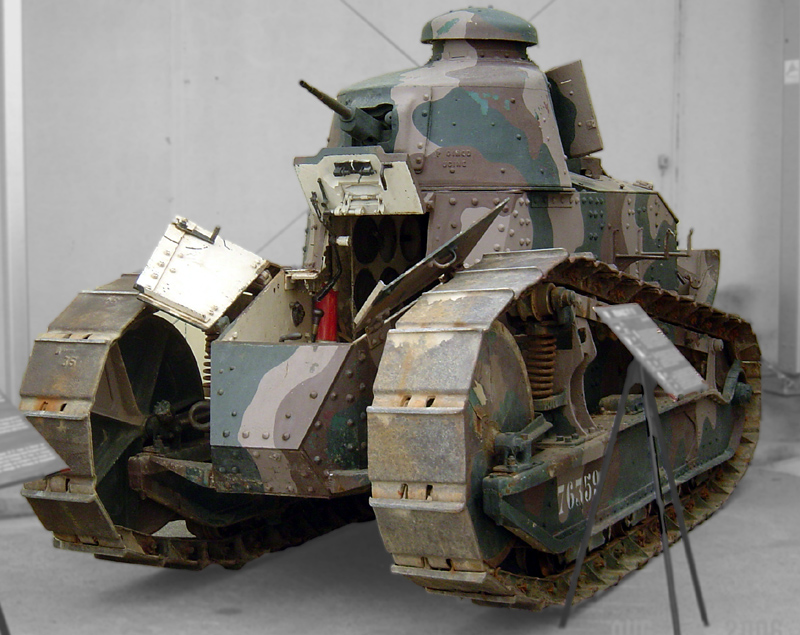
Photo: User:Fat yankey · CC BY-SA 2.5 · Wikimedia Commons
Musée des Blindés is a French tank museum. It is near Saumur, France. One of the world's largest armoured vehicle collections. The free Lokali audio guide runs 6 minutes.
✓ Published October 2026 · how we write these guides
Visitor facts
| Lokali audio guide | 6 min · free |
|---|---|
| Type | Museum |
| Location | Saumur, France |
| Coordinates | 47.2437, -0.0717 |
| Official website | museedesblindes.fr |
| Languages | 50+, in the Lokali app |
The story
Listen for a moment. Under the high roof, the air is cool and still, and it smells faintly of oil, steel and old paint. Your footsteps echo off concrete. All around you, rows of armoured vehicles sit silent, track to track, their guns pointed in every direction. Welcome to the Musée des Blindés in Saumur, one of the largest collections of tanks and armoured vehicles anywhere in the world.
The name simply means the Museum of Armoured Vehicles. But this is not a quiet gallery of polished trophies. Many of these machines saw real fighting. Others were prototypes that never went to war. A surprising number can still move under their own power. As you walk, try to look at each one twice: once as a machine, and once as the place where a small crew of people lived, worked and waited.
First, why here, in a gentle Loire Valley town known for white wine and soft limestone? The answer is horses. For centuries, Saumur has been a home of French cavalry training. When armies replaced horses with engines in the twentieth century, the cavalry did not disappear. It climbed inside armour instead. So the town that once trained riders became a natural home for the armoured branch, and for this collection.
The museum grew from the work of military enthusiasts in the late twentieth century, who gathered vehicles that might otherwise have been scrapped. Over the decades, the collection expanded into the hundreds. Only part of it fits on display at any one time. The rest waits in storage or passes through the workshops, where restorers bring engines, tracks and turrets back to life, sometimes from little more than rusted hulls.
Let's begin near the start of the story, with the First World War. Look for the small, boxy French tanks with a single turret on top. These are Renault FT light tanks. They look almost toy-like now. But the FT was one of the first production tanks with a turret that could turn a full circle. That simple idea — a gun on a rotating turret above the hull — shaped almost every tank that came after it.
Nearby, you may find the heavier, older shapes of the earliest French designs. They look like steel boxes on tracks, built to cross trenches and cut through barbed wire. Imagine the inside: hot, loud, full of engine fumes, with the crew shouting to be heard. Early tank crews sometimes wore leather and chain masks to protect their faces from flying metal fragments inside the hull. Comfort was never part of the plan.
Between the two world wars, France built a large tank force, and the museum shows that era well. Look for the tall, heavy Char B1 bis, with one gun in the turret and a second, larger gun set low in the front of the hull. In 1940, these tanks were among the most strongly armoured in Europe. Yet armour alone could not decide the campaign. Speed, radios and coordination mattered just as much — a lesson written into the shape of later designs.
Now comes the part many visitors travel here to see: the German heavy tanks of the Second World War. Look for the Tiger, square and massive, and the later Tiger II, with its sloped armour and long gun. Here is a detail most people miss. The museum's Tiger II is widely described as the only one of its kind still in running order. On special occasions, this huge machine has rolled out under its own power.
Take a moment to compare the vehicles from different nations side by side. American, British, Soviet and German designs all stand within a few steps of each other. You can see different answers to the same problem. Some designers chose thick armour and heavy guns. Others chose speed, reliability and numbers. Walk around the back of each tank and look at the engine decks. Much of the real story of a tank is told by its engine, not its gun.
After 1945, the collection moves into the Cold War. France rebuilt its armoured force with its own designs, such as the light AMX-13, recognisable by its turret set far back on the hull. Later halls bring you towards modern vehicles, including the Leclerc, France's current main battle tank. Notice how the shapes change over time. Sides become flatter and lower. Electronics, sights and sensors begin to matter as much as steel.
Here is a second surprise. This is a working museum in a very literal sense. Some vehicles leave these halls each year to appear at the Carrousel de Saumur, the town's traditional summer military display, where horses and armour share the same ground. For a few days, the past and the present of the cavalry meet in front of a crowd. The noise of a running tank engine is something no photograph can prepare you for.
As you walk, look also at the smaller details. There are unit markings and painted names on some hulls. There are dents and repaired holes in the armour. Some vehicles carry signs of battle damage, and some carry the marks of decades in fields or scrapyards before rescue. Each scar is a quiet record. A tank is built to look strong, but up close you can see how much these machines endured, and how much their crews endured too.
Before you leave, stand still for a moment between the rows. Look along the line of guns and turrets, from the earliest small boxes to the low, heavy modern shapes. More than a century of engineering sits in this single space. When you step back outside, notice the calm Saumur streets, the pale stone and the soft Loire light. It is a strange and useful contrast — and perhaps the best place to think about what all this steel was built to do.
Key facts
What to look for
Practical tips
Common questions
Is there a free audio guide to Musée des Blindés?
Yes — the Lokali app narrates Musée des Blindés free of charge in 50+ languages. The guide runs about 6 minutes, covers the history, what to look for on site and practical tips, and works offline once downloaded.
Where is Musée des Blindés?
Musée des Blindés is near Saumur, France, at 47.2437, -0.0717. Tap the map link on this page for directions from where you are.
What is Musée des Blindés known for?
One of the world's largest armoured vehicle collections. Saumur has long been a centre of French cavalry training.
What should you look for at Musée des Blindés?
The Char B1 bis with its low hull-mounted gun. Sloped front armour on the long-gunned Tiger II. Repaired shell holes and dents in older hulls.
What should you know before visiting Musée des Blindés?
Allow at least two to three hours for the halls. Walk behind each tank to compare the engine decks.
When is the best time to visit Musée des Blindés?
Plan around the summer Carrousel to see vehicles moving.
On the map
Opens directions to Musée des Blindés from your location.
More to see in Saumur


Hear Musée des Blindés in your language
The full story, narrated, in 50+ languages. Download it before you go and it plays offline, at your own pace, with no ticket and no tour group.