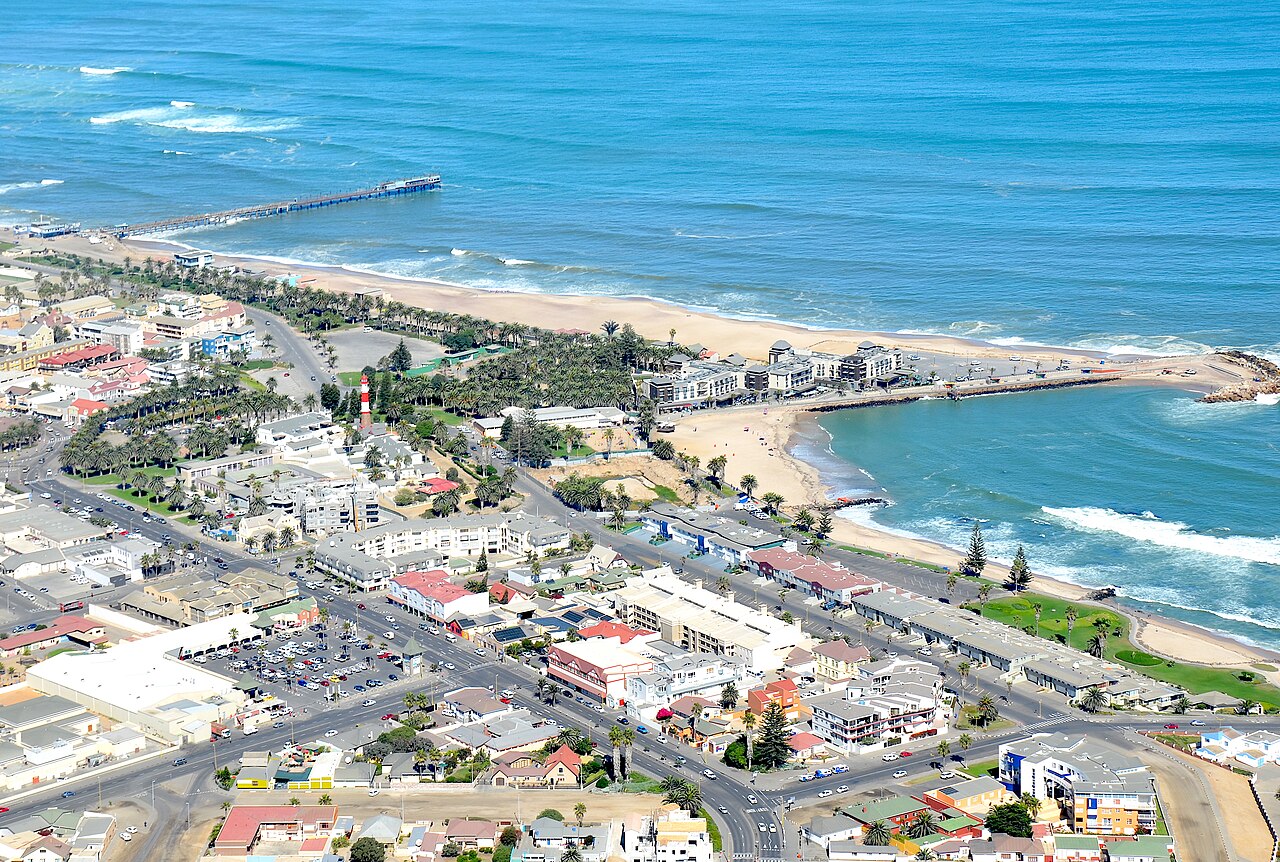
Woermannhaus is a grand colonial mansion built in 1905 for a German trading company. It is in Swakopmund, Namibia. Most visitors spend 45–60 min here. The free Lokali audio guide runs 5 minutes.
✓ Verified August 2026 · how we write these guides
Visitor facts
| Time needed | 45–60 min |
|---|---|
| Lokali audio guide | 5 min · free |
| Type | Museum |
| Best for | History |
| Location | Swakopmund, Namibia |
| Coordinates | -22.6658, 14.5278 |
| Languages | 45, in the Lokali app |
The story
Look up from the street. Above the rooftops of Swakopmund rises a square tower with a steep cap. It has watched this town for well over a century. The building beneath it is the Woermannhaus, once the proudest trading house on this coast, and still one of the most recognizable buildings in Namibia.
The Woermannhaus was built in 1894, when Swakopmund was only a cluster of huts and tents behind a hard, foggy shore. It served as the main offices of the Damara and Namaqua Trading Company. A building this size, this decorated, made a statement. Trade had arrived, and it planned to stay.
Picture the scene in those years. Ships stood offshore in the swell, because the coast had no real harbor. Small boats carried cargo in through the surf. Sacks, crates and barrels came up the sand and into stores like this one. The company sold supplies to the town and bought goods coming back from the interior. From here, everything moved inland by ox wagon, journey after slow journey.
In 1909 the building passed to Woermann, Brock and Company, a German trading firm whose name is still written across shops in Namibia today. People began to call the building the Woermannhaus, and the name stayed. Company clerks worked here, keeping ledgers of everything a young town needed, from flour to fence wire.
Walk closer and study the architecture. The style came from Germany and was adapted to this desert coast. You see half-timbered gables, plastered walls, and a long wooden veranda that catches the afternoon light. The details are careful and a little playful. It looks like a piece of a north German town set down beside the Namib.
Notice how the house sits on a raised base above the street, with stairs leading up. Ground moisture and blowing sand are old enemies here. Builders lifted the main floor, and the veranda gave clerks a shaded place to work and watch the street. Every decorative flourish also had a practical excuse, which is very much a trader's way of building.
The tower had a serious job. It is called the Damara Tower, and it worked as a lookout. From the top, watchers could spot ships approaching through the fog offshore. They could also see the dust of ox wagons returning from the interior. Arrivals meant work, news and money, so the tower connected the town to both of its horizons.
The building's later life was less grand. For years it served as a hostel for school children. Sea air, hard use and thin budgets wore it down, and by the middle of the twentieth century the Woermannhaus stood neglected. There was real talk of pulling it down. Old buildings are easy to lose and hard to get back.
Swakopmund chose to keep it. The house was restored with care, keeping its lines and woodwork, and in 1976 it was declared a national monument. That decision helped anchor the whole historic center. Today the town is known along the coast for its preserved streets from the colonial era, and the Woermannhaus is the building people photograph first.
Step inside. The building now belongs to daily life, not to ledgers. It houses the gallery of the Swakopmund Arts Association, with changing exhibitions of Namibian painting, sculpture and craft. The town library also lives under this roof. Rooms that once counted cargo now hold books and pictures. Children come for story books where merchants once argued about freight.
If the tower is open, take the stairs. From the top, red roofs spread below you. To the west, the cold Atlantic stretches out under its bank of fog. To the east and south lie sand and gravel running toward the dunes. It is the same double view the old watchers scanned, and it still explains the town in one turn.
Afterward, walk the surrounding blocks slowly. Bismarck Street and the streets around it keep many buildings from the same era, painted and cared for, with palm trees between them. Cafes fill the ground floors. The scale is small and friendly. Few places in southern Africa keep a townscape like this so complete.
Trading houses were built to move things along, not to last. This one lasted anyway. It outlived its company, its empire and its first purpose, and found new work holding art and books. Stand under the tower a moment before you leave. Buildings like this do not shout their story. They simply keep standing, and wait to be asked.
Key facts
What to look for
Practical tips
Common questions
How long do you need at Woermannhaus?
Plan 45–60 min. That is the time most visitors spend at Woermannhaus. The free Lokali audio guide adds about 5 minutes of narration you can listen to as you walk, so it fits inside your visit rather than adding to it.
Is there a free audio guide to Woermannhaus?
Yes — the Lokali app narrates Woermannhaus free of charge in 50+ languages. It covers the history, what to look for on site and practical tips, and it works offline once downloaded.
Where is Woermannhaus?
Woermannhaus is in Swakopmund, Namibia, at -22.6658, 14.5278. Tap the map link on this page for directions from where you are.
What should you know before visiting Woermannhaus?
Find the entrance on Bismarck Street.
What is Woermannhaus known for?
Built in 1894 for the Damara and Namaqua Trading Company.
What is the best time to visit Woermannhaus?
The building's high ceilings and original tile work survive intact.
On the map
Opens directions to Woermannhaus from your location.
More to see in Swakopmund


Hear Woermannhaus in your language
The full story, narrated, in 50+ languages. Download it before you go and it plays offline, at your own pace, with no ticket and no tour group.