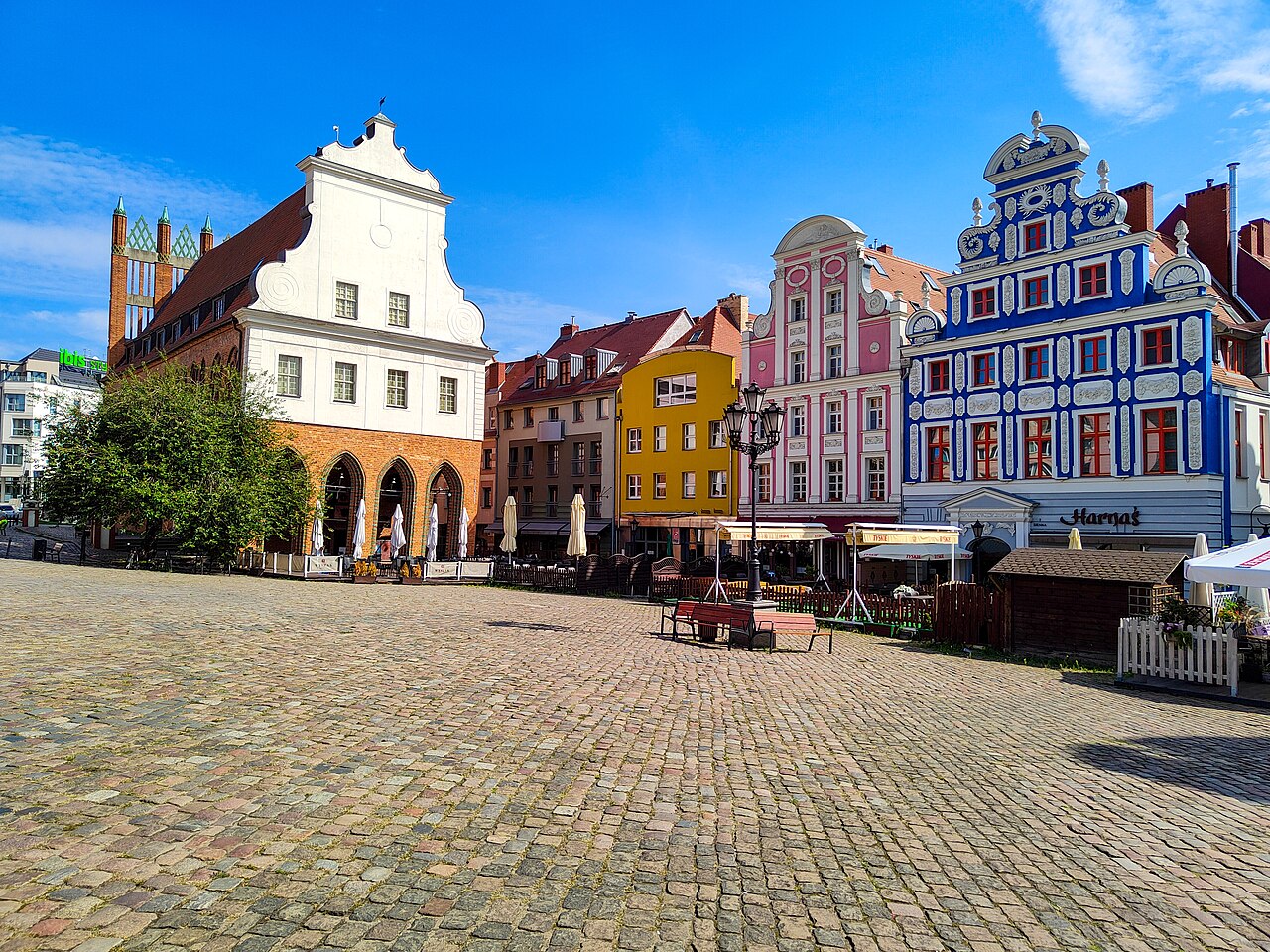
Kino Pionier is a cinema in Szczecin, Poland. Opened in 1909, one of the world's oldest operating cinemas. Survived two world wars and the postwar border shift. Most visitors spend 2-3 hours here. The free Lokali audio guide runs 5 minutes.
✓ Verified October 2026 · how we write these guides
Visitor facts
| Time needed | 2-3 hours |
|---|---|
| Lokali audio guide | 5 min · free |
| Type | Cinema |
| Best for | Editors’ pick |
| Location | Szczecin, Poland |
| Coordinates | 53.4285, 14.5528 |
| Languages | 45, in the Lokali app |
The story
The air inside smells faintly of velvet and old wood, a scent that belongs to another century. You are standing in Kino Pionier, one of the world's oldest continuously operating cinemas, a place where the flicker of moving images has drawn crowds since the earliest days of film. The building itself feels modest from the street — a narrow facade tucked into the fabric of central Szczecin — but step through the door and you enter a time capsule of early twentieth-century entertainment.
The cinema opened in 1909, when motion pictures were still a novelty, a carnival attraction that few believed would last. Back then, films were silent, accompanied by live piano, and a night at the movies meant sitting in a darkened hall watching stories unfold without a single spoken word. Kino Pionier — the name means Pioneer Cinema — was part of that first wave, built in an era when projectionists handled nitrate film stock so flammable it could ignite from a spark. The original projection booth still sits at the back of the hall, a small fortress of brick designed to contain fires that were all too common in early cinemas.
The auditorium holds just over a hundred seats, arranged in steep rows that climb toward the rear wall. The layout is intimate, almost theatrical — there is no sprawling multiplex anonymity here. Every seat offers a direct sightline to the screen, and the acoustics, shaped by the room's proportions and materials, carry sound with surprising clarity despite the lack of modern dampening. The walls are paneled in dark wood, and the ceiling curves gently overhead, a design choice from an age when cinema architecture borrowed from concert halls and opera houses.
What makes Kino Pionier remarkable is not just its age but its continuity. It has operated through two world wars, through the collapse of empires and the redrawing of borders, through the silent era, the talkies, Technicolor, digital projection. Szczecin itself changed hands, shifting from German Stettin to Polish Szczecin after 1945, yet the cinema kept its doors open. Generations of projectionists have threaded film through the same machines, adjusted the same lenses, watched the same light spill onto the same screen.
Today, Kino Pionier programs a mix of art-house films, documentaries, and retrospectives — fare that honors the cinema's roots as a place for discovery rather than blockbuster spectacle. The lobby is small, barely more than a corridor, with a modest concession stand and a few framed posters from decades past. There is no attempt to modernize the space into something slick or corporate. The charm lies in its refusal to change, in the way it holds onto the textures and rhythms of early cinema culture.
The projection booth, visible through a small window at the back of the auditorium, still houses vintage equipment alongside the digital projector that now handles most screenings. The old 35-millimeter machines sit silent but intact, museum pieces that once roared with mechanical life. Film projection was a physical craft — reels weighing kilograms, timing measured in seconds, the constant risk of a break or a jam. The booth is a reminder that cinema, before it became an algorithm, was a labor of hands and eyes.
Szczecin's relationship with its past is complicated. Much of the city was rebuilt after the Second World War, and many prewar landmarks were lost or transformed. Kino Pionier survived, in part because it was too small to matter strategically, too embedded in daily life to be erased. It became a thread of continuity in a city that had to reinvent itself. Locals still refer to it with a kind of quiet pride, a place that has outlasted regimes and ideologies simply by showing films, night after night, decade after decade.
If you visit during a screening, arrive early and take a moment to sit in the empty auditorium before the lights go down. Notice the way the wooden seats creak slightly, the way the room feels both grand and modest at once. The screen is smaller than you are used to, the space more compressed, but that compression creates a kind of focus. When the film begins, the experience is immediate, almost tactile — no distance between you and the story, no buffer of stadium seating or surround sound. Just light, shadow, and a room full of strangers watching together.
Outside, Szczecin moves at the pace of a modern European city — trams, smartphones, the hum of daily commerce. Inside Kino Pionier, time slows. The cinema does not pretend to be a museum, but it carries the weight of history in its bones. As you leave, glance back at the facade — narrow, unassuming, easy to miss. It has stood there for more than a century, a small monument to the enduring pull of stories told in the dark.
Key facts
What to look for
Practical tips
Common questions
How long do you need at Kino Pionier?
Plan 2-3 hours. That is the time most visitors spend at Kino Pionier. The free Lokali audio guide runs 5 minutes and is made to listen to while you walk.
Is there a free audio guide to Kino Pionier?
Yes — the Lokali app narrates Kino Pionier free of charge in 50+ languages. No ticket, tour group or subscription, and it works offline once downloaded.
Where is Kino Pionier?
Kino Pionier is in Szczecin, Poland, at 53.4285, 14.5528. Tap the map link on this page for directions.
What should you know before visiting Kino Pionier?
Arrive early to sit in the empty auditorium before screening
What is Kino Pionier known for?
Opened in 1909, one of the world's oldest operating cinemas
What is the best time to visit Kino Pionier?
Arrive early to sit in the empty auditorium before screening
On the map
Opens directions to Kino Pionier from your location.
Hear Kino Pionier in your language
The full story, narrated, in 50+ languages. Download it before you go and it plays offline, at your own pace, with no ticket and no tour group.