Hida Folk Village
36.1180° N · 137.2780° E · Open-Air Museum
Hida Folk Village is an open-air collection of over 30 traditional farmhouses, workshops, and storehouses relocated from the Hida region. It is in Takayama, Japan. Most visitors spend 90–120 min here. The free Lokali audio guide runs 5 minutes.
✓ Verified August 2026 · how we write these guides
Visitor facts
| Time needed | 90–120 min |
|---|---|
| Lokali audio guide | 5 min · free |
| Type | Open-Air Museum |
| Best for | Photography |
| Location | Takayama, Japan |
| Coordinates | 36.1180, 137.2780 |
| Languages | 45, in the Lokali app |
The story
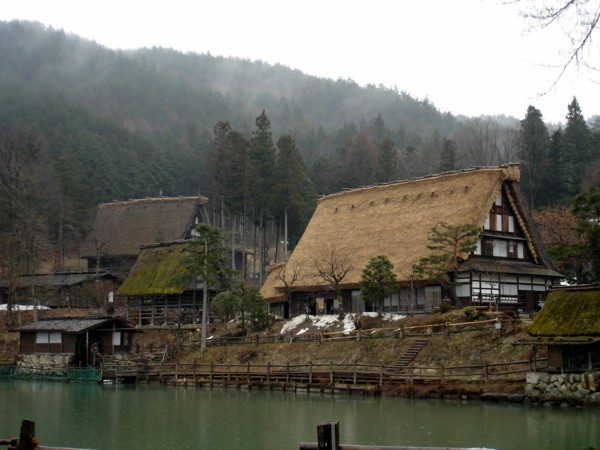
Snow can fall heavily here in winter. You can read that fact in the roofs. They rise above you at a steep angle, thick with thatch, shaped like two hands pressed together in prayer. The dry, grassy smell of old straw drifts down to you. Around you sit more than thirty farmhouses, gathered from across the mountains of Hida, each one carried here and carefully rebuilt.
This is Hida Folk Village, known in Japanese as Hida no Sato. It is an open-air museum. That means the exhibits are whole buildings, standing in the open, that you walk among and step inside. It sits on a hillside above the city of Takayama, in the Hida region of central Japan. The museum opened in 1971.
The houses here are built in a style called gassho-zukuri. The word gassho means hands joined in prayer. Look at any roof and you will understand the name at once. The two sides rise steeply and meet at a sharp angle near the top. This shape was not chosen for beauty alone. It was chosen for survival.
Winters in these mountains are long, and the snow falls deep. A flat roof would collapse under the weight. A steep roof lets the snow slide off before it can pile up. The thick thatch holds warmth inside through the cold months. People here built their homes to fit their world, season by season, without a single nail in the great frame of the roof.
These farmhouses were not built in this park. They once stood in villages all across the Hida region. Many of them date from the Edo period, the years between 1603 and 1868. As the old ways of life faded, the houses were at risk of being lost. So they were taken apart, moved here piece by piece, and raised again. More than thirty of them now stand together.
Step inside one. The floor is dark, worn smooth by generations of feet. In the center sits a hearth, a square pit set into the floor. A fire once burned here through the day and night. The smoke rose up through the rooms and out through the thatch above. That smoke did important work. It kept insects away and helped the heavy roof last for many years.
Climb the steep stairs and look at the upper floors. Up here, under that great triangle of roof, people once raised silkworms. The space was warm and dry, just right for the work. Whole families lived on the floor below while the attic hummed with this quiet industry. A single house could hold both a home and a workshop.
Notice how the houses differ from one another. Some are large, with many rooms, built for wealthy families or for village headmen. Others are small and plain. Each one tells you something about the person who lived there: their work, their standing, the size of their family. Together they form a picture of a whole mountain society.
Outside, walk the paths between the buildings. There is a pond near the center that reflects the roofs and the sky. Old tools of daily work sit where they were once used. There are sheds for storage, racks for drying, and simple shrines. The village was arranged to feel like a real settlement, not a row of objects behind glass.
In some of the houses, craftspeople still work. You might see weaving, or wood carving, or the making of goods from straw. The carpenters of Hida were respected across Japan for their skill. Watching these crafts brings the silent houses back to life. The hands moving here repeat motions that are hundreds of years old.
The seasons change the village completely. In spring there are flowers around the pond. In autumn the hills turn red and gold behind the roofs. In winter the snow returns, and the steep thatch does exactly what it was built to do. Whenever you choose to come, the place looks like the world these houses were first made for.
Stand by the pond before you leave. The roofs lean toward each other across the water, like the hands that gave them their name. The families who lived here are long gone. The fires in the hearths are cold. Yet the houses still stand, moved and saved, so that you can walk inside a way of life that has otherwise slipped away. Breathe in the straw and the cold mountain air, then walk on.
Key facts
What to look for
Practical tips
Common questions
How long do you need at Hida Folk Village?
Plan 90–120 min. That is the time most visitors spend at Hida Folk Village. The free Lokali audio guide adds about 5 minutes of narration you can listen to as you walk, so it fits inside your visit rather than adding to it.
Is there a free audio guide to Hida Folk Village?
Yes — the Lokali app narrates Hida Folk Village free of charge in 50+ languages. It covers the history, what to look for on site and practical tips, and it works offline once downloaded.
Where is Hida Folk Village?
Hida Folk Village is in Takayama, Japan, at 36.1180, 137.2780. Tap the map link on this page for directions from where you are.
What should you know before visiting Hida Folk Village?
Buy a combination bus ticket from Takayama station.
What is Hida Folk Village known for?
Open-air museum in Takayama that opened in 1971.
What is the best time to visit Hida Folk Village?
The village spreads across hillside terrain—wear comfortable shoes.
On the map
Opens directions to Hida Folk Village from your location.
More to see in Takayama


Hear Hida Folk Village in your language
The full story, narrated, in 50+ languages. Download it before you go and it plays offline, at your own pace, with no ticket and no tour group.