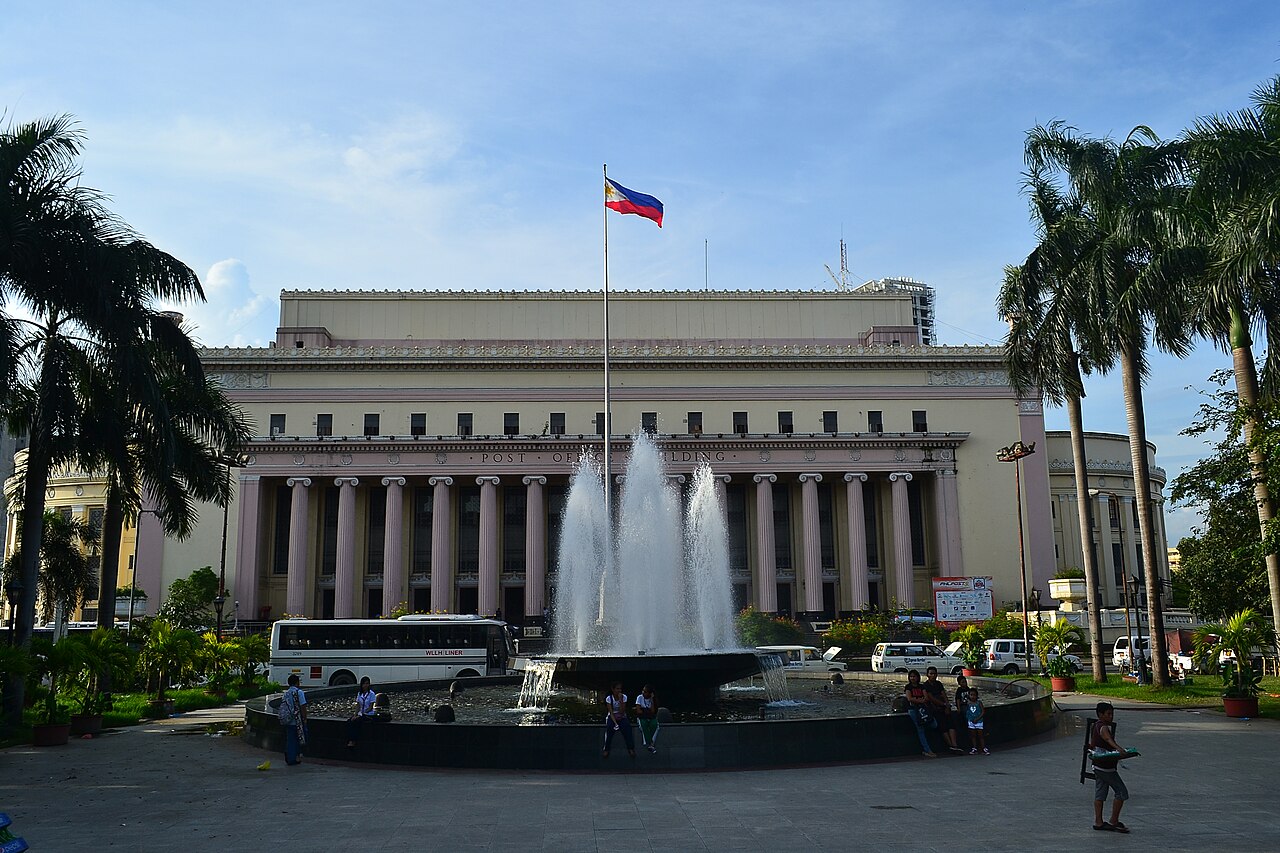
Saigon Central Post Office
10.7913° N · 106.6989° E · Historic Building
Saigon Central Post Office is an ornate French colonial post office completed in 1891, designed by French architect Gustave Eiffel's firm. It is in Thủ Đức, Vietnam. Most visitors spend 20–30 min here. The free Lokali audio guide runs 6 minutes.
✓ Verified August 2026 · how we write these guides
Visitor facts
| Time needed | 20–30 min |
|---|---|
| Lokali audio guide | 6 min · free |
| Type | Historic Building |
| Best for | Photography |
| Location | Thủ Đức, Vietnam |
| Coordinates | 10.7913, 106.6989 |
| Languages | 45, in the Lokali app |
The story
Step through the tall front doors and the sound of the street falls away. The air feels cooler inside. Soft light comes down from the high windows. Above you, a great curved ceiling arches across the whole hall. Fans turn slowly overhead. Your footsteps echo on the patterned tile floor, and your voice, if you speak, comes back to you.
This is the central post office of the city. It is not just for show. It still works as a post office today. People come to send letters, buy stamps, post parcels, and pay bills. But many also come simply to look and to rest in the cool. The building is one of the oldest public works in this part of town, and one of the best loved.
It was built by the French in the late nineteenth century, when this city was the capital of their colony in the south. Work finished around 1891. The French wanted a grand home for their new telegraph and postal service, which was spreading fast across the region. They placed the building in the center of the colonial district, right beside the cathedral, so that church and state stood side by side.
For many years, people said the post office was designed by Gustave Eiffel, the engineer of the famous tower in Paris. It is a good story, and guides still repeat it. But historians now credit the design to a French architect named Alfred Foulhoux. The great iron frame inside, light and strong, may be why the Eiffel name stuck. Look up at the curved ribs of the roof, and you can see why people imagine his hand here.
The front of the building faces a small square. It is painted in warm yellow, with white trim around the windows and green shutters at each opening. Above the main door sits a large clock with the dates of the work below it. Around the upper wall, carved medallions hold the names of scientists and inventors. They honor the men who shaped the science of sending messages across distance.
Step back inside and take in the shape of the hall. It is long and high and open. Two rows of iron columns run down its length and hold up the roof. The columns are painted pale green and topped with simple curling decoration. The arched ceiling carries sound in a gentle way. Even when the hall is full of people, the voices stay low, like the murmur in a railway station.
At the far end of the hall hangs a large portrait of Ho Chi Minh. He looks out calmly over the whole room. The portrait was added after the country was reunified, and it now marks the heart of the building. This is where most visitors stop, line up, and take their photo, framed by the great arch above.
Now look at the side walls near the entrance. Two large painted maps are set into the plaster. They are not new copies. One shows the city and its surroundings as they were in the nineteenth century, with rivers, roads, and old place names. The other traces the telegraph lines that once linked this region to Cambodia. These maps were the network of their day. They show how news once crossed the land, wire by wire.
Along the center of the hall stand long wooden counters where clerks still serve the public. To the sides, set into the walls, you may notice old wooden telephone booths with curved tops. People once stepped inside them to place calls to other cities and far countries, when a single call was a small event. Today the booths sit empty, a quiet reminder of slower times.
Take your time near the souvenir stalls along the aisle. You can buy postcards, stamps, and small gifts here, and send a card from the very same desk. The building keeps up its honest trade in letters even as the crowds flow past. There is something fitting about mailing a card home from a place that was built to carry words across the world.
When you are ready, walk back out into the square between the post office and the cathedral. This corner has been a meeting point of the old city for well over a hundred years. Tall trees give shade. The traffic moves around the edges in a steady stream. People sit on the steps, check their phones, and watch the day go by.
Notice how the building still belongs to the city, not only to its visitors. A grandmother posts a parcel. A student buys a stamp. A clerk presses a form and slides it back across the counter. The grand hall does its small daily work without fuss, the same work it has done for many generations.
A post office is a simple thing. It exists to move words from one hand to another. Yet this one has stood through colony, war, and a new nation, and still keeps at its quiet task. Stand for a moment in the cool of the hall and listen. Somewhere behind a counter, a letter is beginning its long journey.
Key facts
What to look for
Practical tips
Common questions
How long do you need at Saigon Central Post Office?
Plan 20–30 min. That is the time most visitors spend at Saigon Central Post Office. The free Lokali audio guide adds about 6 minutes of narration you can listen to as you walk, so it fits inside your visit rather than adding to it.
Is there a free audio guide to Saigon Central Post Office?
Yes — the Lokali app narrates Saigon Central Post Office free of charge in 50+ languages. It covers the history, what to look for on site and practical tips, and it works offline once downloaded.
Where is Saigon Central Post Office?
Saigon Central Post Office is in Thủ Đức, Vietnam, at 10.7913, 106.6989. Tap the map link on this page for directions from where you are.
What should you know before visiting Saigon Central Post Office?
Buy a postcard inside and mail it immediately.
What is Saigon Central Post Office known for?
Construction completed around 1891 under French colonial rule.
What is the best time to visit Saigon Central Post Office?
Step inside to see the soaring nave and original postal counter.
On the map
Opens directions to Saigon Central Post Office from your location.
More to see in Thủ Đức


Hear Saigon Central Post Office in your language
The full story, narrated, in 50+ languages. Download it before you go and it plays offline, at your own pace, with no ticket and no tour group.