
Great Otway National Park
38.7733° S · 143.5570° E · National Park
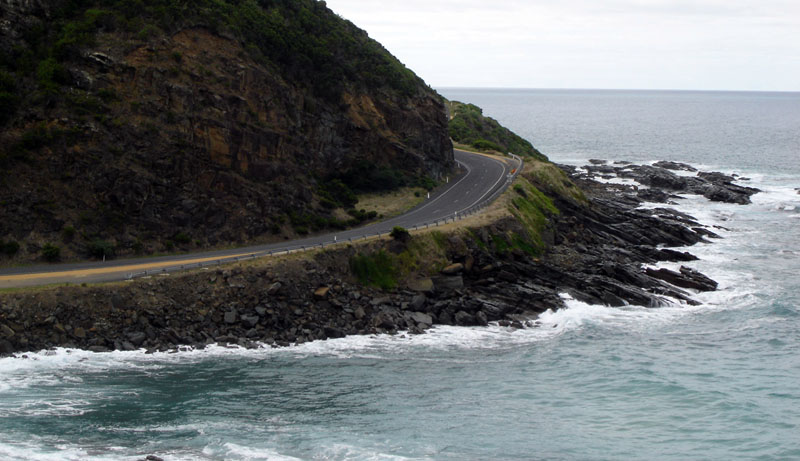
Photo: Biatch at English Wikipedia · Public domain · Wikimedia Commons
Great Otway National Park is a national park in Australia. Created in 2005 by combining several older parks. The free Lokali audio guide runs 8 minutes.
✓ Published October 2026 · how we write these guides
Visitor facts
| Lokali audio guide | 8 min · free |
|---|---|
| Type | National Park |
| Location | Victoria, Australia |
| Coordinates | -38.7733, 143.5570 |
| Official website | parkweb.vic.gov.au |
| Languages | 50+, in the Lokali app |
The story
Stand still for a moment and listen. Water drips from a tree fern frond onto the leaf litter below. Somewhere above, a bird calls once, then goes quiet. The air smells of wet bark, moss and cold earth. Further off, faint but steady, the Southern Ocean moves against the rocks. In the Otways, you are rarely far from both sounds at once: the forest close around you, and the sea never quite out of hearing.
Welcome to Great Otway National Park, on the southwest coast of Victoria, in southern Australia. The park follows a long stretch of coastline and climbs inland into the Otway Ranges. It was created in 2005 by joining several older parks and forest reserves into one protected area. That is why the park feels like many places at once. Here there are beaches, cliffs, fern gullies, waterfalls, heathland and tall wet forest, all inside one boundary.
Before any park, before any road, this was Aboriginal Country. The Gadubanud people lived along this coast and in these ranges for thousands of years. Today the Eastern Maar people are recognised as Traditional Owners of much of this land. They knew the forest as a source of food, materials and story. As you walk, it helps to remember that these trails cross a landscape that was known in detail long before any European map gave it a name.
Now look up. In the wetter valleys, the tallest trees are mountain ash, a kind of eucalyptus. Mountain ash is one of the tallest flowering plants on Earth. The trunks rise straight and pale, and the bark peels away in long ribbons that hang from the branches. Below them grow myrtle beech, blackwood and a thick layer of tree ferns. Light reaches the ground in thin green shafts. Even at midday, parts of the forest floor stay dim and cool.
Why is it so green here? The answer is rain. The Otway Ranges catch moist air that blows in from the Southern Ocean. As the air rises over the hills, it cools and drops its water. Parts of the Otways are among the wettest places in Victoria. That rain feeds the creeks, the moss and the ferns. It also explains something visitors often miss. The coast can be sunny and dry while the forest a short drive inland stands in drizzle and mist.
All that rain has to go somewhere, and it goes over the edge. The park is known for its waterfalls. Hopetoun Falls drops into a fern-lined gully. Triplet Falls spreads across several streams through old forest. Erskine Falls, inland from the town of Lorne, falls into a deep green valley. Each one is different, and each one changes with the season. After heavy rain the water roars and throws spray. In a dry spell, the same falls can thin to a soft white thread.
Here is a surprise for anyone who visits after dark. In some damp gullies of the Otways, small lights shine along the creek banks at night. These are glow worms, the larvae of a small fly. They hang sticky threads and glow to attract tiny insects. Melba Gully, in the western part of the park, is one place where people come to see them. Bring patience rather than a bright torch. Your eyes need time, and the glow worms need darkness.
Now turn toward the sea. The Great Ocean Road runs through and beside much of the park. Returned soldiers built this road after the First World War, and it is often described as the world's largest war memorial. It hugs the cliffs, dips down to beaches and climbs back through the forest. Many visitors see the Otways only through a car window. The road is beautiful, but the park really opens up when you stop, step out, and walk a few hundred metres into the trees.
At the southern tip of the ranges stands Cape Otway. Here, the waters of Bass Strait meet the Southern Ocean. For sailing ships in the nineteenth century, this was a frightening stretch of coast. Fog, strong currents and hidden reefs caused many wrecks. This shore is part of what Australians call the Shipwreck Coast. To guide ships safely, a lighthouse was built on the cliffs. The Cape Otway Lightstation was first lit in 1848. It is the oldest surviving lighthouse on mainland Australia.
The lightstation itself is managed as a separate visitor site inside the park. The tower is short and white, made of local stone, and it stands high above the water. Around it are the old keepers' cottages and the telegraph station. Life here was isolated and hard. Supplies were difficult to bring in, and the wind rarely stopped. Standing on the cliff top, you can feel how small a ship must have looked from here, and how much depended on this one light.
On the road toward the cape, keep your eyes on the trees. Koalas live in the manna gums of this area. They often sit high in a fork of a branch, round and grey, and nearly motionless. They sleep for most of the day, so look for a dark shape that does not move. Please stay well back, and never park in a dangerous spot to look. In the forest and along the shore, you may also see kangaroos, wallabies, cockatoos and many sea birds.
For walkers, the park offers a lot of choice. Short loops, such as the rainforest walk at Mait's Rest, take you onto boardwalks among old myrtle beech and tree ferns. Longer trails follow rivers and ridges. The Great Ocean Walk is a multi-day trail that runs west from Apollo Bay along the coast, through much of the park and beyond. You can walk a single section of it in an afternoon, or carry a pack for several days and camp along the way.
This forest has not always been a quiet reserve. For many decades, timber cutters worked in the Otways. Small tramways and sawmills once carried logs out of these valleys. Today, many of the old routes have become walking tracks, and the forest is slowly growing back in places that were once cleared. Fire has also shaped this land, and it will again. When you see a blackened stump with new green shoots around it, you are looking at a forest that recovers.
Before you leave, stop once more and listen. The drip of water. The creak of a tall trunk in the wind. The far sound of the waves. Notice the colour of the light through the ferns, and the cool feel of the air on your face. This park changes with every hour and every season, so no two visits are the same. As you walk back, look down at the moss on the path. It has been growing, quietly, the whole time you have been here.
Key facts
What to look for
Practical tips
Common questions
Is there a free audio guide to Great Otway National Park?
Yes — the Lokali app narrates Great Otway National Park free of charge in 50+ languages. The guide runs about 8 minutes, covers the history, what to look for on site and practical tips, and works offline once downloaded.
Where is Great Otway National Park?
Great Otway National Park is near Victoria, Australia, at -38.7733, 143.5570. Tap the map link on this page for directions from where you are.
What is Great Otway National Park known for?
Created in 2005 by combining several older parks. Cape Otway Lightstation was first lit in 1848.
What should you look for at Great Otway National Park?
Long ribbons of bark hanging from mountain ash trunks. Koalas sleeping high in forks of manna gums. Tiny blue-green glow worm lights on gully banks.
What should you know before visiting Great Otway National Park?
Pack a rain jacket even when the coast looks sunny. Visit waterfalls after rain for the strongest flow.
On the map
Opens directions to Great Otway National Park from your location.
More to see in Victoria

Hear Great Otway National Park in your language
The full story, narrated, in 50+ languages. Download it before you go and it plays offline, at your own pace, with no ticket and no tour group.