
Kunsthistorisches Museum
48.2039° N · 16.3616° E · Museum
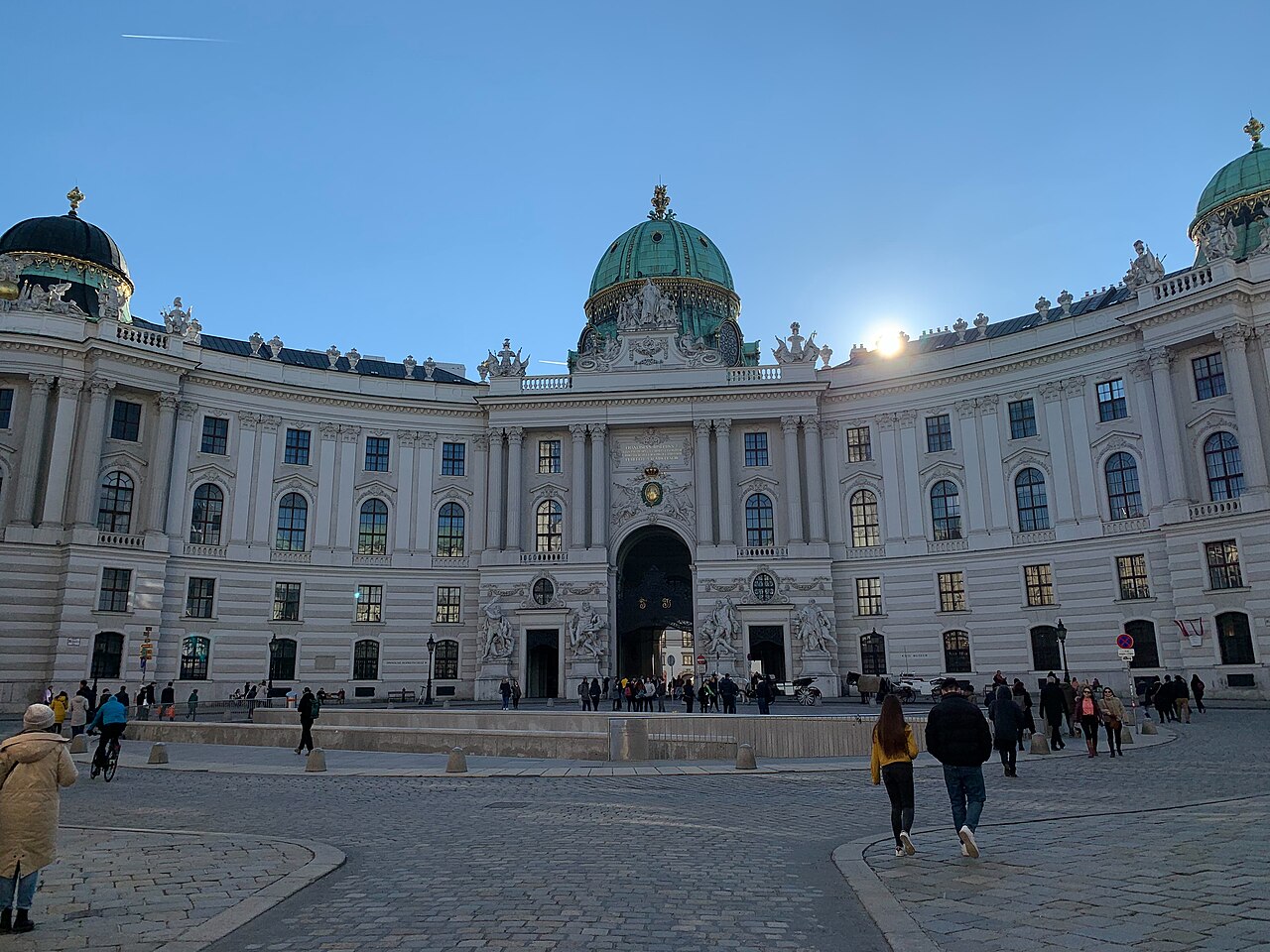
Photo: Andrzej Otrębski · CC BY-SA 3.0 · Wikimedia Commons
Kunsthistorisches Museum is an art museum in Vienna, Austria. Opened to the public in 1891 under Emperor Franz Joseph. The free Lokali audio guide runs 7 minutes.
✓ Published October 2026 · how we write these guides
Visitor facts
| Lokali audio guide | 7 min · free |
|---|---|
| Type | Museum |
| Location | Vienna, Austria |
| Coordinates | 48.2039, 16.3616 |
| Official website | khm.at |
| Languages | 50+, in the Lokali app |
The story
Stand at the foot of the grand staircase and look up. Marble in cream, rose, and deep green rises on every side. Your footsteps sound sharp on the stone, then soften as the space opens above you. Light falls from far overhead and catches gilded frames, painted figures, and a white sculpture locked in struggle. Before you have seen a single painting, the building has already done its work. It was designed to make you slow down, lift your eyes, and feel small in front of art.
This is the Kunsthistorisches Museum, which means the Museum of Art History. It opened to the public in 1891, under Emperor Franz Joseph. Its purpose was to give a worthy home to the art the Habsburg family had collected over centuries. For generations, these treasures sat in palaces and private chambers. Here, for the first time, they were gathered under one roof and opened to the people of Vienna. The museum is, in a real sense, a portrait of one dynasty and its taste.
Step outside for a moment, at least in your mind. The museum faces an almost identical twin across the square. That second building is the Natural History Museum. The two were planned together as mirror images, one for the works of human hands and one for the works of nature. Between them sits a large monument to Empress Maria Theresa, one of the most powerful Habsburg rulers. The whole square was part of a grand imperial plan that reached toward the Hofburg palace nearby.
The architects were Gottfried Semper, a leading German architect of his age, and Carl von Hasenauer of Vienna. Their partnership was not always easy, but the result is clear. The style looks back to the Italian Renaissance — the period of revival in art and learning that began in fifteenth-century Italy. Domes, columns, and rich decoration were chosen on purpose. The message was simple. The Habsburgs saw themselves as heirs to that great tradition, and this building made the claim in stone.
Now back to the staircase, because it holds a surprise. Look high up, between the columns and in the curved spaces above the arches. Those painted figures include early work by a young Gustav Klimt. He worked here with his brother Ernst and their colleague Franz Matsch. At the time, Klimt was not yet the rebel of golden portraits and bold modern design. Here he painted in a careful historical style. Many visitors walk past without realising whose brush made these figures.
The white sculpture on the landing shows Theseus, a hero of Greek myth, killing a centaur. It is the work of Antonio Canova, the great Italian sculptor of the neoclassical age. Above it, the ceiling painting by the Hungarian artist Mihály Munkácsy celebrates the Renaissance itself. So in one view you have a Greek myth, an Italian sculptor, a Hungarian painter, and a young Viennese artist. The staircase is a meeting place for all of Europe, held together by Habsburg ambition.
The picture gallery is the heart of the museum, and one room deserves special attention. The museum holds the largest group of paintings by Pieter Bruegel the Elder anywhere in the world. Bruegel was a Flemish painter of the sixteenth century, known for crowded scenes of ordinary life. Look for Hunters in the Snow. Tired men and dogs walk home over a white hill. Below them, tiny figures skate on frozen ponds. It is a picture you can stand in front of for a long time.
Nearby hangs The Tower of Babel, the Bible story of a tower built to reach heaven. Bruegel fills it with workers, cranes, ladders, and small arches. Lean closer and you will find details that are easy to miss from a distance. Then find The Peasant Wedding, with its long table and servers carrying bowls of food on a door used as a tray. These paintings show farmers, children, and workers, not only kings and saints. That was unusual in its time.
The gallery holds many other masters. There are works by Titian, Raphael, Rubens, Rembrandt, and Caravaggio. Look for the portraits of young Spanish princesses by Diego Velázquez. The Spanish and Austrian branches of the Habsburg family were closely linked, and these paintings travelled between the two courts. They were a way for relatives to see how the children were growing. A quiet surprise here is Vermeer's The Art of Painting, showing an artist at work, seen from behind.
Don't miss the Kunstkammer, which means the Chamber of Art and Wonders. Here the Habsburgs kept objects meant to amaze. You will see clocks, carved ivory, gold, rare shells, and scientific instruments. The most famous piece is the Saliera, a golden salt cellar by the Italian goldsmith Benvenuto Cellini. In 2003 it was stolen from the museum in a daring theft. It was recovered a few years later, buried in a box in the countryside. Today it sits safely back on display.
The museum also reaches much further back in time. On the ground floor you will find the Egyptian and Near Eastern collection and the Greek and Roman antiquities. One highlight is a complete offering chapel from an ancient Egyptian tomb. You can step inside and see carved scenes of daily life and offerings for the dead. The museum also has a large coin collection. It shows how rulers placed their faces on money to spread their power across their lands.
Before you leave, pause under the great dome. The central hall holds a café, and few museum cafés anywhere sit in a space like this. You drink coffee under the curve of the dome, with marble and gold all around. It is a very Viennese idea. Art and coffee are not separate pleasures here. Many visitors plan their walk around a break in this hall. It is the best place to rest your feet and think about what you have seen.
As you walk back toward the staircase, notice how the light changes through the day. Notice the soft voices, the creak of a bench, the sound of a guard's shoes on the floor. This building was made to show the power of an empire. That empire is gone. What remains is the art, and the people who come to look at it. Take one last look up at Klimt's figures. Then step out into the square, where the twin museum waits across the way.
Key facts
What to look for
Practical tips
Common questions
Is there a free audio guide to Kunsthistorisches Museum?
Yes — the Lokali app narrates Kunsthistorisches Museum free of charge in 50+ languages. The guide runs about 7 minutes, covers the history, what to look for on site and practical tips, and works offline once downloaded.
Where is Kunsthistorisches Museum?
Kunsthistorisches Museum is in Vienna, Austria, at 48.2039, 16.3616. Tap the map link on this page for directions from where you are.
What is Kunsthistorisches Museum known for?
Opened to the public in 1891 under Emperor Franz Joseph. Designed by architects Gottfried Semper and Carl von Hasenauer.
What should you look for at Kunsthistorisches Museum?
Young Klimt's painted figures high on the staircase. Canova's Theseus fighting a centaur on the main landing. Skaters on frozen ponds in Hunters in the Snow.
What should you know before visiting Kunsthistorisches Museum?
Start with the Bruegel room before tour groups arrive. Plan a coffee break in the domed central hall.
On the map
Opens directions to Kunsthistorisches Museum from your location.
More to see in Vienna


Hear Kunsthistorisches Museum in your language
The full story, narrated, in 50+ languages. Download it before you go and it plays offline, at your own pace, with no ticket and no tour group.