
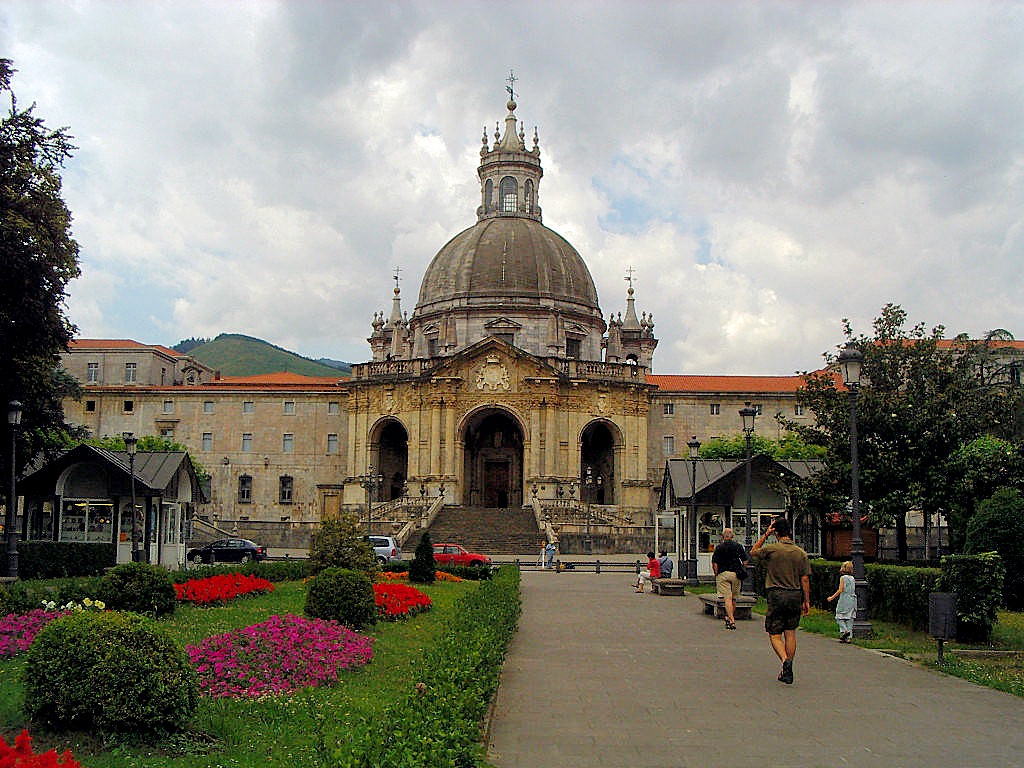
Cathedral of Santa María de Vitoria
42.8508° N · 2.6725° W · Church
Photo: Fernando · CC BY-SA 4.0 · Wikimedia Commons
Cathedral of Santa María de Vitoria is a cultural property in Vitoria, Spain. Closed for worship in 1994 due to structural damage. The free Lokali audio guide runs 7 minutes.
✓ Published October 2026 · how we write these guides
Visitor facts
| Lokali audio guide | 7 min · free |
|---|---|
| Type | Church |
| Location | Vitoria-Gasteiz, Spain |
| Coordinates | 42.8508, -2.6725 |
| Official website | catedralvitoria.eus |
| Languages | 50+, in the Lokali app |
The story
Listen for a moment. Beneath the voices of the old town, you may catch a faint metallic sound: the clink of scaffolding, the tap of a hard hat against a steel rail. Here at the top of Vitoria-Gasteiz, the stone underfoot is worn smooth. The air inside this cathedral carries a cool, dusty smell of limestone, and it feels a little like a workshop. That impression is correct. This is a medieval church that has been opened up so visitors can see how it works.
You are standing on the highest point of the medieval hill. Locals often call this oval old quarter the almond, because its streets curve around the summit in rings, like the layers of a nut. In the late twelfth century, a king of Navarre granted the settlement new rights and a new name, Victoria. Over the following generations, the town grew down the slopes of the hill. The Cathedral of Santa María grew at the very top.
Before it was a cathedral, this building did another job. Its walls formed part of the town's defences. Santa María began as a church that could also act as a fortress, built into the line of the medieval wall. Look at the thickness of the masonry and the closed, heavy feel of some outer faces. You can still sense that double purpose. Prayer and protection shared the same stones.
The building we see today is mostly Gothic. That is the style of pointed arches, ribbed vaults and tall windows that spread across Europe in the Middle Ages. Construction ran from roughly the thirteenth century into the fourteenth century and beyond. Different builders added chapels, raised vaults and adjusted the plan. The result is not one perfect design. It is a long conversation between generations of masons, and each one solved the problems of the last.
Here is the first surprise. Those problems were serious. Over the centuries, builders added more weight to a structure that was not designed to carry it. The pillars began to lean. Walls moved outward. Arches deformed. By the late twentieth century the situation was alarming, and in 1994 the cathedral closed for worship. Many cities would have shut the doors and hidden the repairs behind sheets. Vitoria chose a different path.
The restoration team opened the building to the public while the work went on. The idea became known as Open for Works, and it changed how many people think about heritage. Visitors put on hard hats and walk through excavations, along scaffolding and up into the structure. Instead of a finished monument, you see a building under study. The visit shows its wounds, its old foundations and the clever ways engineers now hold it together.
On a guided route, you may walk below the floor level. Excavations under the church have uncovered traces of earlier buildings and of the old town that existed before the Gothic church. It is strange to stand among foundations that were buried for centuries, while the vaults rise above you. The cathedral becomes a vertical timeline. The oldest layers sit lowest, and the youngest repairs are often the highest, near the roof.
Now look closely at the pillars when you are inside. Some of them do not stand straight. They tilt, and in places the bend is visible to the naked eye. It can feel unsettling at first. Then it becomes fascinating. Those curves record centuries of pressure, like a body that carried a heavy load for too long. Modern supports now take some of that weight, and the bend is no longer getting worse.
Here is the second surprise, and it concerns the main entrance. At the west end, a covered porch shelters a set of Gothic doorways. Their carved figures still carry traces of original paint: reds, blues, golds and flesh tones. Most medieval sculpture was once painted, but the colour on most churches has been lost to the weather. Here the porch protected it. Spend a little time with the scenes. They tell biblical stories in a clear, almost comic-strip way.
The church has also attracted writers. The British novelist Ken Follett, famous for his novels about medieval cathedral builders, has spoken warmly about this place and its restoration. Near the cathedral, look for a bronze figure of the writer. It is a small, playful tribute, and many visitors stop to sit beside it. It is also a reminder that this building feels close to a novel. It is full of risk, craft and ambition.
This is called the Old Cathedral for a reason. Vitoria became the seat of a diocese in the nineteenth century, and Santa María took the role of cathedral. Later, the city began a much larger New Cathedral down in the newer town, in a revived Gothic style. So Vitoria has two cathedrals: one truly medieval and one that imitates the Middle Ages. Comparing them on the same day is an interesting exercise.
Some tours include a climb up the tower. The steps are narrow and the effort is real. At the top you get a wide view across the red roofs of the almond, out to the modern grid of the city and the green hills of Álava beyond. From up there, the shape of the medieval town becomes clear. You can see the curved streets that hug the slope, with the cathedral at the centre of the rings.
When you leave, take the streets downhill slowly. Many of the lanes still carry the names of medieval trades. Notice how the ground falls away beneath your feet, and how the cathedral's bulk stays behind you over the rooftops. The masons who raised it could never have imagined steel braces, laser surveys or visitors in helmets. Yet the repair work continues the same long effort they began.
Before you go, pause one last time and look back at the stone. Listen again for the quiet sounds of work, a tool or a footstep on a plank. This building is not frozen in the past. It is still being looked after, one beam and one block at a time... and for a short while, you have been part of that story.
Key facts
What to look for
Practical tips
Common questions
Is there a free audio guide to Cathedral of Santa María de Vitoria?
Yes — the Lokali app narrates Cathedral of Santa María de Vitoria free of charge in 50+ languages. The guide runs about 7 minutes, covers the history, what to look for on site and practical tips, and works offline once downloaded.
Where is Cathedral of Santa María de Vitoria?
Cathedral of Santa María de Vitoria is near Vitoria-Gasteiz, Spain, at 42.8508, -2.6725. Tap the map link on this page for directions from where you are.
What is Cathedral of Santa María de Vitoria known for?
Closed for worship in 1994 due to structural damage. Built mostly in Gothic style from the thirteenth century.
What should you look for at Cathedral of Santa María de Vitoria?
Original painted colour on the west portal sculptures. Pillars visibly leaning inside the nave. Bronze statue of novelist Ken Follett nearby.
What should you know before visiting Cathedral of Santa María de Vitoria?
Book a guided visit in advance to enter the cathedral. Wear comfortable shoes for scaffolding and uneven excavations.
On the map
Opens directions to Cathedral of Santa María de Vitoria from your location.
More to see near Cathedral of Santa María de Vitoria

Hear Cathedral of Santa María de Vitoria in your language
The full story, narrated, in 50+ languages. Download it before you go and it plays offline, at your own pace, with no ticket and no tour group.