
Church of the Intercession on the Nerl
56.1963° N · 40.5614° E · Tourist Attraction
Photo: E.3 · CC0 · Wikimedia Commons
Church of the Intercession on the Nerl is a church in Russia. Built in the twelfth century under Prince Andrei Bogolyubsky. The free Lokali audio guide runs 6 minutes.
✓ Published October 2026 · how we write these guides
Visitor facts
| Lokali audio guide | 6 min · free |
|---|---|
| Type | Tourist Attraction |
| Location | Vladimir, Russia |
| Coordinates | 56.1963, 40.5614 |
| Languages | 50+, in the Lokali app |
The story
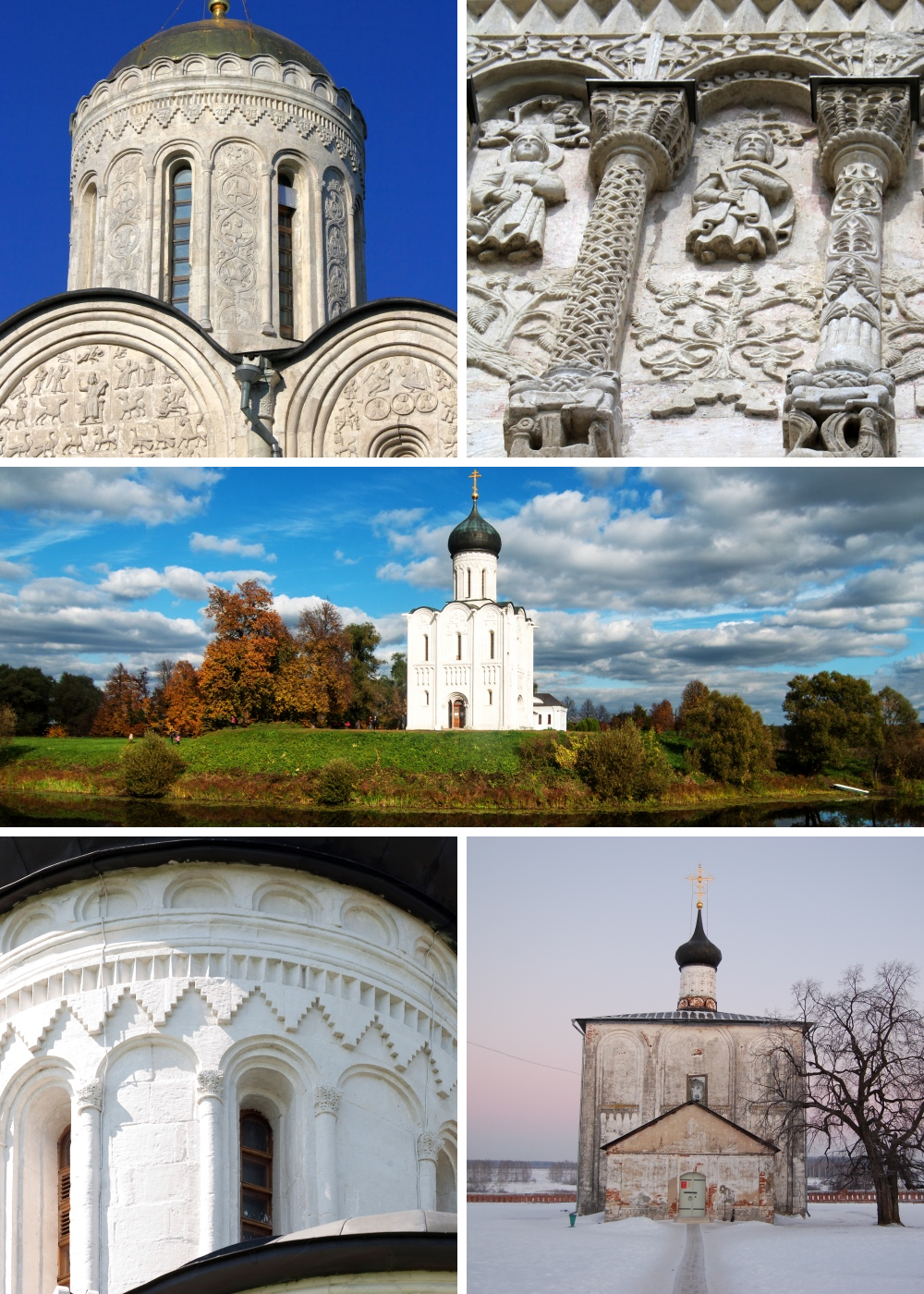
Listen first. Out here on the meadow, the loudest sound is often the grass moving in the wind. Your feet press into soft earth, and the path runs straight across open country toward a single white church. It stands alone, with almost nothing around it. Ahead, the pale stone catches the light. On a grey day it looks almost silver.
This is the Church of the Intercession on the Nerl. It stands near the village of Bogolyubovo, a short drive from the city of Vladimir, close to the point where the small Nerl River joins the larger Klyazma. Most visitors walk here across the meadow from the railway line and the village. Take your time on that walk. It is part of the experience. The church grows slowly in front of you, and its proportions change with every step.
The church dates from the twelfth century. Tradition places its construction in the 1160s, under Prince Andrei Bogolyubsky. He was one of the most ambitious rulers of medieval Rus, the early East Slavic lands that later grew into Russia, Ukraine and Belarus. Andrei moved the centre of his power away from Kyiv. He chose this forested north-eastern region instead, and he built Vladimir into a capital of white stone.
Why build here, in an empty floodplain? One explanation comes from medieval tradition. Andrei's son Izyaslav died after a military campaign against the Volga Bulgars, a powerful trading state further east on the Volga River. According to this account, the prince raised the church partly in memory of his son. Historians treat the link with some caution, but it is a story that people here repeat often.
The dedication matters too. The Feast of the Intercession honours the Virgin Mary as a protector who spreads her veil over the faithful. Andrei is closely associated with bringing this feast into wide use in his lands. So this small church is more than a pretty building. It is also a statement of faith and of political confidence, made by a prince who wanted his own holy places and his own celebrations.
Now look at the ground under the church. Here is the first surprise. The building stands on a raised base. Every spring, melting snow floods these meadows, sometimes for weeks. The builders knew this. They created a solid stone foundation and built up the earth around it, so the church rises above the water. In flood season, the church seems to stand on its own island, and its reflection lies in the water below.
The material is white limestone, cut into careful blocks. This local stone gave the buildings of the Vladimir and Suzdal region their pale, soft look. In 1992, UNESCO added this church to the World Heritage List. It belongs to a group known as the White Monuments of Vladimir and Suzdal. The listing also includes the great cathedrals in Vladimir itself.
The plan is simple. There is one dome, four interior pillars and three rounded apses at the eastern end, where the altar stands. Yet the church does not feel heavy. The walls rise tall and narrow. Thin vertical columns run up the facades and make the building look even taller. The top of each wall curves into a rounded arch. Together, these lines lift your eye toward the dome.
Walk closer now and look high on the walls. Here is the second surprise. The facades are covered with carving. In the centre of the upper arches you will find a seated figure playing a stringed instrument. This is King David, the psalm-singer of the Bible. Around him are lions, birds and other creatures. The message is one of harmony: all creation listens to the song of praise.
Look also for small carved faces of women, set in a row along the walls. Scholars have offered different readings of these faces. Some connect them with the Virgin Mary. Others see them as a decorative tradition with older roots. Whatever their meaning, they give the stone a human presence. They watch the meadow quietly, as they have for centuries.
The church you see today is not exactly the church Andrei built. Archaeologists working here in the twentieth century found traces of an open gallery that once surrounded the building on several sides. That gallery would have made the church look wider and lower. The onion dome on top is also a later shape. The original covering was probably a rounder, helmet-like dome, more typical of the twelfth century.
There is also a popular tale about the church's survival. Locals say that in later centuries, monks from a nearby monastery wanted to take it apart and reuse the stone for new construction. According to the story, the plan failed and the building was left alone. Treat this as folklore, not documented history. Still, it shows how close fragile buildings can come to disappearing, even when they are loved today.
If the church is open, step inside. The interior is calm and fairly plain. Light falls from the narrow windows in the drum below the dome. Notice how small the space feels compared with the tall outside walls. This contrast is part of the design. Outside, the church is built to be seen across open country. Inside, it is a quiet room for prayer.
Before you leave, walk once around the church and then step back toward the meadow. Turn and look again. Notice how the white stone changes with the sky, how the dome sits against the clouds, how the river moves behind the trees. Listen for the wind in the grass again. For more than eight hundred years, people have walked this path and turned to look back, just as you are doing now.
Key facts
What to look for
Practical tips
Common questions
Is there a free audio guide to Church of the Intercession on the Nerl?
Yes — the Lokali app narrates Church of the Intercession on the Nerl free of charge in 50+ languages. The guide runs about 6 minutes, covers the history, what to look for on site and practical tips, and works offline once downloaded.
Where is Church of the Intercession on the Nerl?
Church of the Intercession on the Nerl is near Vladimir, Russia, at 56.1963, 40.5614. Tap the map link on this page for directions from where you are.
What is Church of the Intercession on the Nerl known for?
Built in the twelfth century under Prince Andrei Bogolyubsky. Dedicated to the Feast of the Intercession of the Virgin.
What should you look for at Church of the Intercession on the Nerl?
King David playing a stringed instrument on the upper arches. Small carved faces of women along the walls. Thin vertical columns running up each facade.
What should you know before visiting Church of the Intercession on the Nerl?
Walk the meadow path from Bogolyubovo for the gradual approach. Wear waterproof shoes; the meadow path can be muddy.
When is the best time to visit Church of the Intercession on the Nerl?
Come in spring flood season to see the reflection.
On the map
Opens directions to Church of the Intercession on the Nerl from your location.
More to see in Vladimir



Hear Church of the Intercession on the Nerl in your language
The full story, narrated, in 50+ languages. Download it before you go and it plays offline, at your own pace, with no ticket and no tour group.