
Freer Gallery of Art
38.8883° N · 77.0275° W · Museum
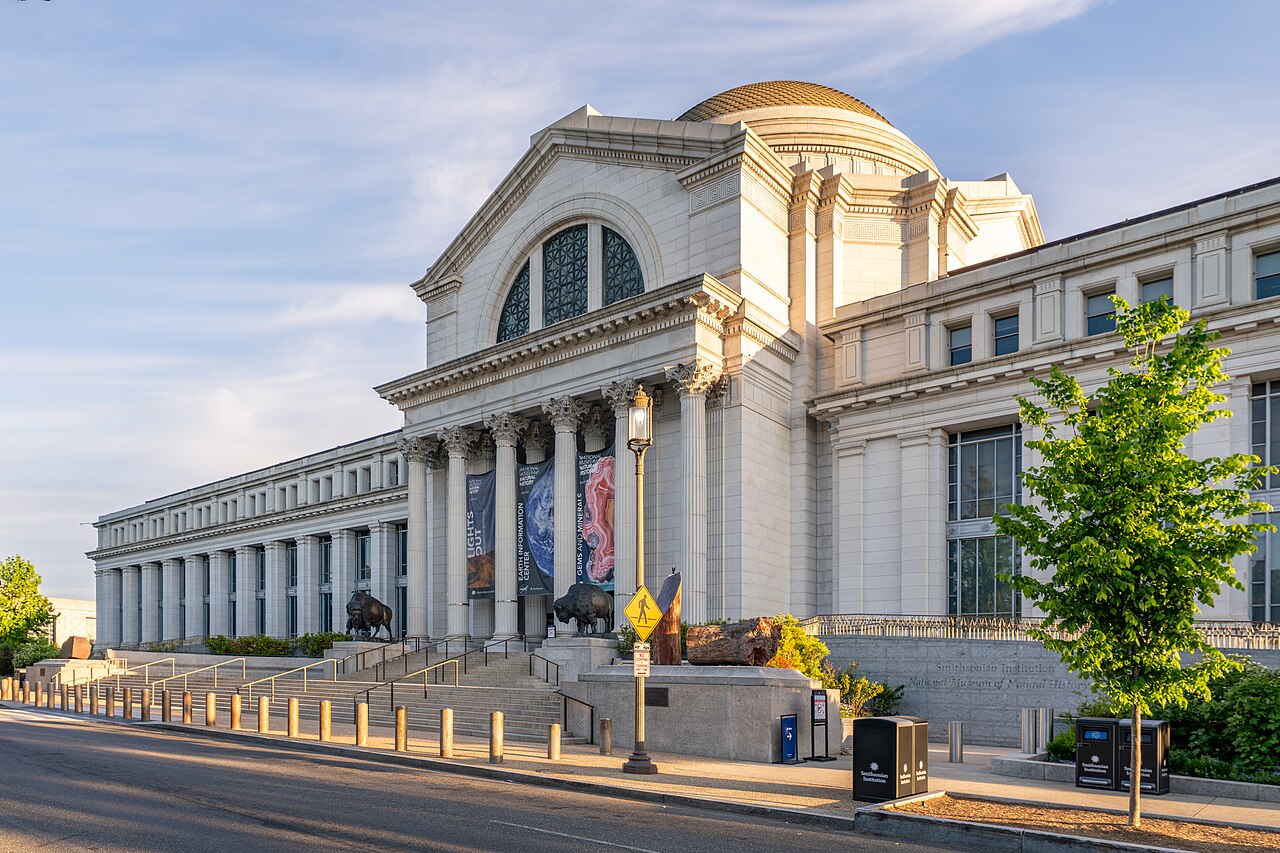
Photo: Wikimedia Commons contributor · CC BY-SA 3.0 · Wikimedia Commons
Freer Gallery of Art is an art museum in Washington, D.C. Opened in 1923 as the first Smithsonian fine art museum. The free Lokali audio guide runs 6 minutes.
✓ Published October 2026 · how we write these guides
Visitor facts
| Lokali audio guide | 6 min · free |
|---|---|
| Type | Museum |
| Location | Washington, United States |
| Coordinates | 38.8883, -77.0275 |
| Official website | freersackler.si.edu |
| Languages | 50+, in the Lokali app |
The story
Listen for a moment. The noise of the National Mall fades as you cross the threshold. Footsteps soften on stone. The air feels cooler, and the light turns gentle and even. Ahead, through tall windows, a quiet open courtyard sits at the centre of the building. Many visitors walk past this granite museum on their way to larger, louder neighbours. That is a pity, because what waits inside is one of the most personal collections in America.
You are standing in the Freer Gallery of Art, part of the Smithsonian Institution. It sits on the south side of the Mall, close to the red sandstone towers of the Smithsonian Castle. When it opened in 1923, it became the first Smithsonian museum devoted to fine art. That status surprises many people. In a city full of national galleries, this smaller building came first, and it began with the generosity of a single man.
That man was Charles Lang Freer. He was a Detroit industrialist who made his fortune in the late nineteenth century, largely through the manufacture of railroad cars. Wealth gave him freedom, and he used it to look closely at art. He did not collect to show off. He collected to understand. Over the years, his eye moved steadily eastward, from American paintings toward the ceramics, scrolls, and bronzes of Asia.
Here is the first surprise. Freer offered his collection to the nation in the first decade of the twentieth century, and the Smithsonian accepted it in 1906. But Freer did not live to see this building open. He died in 1919, several years before the doors opened to the public. Everything you see was shaped by his choices, yet he never walked these galleries himself.
Look at the building around you. It was designed by the architect Charles Platt in the style of an Italian Renaissance palazzo, a type of grand city house built for wealthy families in fifteenth-century Italy. The exterior is pale granite, calm and symmetrical. Inside, the galleries wrap around that central courtyard. The plan feels less like a monument and more like a private home, which suits a collection built by one person.
The second surprise is about rules. Freer attached firm conditions to his gift. For much of the museum's history, works from his collection could not be lent to other museums. Objects from outside the collection could not be shown beside them. This means many of these pieces have stayed in Washington for a century. If you want to see them, you must come here. The collection itself travels almost nowhere.
The heart of the museum, for many visitors, is the Peacock Room. Its story begins in London, not Washington. In the 1870s, a shipping magnate named Frederick Leyland commissioned a dining room to display his collection of Chinese porcelain. The architect Thomas Jeckyll designed the room with walls of wooden shelving. Then the American painter James McNeill Whistler was asked to make a few small changes to the decoration.
Whistler did far more than he was asked. While Leyland was away, the painter covered the room in deep blue-green and gold. He painted golden peacocks across the wooden shutters. Leyland was not pleased, and the two men argued bitterly about payment. Whistler answered with paint. On one wall he showed two fighting peacocks, one with coins at its feet, a portrait of the quarrel itself. The room became a record of an argument between an artist and his patron.
After Leyland died, the room was sold. Freer bought it in 1904 and had it taken apart and moved to his home in Detroit. After his own death, it came here and was rebuilt inside the museum. Freer filled the shelves with ceramics from Asia and the Middle East, rather than Leyland's porcelain. So the room you see is layered. It is London decoration, an American collector's taste, and a Washington home, all in one space.
Whistler matters to this museum beyond one room. He was a friend of Freer, and he encouraged the collector's growing interest in Asian art. Freer gathered a very large group of Whistler's paintings, prints, and drawings. He also collected American painters of his own time, such as Thomas Dewing and Abbott Thayer. Their soft, quiet canvases hang not far from Japanese screens, and the connection is intentional. Freer believed great art from different cultures could share the same feeling.
The Asian collection covers a very wide range. You may find Chinese jades and bronzes, Japanese folding screens, Korean ceramics, Buddhist sculpture, and illustrated manuscripts from South Asia and the Islamic world. Galleries change over time, because fragile works on paper and silk cannot stay in the light for long. So take your time in each room. A painted scroll you see today may rest in storage when you return.
The Freer does not stand alone today. An underground passage links it to the Arthur M. Sackler Gallery next door, which opened in the 1980s. Together the two buildings now form the National Museum of Asian Art. You can walk between them without stepping outside. It is an easy detail to miss, so look for signs pointing below ground if you want to continue your visit.
Before you leave, return to the courtyard if it is open. Stand still for a minute. Notice the sound of the city kept outside the granite walls, and the light falling on stone. This space was planned for slow looking, the kind Freer himself practised for decades. He wanted visitors to leave calmer than they arrived. As you walk back onto the Mall, glance at the plain granite front behind you. It gives away very little. Inside are blue-green walls, gold peacocks, and centuries of objects gathered by one careful eye. Carry that quiet with you a little longer, as the noise of the Mall comes back around you.
Key facts
What to look for
Practical tips
Common questions
Is there a free audio guide to Freer Gallery of Art?
Yes — the Lokali app narrates Freer Gallery of Art free of charge in 50+ languages. The guide runs about 6 minutes, covers the history, what to look for on site and practical tips, and works offline once downloaded.
Where is Freer Gallery of Art?
Freer Gallery of Art is in Washington, United States, at 38.8883, -77.0275. Tap the map link on this page for directions from where you are.
What is Freer Gallery of Art known for?
Opened in 1923 as the first Smithsonian fine art museum. Founder Charles Lang Freer made his fortune building railroad cars.
What should you look for at Freer Gallery of Art?
Golden peacocks painted across the Peacock Room's wooden shutters. Two fighting peacocks, one with coins at its feet. Pale granite facade modelled on an Italian Renaissance palazzo.
What should you know before visiting Freer Gallery of Art?
Check ahead whether the Peacock Room shutters will be open. Use the underground passage to reach the Sackler Gallery.
On the map
Opens directions to Freer Gallery of Art from your location.
More to see in Washington



Hear Freer Gallery of Art in your language
The full story, narrated, in 50+ languages. Download it before you go and it plays offline, at your own pace, with no ticket and no tour group.