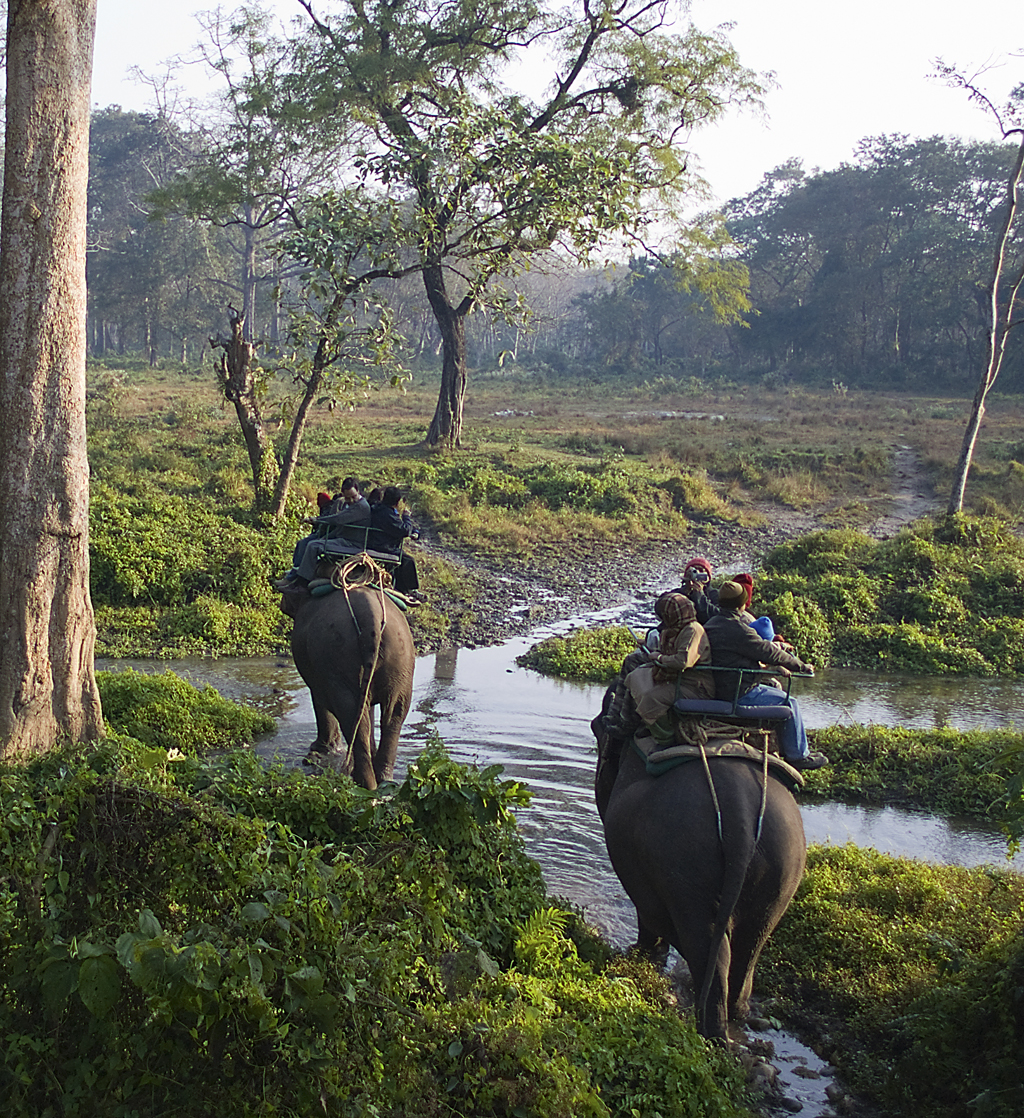
Jaldapara National Park
26.6286° N · 89.3775° E · National Park
Photo: JKDs · CC BY 2.0 · Wikimedia Commons
Jaldapara National Park is a national park in West Bengal, India. Protected as a wildlife sanctuary in 1941. The free Lokali audio guide runs 6 minutes.
✓ Published October 2026 · how we write these guides
Visitor facts
| Lokali audio guide | 6 min · free |
|---|---|
| Type | National Park |
| Location | West Bengal, India |
| Coordinates | 26.6286, 89.3775 |
| Official website | jaldapara.in |
| Languages | 50+, in the Lokali app |
The story
Listen first. Somewhere beyond the wall of grass, a bird calls twice and goes quiet. The air is heavy and green, and it smells of damp earth and river silt. Underfoot, the ground is soft from water that has moved across this land for a very long time. The grass in front of you may stand taller than a person. Somewhere inside it, an animal weighing as much as a small car may be standing very still and listening to you.
Welcome to Jaldapara National Park, in the Alipurduar district of northern West Bengal. This is the Dooars, a long belt of forest and floodplain at the foot of the Eastern Himalayas. The name Dooars is usually linked to the word for doors. These plains were once the gateways between the Bengal lowlands and the hills of Bhutan to the north. On a clear morning you may see those hills as a faint blue line on the horizon.
The land here is shaped by rivers. The Torsa is the main one. It comes down from the mountains, spreads wide across the plain, and changes course over the years. Smaller rivers, including the Malangi, also cross the park. Each monsoon, floodwater carries fresh silt across the ground. That silt feeds the grasslands, and the grasslands feed nearly everything else that lives here. The park depends on this cycle of flood and regrowth.
Jaldapara was first protected as a wildlife sanctuary in 1941. The main reason was the rhinoceros. For decades, hunting and the loss of grassland to farms and tea gardens had pushed the animal close to disappearing from this region. Protection came slowly, and it was not always successful. In 2012, the sanctuary was upgraded to a national park. Today the protected area covers a little over two hundred square kilometres of grass, forest and river.
The animal at the centre of this story is the greater one-horned rhinoceros. Look at its skin and you will understand its nickname, the armoured rhino. Thick folds hang over its shoulders and hips like plates of leather. It has a single horn, often blunt and worn rather than sharp. Here is something many visitors do not know: Jaldapara holds one of the largest rhino populations in India, second only to Kaziranga National Park in neighbouring Assam.
That recovery is one of the quiet successes of Indian conservation. Numbers here have grown over recent decades, through guarded patrols, grassland management, and long work by forest staff and local communities. Poaching remains a real threat, because rhino horn still sells illegally across borders. So when you see a rhino grazing calmly in the open, you are looking at the result of many years of protection. It is not something that happened by accident.
The tall grass has its own name in local English: elephant grass. The name makes sense once you see it. A full-grown elephant can almost disappear inside it. The grass grows fast after the rains and gives cover to hog deer, wild boar and the rhino itself. Forest staff manage parts of it with controlled burning, so fresh green shoots return. Those patches of short, bright new growth are often where the grazing animals gather.
And yes, there are elephants. Wild Asian elephants move through Jaldapara and the wider Dooars along old routes between forests. You may also see the gaur, sometimes called the Indian bison. It is a huge, dark wild cattle with pale lower legs that look as if it is wearing white socks. Sambar, barking deer and many kinds of birds live here too. Leopards are present, but they are shy, and most visitors never see one.
Bird watchers come here for the grassland species. One of the most prized is the Bengal florican, a rare bustard that depends on exactly this kind of open grass. In the breeding season, the male is known for a display flight, rising above the grass and dropping back down. Overhead you may hear hornbills, with their heavy, whooshing wingbeats. Along the rivers, look for kingfishers and herons standing still at the water's edge.
Most visitors explore on a jeep safari along forest tracks, with a guide from the forest department. Elephant-back rides have long been offered here as well, often in the early morning. Some travellers choose them because elephants can move into the grass, closer to the rhinos. Others choose not to ride, for animal-welfare reasons. Either way, it helps to keep your voice low and stay inside your vehicle. Patience is usually rewarded.
Inside the forest stands Hollong, a government tourist lodge raised on wooden stilts. It is named after the hollong tree, a tall forest tree of this region. Guests there often watch animals come to a nearby salt lick in the evening. A salt lick is a patch of mineral-rich ground that animals visit to lick the soil. It is one of the simplest ways to see wildlife here. Watching from a quiet spot often works better than searching.
Jaldapara is not an empty wilderness. People live all around it. Villages, tea gardens and farms press close to the park edge, and conflict with elephants and other animals is part of daily life for many families. North of the park, near the Bhutan border, lives the Toto community, one of the smallest tribal groups in India. The park's future depends as much on these neighbours as on any fence or patrol.
Now, before you move on, pause for a moment. Notice the light on the grass tips, the sound of wind moving through the stems, the smell of the river nearby. Somewhere in that green wall, something is aware of you. As you leave, look at the muddy edges of the track. A round, three-toed print may be pressed into the soil. That is a rhino, and it passed this way not very long ago.
Key facts
What to look for
Practical tips
Common questions
Is there a free audio guide to Jaldapara National Park?
Yes — the Lokali app narrates Jaldapara National Park free of charge in 50+ languages. The guide runs about 6 minutes, covers the history, what to look for on site and practical tips, and works offline once downloaded.
Where is Jaldapara National Park?
Jaldapara National Park is in West Bengal, India, at 26.6286, 89.3775. Tap the map link on this page for directions from where you are.
What is Jaldapara National Park known for?
Protected as a wildlife sanctuary in 1941. Upgraded to national park status in 2012.
What should you look for at Jaldapara National Park?
Thick armour-like skin folds on rhino shoulders. Three-toed rhino footprints pressed into muddy tracks. Gaur with pale lower legs like white socks.
What should you know before visiting Jaldapara National Park?
Book safaris early in the morning for active wildlife. Wear muted green or brown clothing on safari.
When is the best time to visit Jaldapara National Park?
Book safaris early in the morning for active wildlife.
On the map
Opens directions to Jaldapara National Park from your location.
More to see in West Bengal

Hear Jaldapara National Park in your language
The full story, narrated, in 50+ languages. Download it before you go and it plays offline, at your own pace, with no ticket and no tour group.