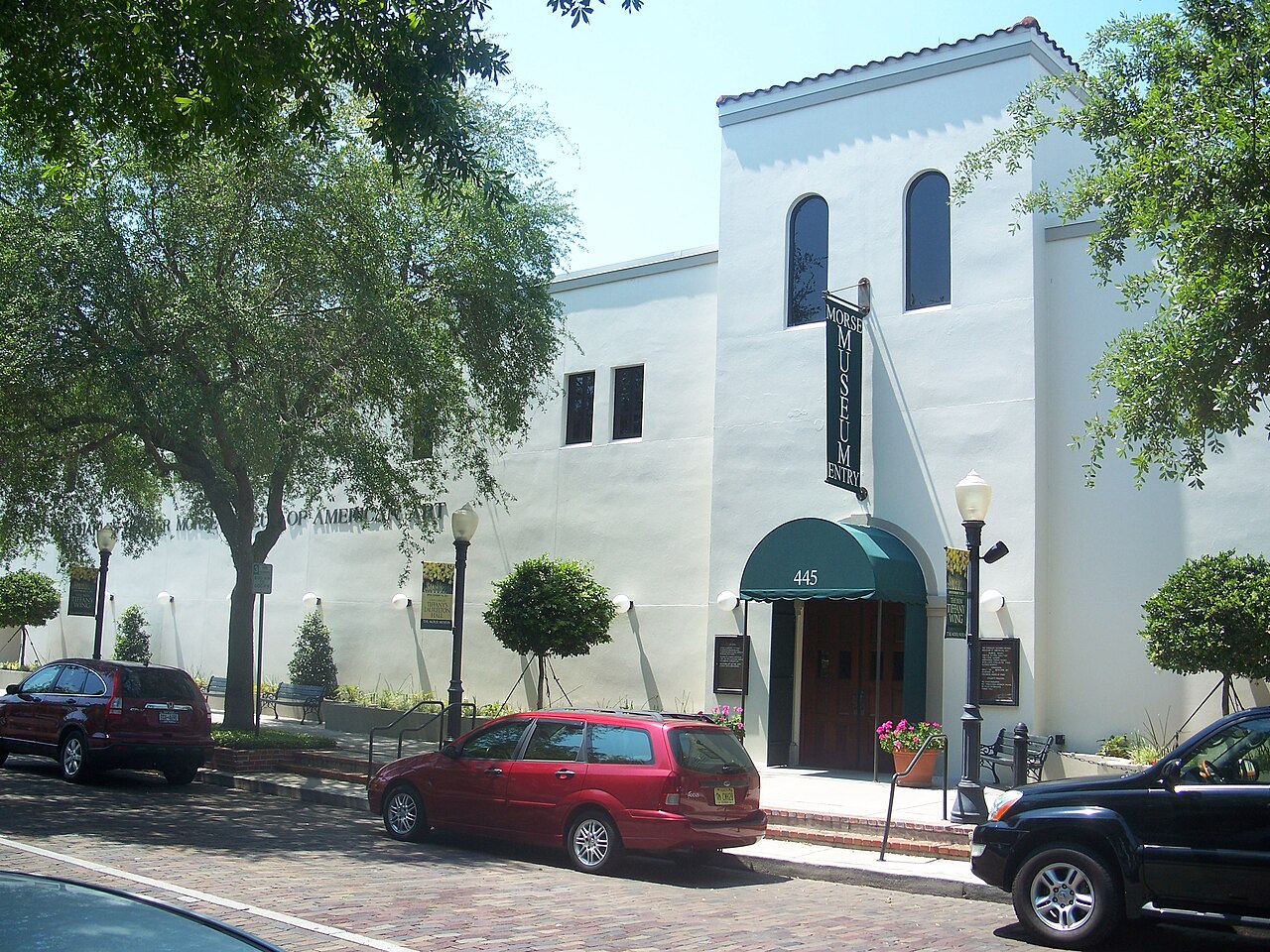
The Charles Hosmer Morse Museum of American Art
28.5945° N · 81.3364° W · Museum
The Charles Hosmer Morse Museum of American Art is a museum in Winter Park, United States. Houses the world's most comprehensive collection of Tiffany glass and lamps, plus American decorative arts. Most visitors spend 1–2 hours here. The free Lokali audio guide runs 5 minutes.
✓ Verified August 2026 · how we write these guides
Visitor facts
| Time needed | 1–2 hours |
|---|---|
| Lokali audio guide | 5 min · free |
| Type | Museum |
| Best for | Editors' pick |
| Location | Winter Park, United States |
| Coordinates | 28.5945, -81.3364 |
| Languages | 45, in the Lokali app |
The story
Inside, the light does the talking. Glass glows from the walls. The colors are deep blue, green, and gold. The room is quiet. People speak in low voices. They do this near things that feel fragile and rare. This is a museum built around one idea. It is built around light and color, held inside glass.
The Morse Museum sits in Winter Park. This is a small city right beside Orlando. The museum holds a large collection. It is the work of the American artist Louis Comfort Tiffany. Tiffany worked with glass above all. He made windows, lamps, and vases. Each one turned plain light into something deep and warm.
Louis Comfort Tiffany lived from 1848 to 1933. He came from a famous jewelry family in New York. But gems alone did not hold him. He wanted to work with color and with glass. He spent his whole life on it. He kept asking one question. How do you make glass shine from within?
Look at the glass vases in the cases. Tiffany called his blown glass Favrile. The surfaces shimmer in the light. Some look like oil floating on water. Some look like peacock feathers. The color is not painted on top. Instead, he found ways to fold it into the glass itself. The effect still surprises people today. Move your head from side to side. The colors shift and slide as you move.
The heart of the museum is the Tiffany Chapel. Tiffany designed this chapel interior for a great fair. The fair was held in Chicago in 1893. It is a full room of mosaic, glass, and light. A great cross hangs above. The columns shine, covered with tiny tiles. Stand in the center. Turn slowly and look all around.
Now look up at the chapel ceiling and arches. The surfaces are covered in small pieces. There is glass, and there is colored stone. Each piece catches the light at its own angle. From far away, the pieces form pictures and patterns. Up close, they break apart again. They become thousands of separate points of color.
Tiffany built a grand home on Long Island. He called it Laurelton Hall. It was filled with his own art. In 1957 a fire destroyed much of the house. The founders of this museum heard the news. They traveled north and saved what they could. Some of those rescued pieces now stand here, in the rooms around you.
Move through the rooms and watch the windows. Tiffany made scenes in leaded glass. He showed flowers, gardens, and wide landscapes. He used glass of many thicknesses. Thick glass gives deep shadow. Thin glass lets through bright sky. So the picture is never fixed. It shifts as the daylight outside the building changes. In the morning the scenes feel cool. By afternoon they warm and deepen.
The lamps are gentle and warm. Their shades are built from small glass pieces. The pieces are shaped like flowers, leaves, and insects. When the lamps are lit, they glow. They throw soft pools of color onto the table below. These lamps carried Tiffany's name far. They brought his art into many ordinary homes.
The museum carries the name of Charles Hosmer Morse. He helped build the town of Winter Park. His granddaughter was Jeannette Genius McKean. She started the museum in 1942. She worked with her husband, Hugh McKean. Together they gathered the Tiffany works. They did this patiently, over many long years.
The collection is more than Tiffany alone. There are American paintings here. There is pottery, and there is jewelry. Most of it dates from the late nineteenth and early twentieth centuries. Together these works show a moment in time. American artists were reaching for new beauty. They sought it even in everyday things. A plain bowl or a simple lamp could be made into art.
Take a slow path through the rooms. Let your eyes adjust to the careful light. The light is kept low on purpose. It protects the old glass from harm. It also lets the colors do their work. In the quiet, small details appear. A single petal. A curl of metal. A thin line of gold. Give your eyes a moment. The longer you look, the more you find.
Tiffany believed that color and light could lift the spirit. Much of his glass nearly vanished. Fire and time almost took it all. What survives now glows in these quiet rooms. Before you go, stand once more in the chapel. Let the colored light fall over you. Remember how close it came to being lost.
Key facts
What to look for
Practical tips
Common questions
How long do you need at The Charles Hosmer Morse Museum of American Art?
Plan 1–2 hours. That is the time most visitors spend at The Charles Hosmer Morse Museum of American Art. The free Lokali audio guide adds about 5 minutes of narration you can listen to as you walk, so it fits inside your visit rather than adding to it.
Is there a free audio guide to The Charles Hosmer Morse Museum of American Art?
Yes — the Lokali app narrates The Charles Hosmer Morse Museum of American Art free of charge in 50+ languages. It covers the history, what to look for on site and practical tips, and it works offline once downloaded.
Where is The Charles Hosmer Morse Museum of American Art?
The Charles Hosmer Morse Museum of American Art is in Winter Park, United States, at 28.5945, -81.3364. Tap the map link on this page for directions from where you are.
What should you know before visiting The Charles Hosmer Morse Museum of American Art?
Allow at least ninety minutes for the full collection.
What is The Charles Hosmer Morse Museum of American Art known for?
Holds the most comprehensive Louis Comfort Tiffany collection.
What is the best time to visit The Charles Hosmer Morse Museum of American Art?
The museum is small and rarely crowded; you can linger over individual pieces.
On the map
Opens directions to The Charles Hosmer Morse Museum of American Art from your location.
More to see in Winter Park

Hear The Charles Hosmer Morse Museum of American Art in your language
The full story, narrated, in 50+ languages. Download it before you go and it plays offline, at your own pace, with no ticket and no tour group.