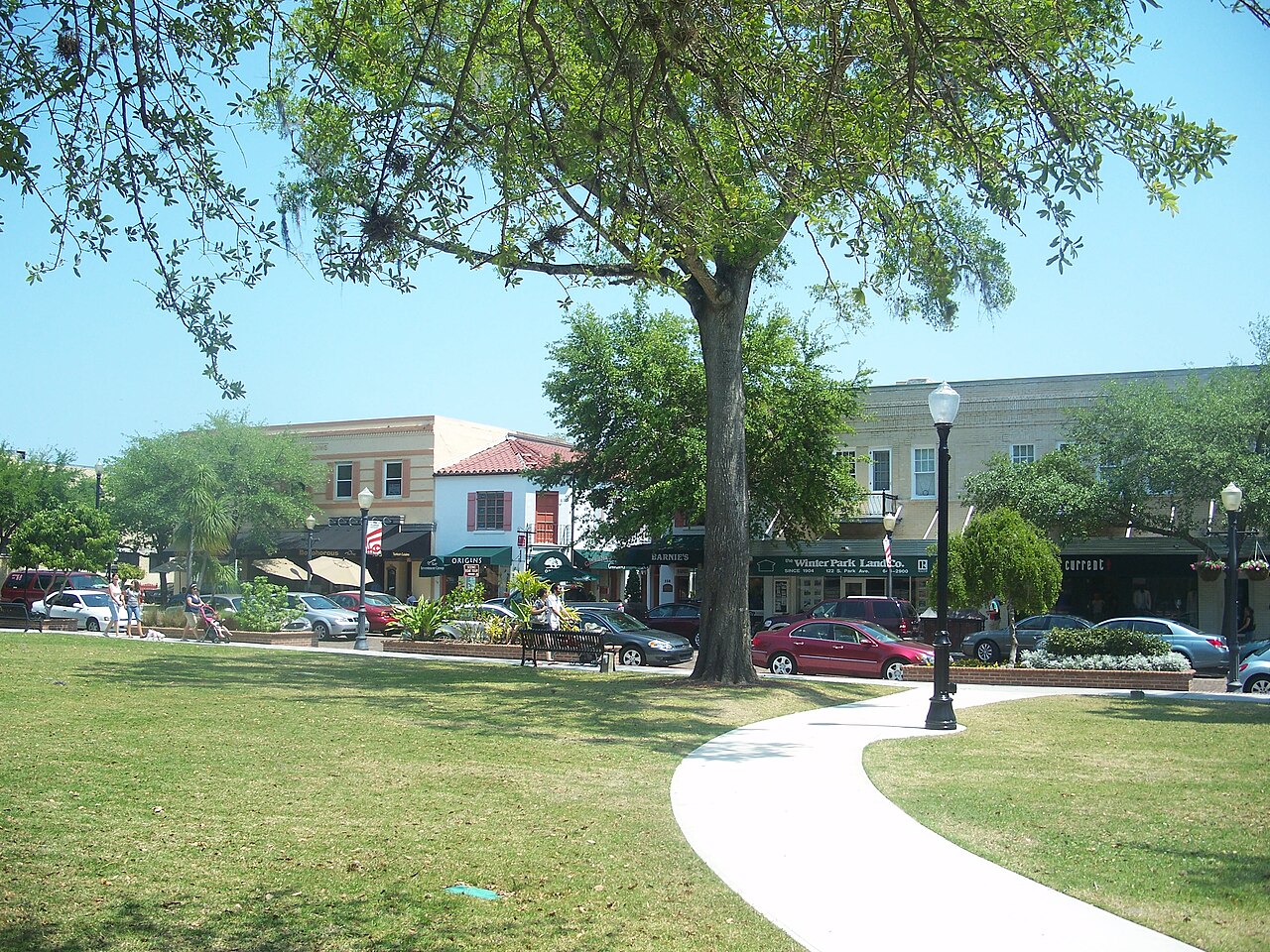
Winter Park is a neighborhood in Winter Park, United States. Upscale residential and commercial district north of downtown, known for tree-lined streets, lakeside parks, boutique shops, and galleries. Most visitors spend 1–3 hours here. The free Lokali audio guide runs 5 minutes.
✓ Verified August 2026 · how we write these guides
Visitor facts
| Time needed | 1–3 hours |
|---|---|
| Lokali audio guide | 5 min · free |
| Type | Neighborhood |
| Best for | Romantic |
| Location | Winter Park, United States |
| Coordinates | 28.5961, -81.3380 |
| Languages | 45, in the Lokali app |
The story
Brick streets run beneath arching shade trees. A small train of open boats glides slowly across a quiet lake. The air smells of water, cut grass, and warm pavement. Birdsong drifts from the gardens. You have come to Winter Park, a town built for slow afternoons, sitting just north of the busy roads and highways of Orlando.
Winter Park began in the 1880s. Developers from the North laid out a whole town here as a winter resort, a warm place where wealthy families could escape the cold of the northern states. They named the streets, planted trees along them, and built around a chain of small connected lakes. That early plan still shapes the quiet, orderly town you walk through today.
Park Avenue is the main street and the heart of the town. It runs for several blocks, lined with shops, cafes, and old storefronts under shade. The road is paved in red brick. A long green park stretches along one side of it, with a railway line running quietly at its far edge. People walk slowly here, in no rush. The street was made for strolling, not for traffic.
The town holds a remarkable museum, the Charles Hosmer Morse Museum of American Art. It keeps the largest collection found anywhere of work by Louis Comfort Tiffany, the celebrated American designer of stained glass. His glass glows with deep, layered color, lit from behind, showing flowers, landscapes, and human figures rendered in fine detail. The rooms are kept dim so the windows can do the work.
The museum's greatest treasure is a chapel interior that Tiffany designed for a world's fair held in 1893. After the fair closed, the chapel was moved, stored, and nearly lost to neglect over the following years. It was later rescued, carefully restored, and rebuilt whole inside the museum. Visitors step into a complete room of glass mosaic, hanging lamps, and colored light.
The Winter Park Scenic Boat Tour leaves from a small wooden dock on Lake Osceola. The open electric boats carry you through a chain of lakes joined by narrow canals. Those canals were dug by hand long ago, cut through banks now lined with cypress and palm. Large houses sit back among the trees along the shore, half hidden by greenery and shadow.
Out on the water, the guide points out birds, plants, and the grand homes of the lakeside. Turtles sun themselves in rows on fallen logs. Herons stand motionless in the shallows, watching for fish. The canals are narrow and deeply shaded, almost like green tunnels, before each one opens out again onto a wide, bright stretch of open lake.
Winter Park is also home to Rollins College, one of the oldest colleges in the state of Florida. Its campus sits beside Lake Virginia, with buildings in a Spanish style arranged around green courtyards and walkways. The college has shaped the character of the town for well over a century, bringing students, music, lectures, and ideas into its quiet streets.
The town keeps a calm and settled feeling throughout. Old oak trees arch right over the side streets, meeting in the middle. Spanish moss hangs in gray strands from the branches. Many of the homes have stood for generations and are cared for with pride. The pace is gentle here, a clear contrast to the theme parks and crowded highways that surround the wider Orlando area.
Park Avenue holds small surprises for those who slow down. Narrow walkways lead off the main street into hidden courtyards, with fountains, benches, and quiet tables tucked out of sight. Several galleries and small museums sit within an easy walk of one another. The whole district can be explored comfortably on foot over a single unhurried afternoon.
Seasons here are soft but real. Winter brings mild, clear, sunny days, the very weather that drew the town's first visitors south so long ago. The trees stay green through the cool months. The lakes stay warm enough for the birds to remain. It is easy to understand why people once traveled so far to spend the cold part of the year in this place.
As the light turns golden over the lake, the boats return one by one to the dock. The brick streets settle slowly into evening. Winter Park does not ask you to hurry through it. Instead it asks you to slow down and notice small things. That is a rare and welcome request to find so close to a great modern city.
Key facts
What to look for
Practical tips
Common questions
How long do you need at Winter Park?
Plan 1–3 hours. That is the time most visitors spend at Winter Park. The free Lokali audio guide adds about 5 minutes of narration you can listen to as you walk, so it fits inside your visit rather than adding to it.
Is there a free audio guide to Winter Park?
Yes — the Lokali app narrates Winter Park free of charge in 50+ languages. It covers the history, what to look for on site and practical tips, and it works offline once downloaded.
Where is Winter Park?
Winter Park is in Winter Park, United States, at 28.5961, -81.3380. Tap the map link on this page for directions from where you are.
What should you know before visiting Winter Park?
Stroll the brick length of Park Avenue.
What is Winter Park known for?
Winter Park was founded in the 1880s as a resort.
What is the best time to visit Winter Park?
Park Avenue is the main shopping street—walk it slowly to notice the historic storefronts and courtyards.
On the map
Opens directions to Winter Park from your location.
Reference
More to see in Winter Park

Hear Winter Park in your language
The full story, narrated, in 50+ languages. Download it before you go and it plays offline, at your own pace, with no ticket and no tour group.