
Croatian Museum of Naïve Art
45.8154° N · 15.9733° E · Museum
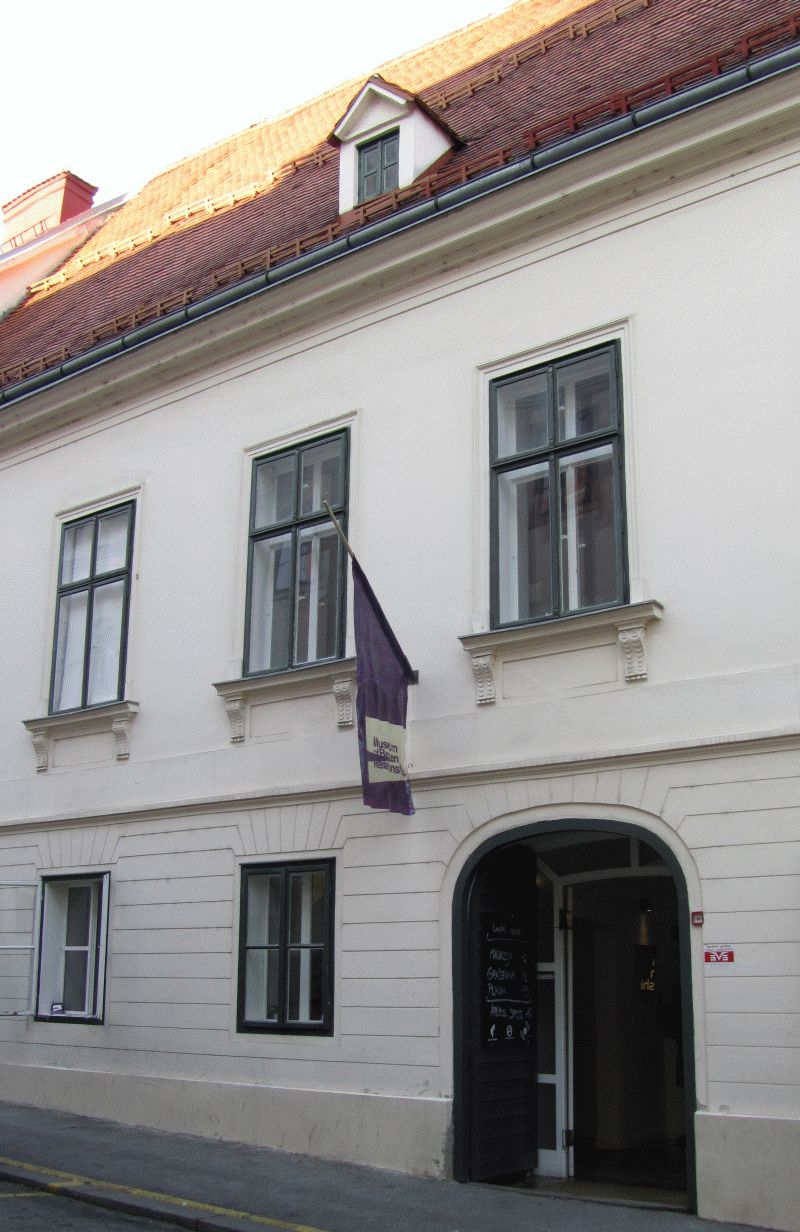
Photo: Suradnik13 · CC BY-SA 4.0 · Wikimedia Commons
Croatian Museum of Naïve Art is an art museum in Zagreb, Croatia. Founded in 1952 as the Peasant Art Gallery. The free Lokali audio guide runs 6 minutes.
✓ Published October 2026 · how we write these guides
Visitor facts
| Lokali audio guide | 6 min · free |
|---|---|
| Type | Museum |
| Location | Zagreb, Croatia |
| Coordinates | 45.8154, 15.9733 |
| Official website | hmnu.hr |
| Languages | 50+, in the Lokali app |
The story
Listen for a moment before you go in. Up here in Zagreb's Upper Town the traffic of the lower city fades. You hear footsteps on old paving, a church bell somewhere close, perhaps a tram far below. The street is narrow, and the buildings are pale and quiet. Inside one of them, a few steps from Saint Mark's Square, is a collection of paintings made by farmers, shepherds and village craftsmen. Many of them never trained at an art academy.
This is the Croatian Museum of Naïve Art. It is often described as one of the first museums in the world dedicated to this kind of painting. It began in 1952 under a modest name, the Peasant Art Gallery. Over the following decades it grew, changed its name, and became the national home of a movement that brought Croatian village painters to galleries far beyond Croatia. The collection now runs to well over a thousand works.
First, a word about the term naïve art. It does not mean simple or careless art. It describes artists who taught themselves, outside the academies and outside the rules of perspective and anatomy. Their trees may be too round. Their cows may be too large for the barn. Their skies may hold a sun and a moon together. These choices are not mistakes. They come from a different way of seeing, closer to memory and feeling than to measurement.
The story begins in a small village called Hlebine, in the Podravina region of northern Croatia, near the Hungarian border. In the early 1930s the Zagreb painter Krsto Hegedušić spent time there. He was a trained, politically engaged artist. He belonged to a group called Zemlja, which means Earth. The group wanted art to speak about the lives of ordinary working people. In Hlebine, Hegedušić met young villagers who were already drawing and painting. He encouraged them.
The best known of those young men was Ivan Generalić. Another was Franjo Mraz, and later came Mirko Virius. They showed their work alongside the Zemlja group in Zagreb, and city audiences were surprised. Here were paintings of village life made from the inside, by people who lived it. Generalić in particular went on to become the central figure of what is now called the Hlebine School. His name will follow you through these rooms.
As you walk, look closely at the surfaces. Many of the paintings here are not on canvas at all. They are painted on glass, and they are painted from behind. This technique is called reverse glass painting. The artist must work backwards. The final details, the highlights and outlines, go on first. The background goes on last. You are looking at the painting through the glass, so the colours keep a deep, wet shine.
This method was not invented by these painters. Painting on glass has a long folk tradition in Central Europe, where small religious pictures were made for village homes. The Hlebine painters took that old craft and used it for something new: winter fields, harvest work, village weddings, floods, funerals. The colours can be very bright, but the subjects are often serious. Poverty, hard labour and loss appear here as often as celebration.
Not every artist in this museum came from Hlebine. One painter you will likely notice is Ivan Rabuzin. His work looks very different. He painted soft, rounded hills, trees like clouds, and flowers arranged in calm, almost musical patterns. There is very little drama in his landscapes. They feel like a dream of the countryside rather than a record of it. Many visitors stop longest in front of his pictures.
Another name to watch for is Ivan Lacković Croata. He worked mostly in fine, detailed drawing and painting, often of snowy villages with thin, dark trees. His winters are quiet and cold, and the lines are very precise. Compare his work with the earlier Hlebine paintings. You can see how the movement changed over the decades, from a village experiment into a recognised artistic tradition with its own masters and its own students.
The collection is not only Croatian. Over the years the museum also gathered works by self-taught artists from other countries. These are a smaller part of the collection, but they remind you that naïve art was never one village's secret. In the middle of the twentieth century, collectors and critics across Europe and beyond took a strong interest in untrained painters. Zagreb, with Hlebine nearby, became one of the most important centres of that interest.
The building itself deserves a moment. The museum occupies an older palace in the Upper Town, with thick walls and a calm, residential scale. It is not a large museum. The rooms are intimate, and you can see the main collection without rushing. That small size suits the art. These paintings were often made for kitchens and village houses, not for grand halls. Here they hang at a distance you can study without strain.
When you step back outside, you are in the oldest part of the city. Saint Mark's Church, with its tiled roof of coloured patterns, is only a few steps away. The Lotrščak Tower and the funicular down to the lower town are a short walk as well. It is worth noticing how this neighbourhood connects with the paintings. Both carry the same mix of tradition, small scale, and bright colour against grey stone.
Before you leave, stand still for a moment in the street. Look at the rooftops, the chimneys, the light on the walls. Then think of the painters you just met. Most of them began with nothing but a village, a season, and the wish to record what they saw. As you walk away, you may notice that the world around you looks a little more like one of their pictures. The colours seem slightly brighter, and the small details seem more important.
Key facts
What to look for
Practical tips
Common questions
Is there a free audio guide to Croatian Museum of Naïve Art?
Yes — the Lokali app narrates Croatian Museum of Naïve Art free of charge in 50+ languages. The guide runs about 6 minutes, covers the history, what to look for on site and practical tips, and works offline once downloaded.
Where is Croatian Museum of Naïve Art?
Croatian Museum of Naïve Art is in Zagreb, Croatia, at 45.8154, 15.9733. Tap the map link on this page for directions from where you are.
What is Croatian Museum of Naïve Art known for?
Founded in 1952 as the Peasant Art Gallery. Often called among the world's first naïve art museums.
What should you look for at Croatian Museum of Naïve Art?
Paintings on glass, worked in reverse from behind. Ivan Rabuzin's cloud-shaped trees and rounded hills. Snowy village scenes with thin, dark winter trees.
What should you know before visiting Croatian Museum of Naïve Art?
Combine your visit with nearby Saint Mark's Square. Ride the funicular up from the lower town.
When is the best time to visit Croatian Museum of Naïve Art?
Visit on a weekday morning for quieter rooms.
On the map
Opens directions to Croatian Museum of Naïve Art from your location.
More to see in Zagreb


Hear Croatian Museum of Naïve Art in your language
The full story, narrated, in 50+ languages. Download it before you go and it plays offline, at your own pace, with no ticket and no tour group.