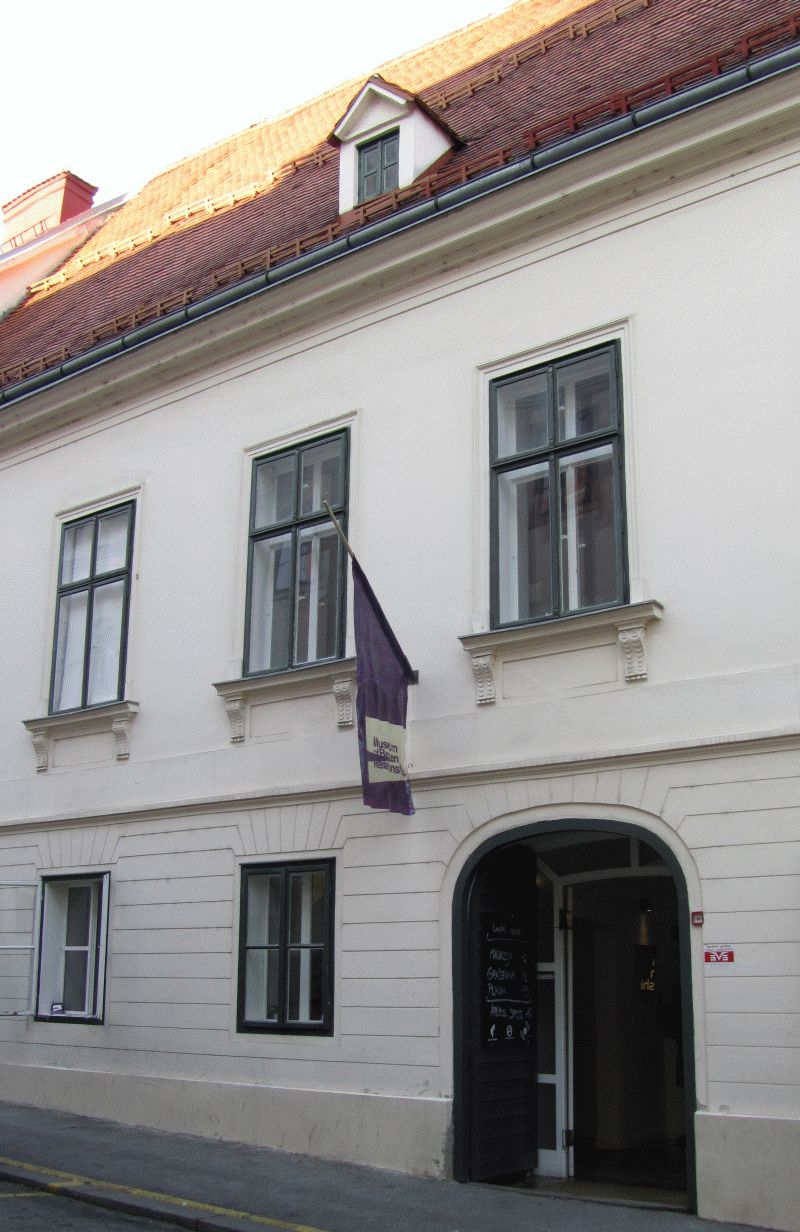
Museum of Broken Relationships
45.8152° N · 15.9736° E · Museum
Photo: Waerfelu · CC BY 3.0 · Wikimedia Commons
Museum of Broken Relationships is a specialized museum in Zagreb, Croatia. Founded by Zagreb artists Olinka Vištica and Dražen Grubišić. The free Lokali audio guide runs 7 minutes.
✓ Published October 2026 · how we write these guides
Visitor facts
| Lokali audio guide | 7 min · free |
|---|---|
| Type | Museum |
| Location | Zagreb, Croatia |
| Coordinates | 45.8152, 15.9736 |
| Official website | brokenships.com |
| Languages | 50+, in the Lokali app |
The story
Listen for a moment before you go inside. On these steep Upper Town streets, footsteps echo off old stone walls, and the air often carries the smell of coffee and damp cobbles. Then you push open the door. Inside, the light is soft and the rooms are quiet. People here tend to speak in low voices, as if they were in a chapel. In a way, they are. Every object in these rooms once meant the world to someone, and then it stopped meaning anything at all.
This is the Museum of Broken Relationships. The idea is simple, and that is why it works. Ordinary people from around the world donate an object left over from a love that ended. With the object, they send a short story. Some stories run to a single line. Others fill a page. The donors stay anonymous. You never learn their names. You only learn what they kept, and why they finally decided to let it go.
The museum began with a breakup of its own. Two Zagreb artists, Olinka Vištica and Dražen Grubišić, were a couple. When their relationship ended in the early 2000s, they faced a familiar question. What do you do with all the things you shared? Half joking, they wondered if those things deserved a museum. The joke turned into a project. Friends gave objects. Strangers followed. Soon the two former partners were building something together that neither had planned.
At first, the collection had no permanent home. It travelled as an exhibition, from city to city and country to country. That travel matters to what you see today. In each new place, local people added their own objects and stories. So the collection grew in many languages and from many cultures. A love letter from one continent may sit beside a kitchen tool from another. By 2010, the collection had settled here in Zagreb, in an old palace in the historic Upper Town.
Here is the first surprise for many visitors. This is not a sad museum. Yes, there is grief in these rooms. But there is also anger, relief, dark humour, and a lot of plain honesty. One of the best-known objects is an axe. According to its story, the donor used it to chop up the furniture of a partner who had left. Visitors usually laugh when they read it... and then they go quiet, because they recognise the feeling.
Other objects are much gentler. You will find wedding dresses, children's toys, mobile phones, keys to old apartments, and handwritten notes. Some pieces look like rubbish at first. A worn shoe. A small figure from a fairground. A glass jar. The label beside each one changes everything. A few lines of text turn a cheap item into a whole life. Take your time with the labels. They are the real exhibits here.
Not every story is about romance. This is the second surprise. Some objects come from broken friendships, from family members who drifted apart, or from loss through illness and war. Croatia lived through war in the 1990s, and some stories carry that history quietly. Other stories describe the end of a relationship with a place, a home, or even a former version of oneself. The word relationship, here, covers almost any bond that a person has outgrown or lost.
Notice how the rooms are arranged. The displays are clean and simple, with white walls and careful lighting. Nothing is dramatic. The curators let the objects and words do the work. This restraint is deliberate. It gives each story room to breathe, and it treats the donors with respect. The design also means you never know what is around the corner. A funny story may sit right next to a story that stops you in your tracks.
The idea proved powerful far beyond Croatia. The museum received a European award for innovation, given by the European Museum Forum, not long after it opened here. Journalists and writers from many countries have visited. The collection keeps growing, because people keep sending new objects. That is unusual for a museum. Most museums collect the past. This one collects something closer to the present, and the present keeps breaking.
Why do people donate? Many stories give a hint. For some donors, sending the object is a small ceremony. It is a way to close a chapter without throwing a memory in the bin. The object leaves their home, but it is not destroyed. Instead, strangers read the story and understand it. There is comfort in that. Your private pain becomes part of a shared human record. As you walk, you may feel that you are taking part in that ceremony too.
The building itself is worth a look. The museum sits in a baroque palace in Gornji Grad, the old Upper Town of Zagreb. Baroque is the ornate style of the seventeenth and eighteenth centuries, known for grand proportions and decoration. The thick walls keep the rooms cool and quiet. Outside, the narrow streets around you lead to some of the oldest parts of the city. Saint Mark's Church, with its colourful tiled roof, stands only a short walk away.
Before you leave, spend a few minutes in the area around the entrance. The museum has a small café and a shop, and both are good places to sit with what you have read. Many visitors talk about their own past relationships here, sometimes with people they have just met. If you hear a loud bang around midday, do not worry. A cannon fires every day at noon from the nearby Lotrščak Tower, an old Zagreb tradition.
When you step back outside, look at the street with fresh eyes. Every person walking past carries objects like the ones you have just seen. A ring in a drawer. A ticket in a wallet. A song they still cannot hear. The museum does not tell you how to feel about any of that. It simply reminds you that endings are part of every life. Take a slow breath of the Upper Town air, and notice what you are carrying with you as you walk on.
Key facts
What to look for
Practical tips
Common questions
Is there a free audio guide to Museum of Broken Relationships?
Yes — the Lokali app narrates Museum of Broken Relationships free of charge in 50+ languages. The guide runs about 7 minutes, covers the history, what to look for on site and practical tips, and works offline once downloaded.
Where is Museum of Broken Relationships?
Museum of Broken Relationships is in Zagreb, Croatia, at 45.8152, 15.9736. Tap the map link on this page for directions from where you are.
What is Museum of Broken Relationships known for?
Founded by Zagreb artists Olinka Vištica and Dražen Grubišić. The idea grew from the founders' own breakup.
What should you look for at Museum of Broken Relationships?
The axe used to chop up an ex's furniture. Short handwritten-style stories beside each object. Ordinary household items with surprisingly powerful labels.
What should you know before visiting Museum of Broken Relationships?
Allow time to read every label slowly. Visit early to enjoy the quieter, reflective rooms.
When is the best time to visit Museum of Broken Relationships?
Visit early to enjoy the quieter, reflective rooms.
On the map
Opens directions to Museum of Broken Relationships from your location.
More to see in Zagreb


Hear Museum of Broken Relationships in your language
The full story, narrated, in 50+ languages. Download it before you go and it plays offline, at your own pace, with no ticket and no tour group.