Radegast Station is a late-19th-century railway station with distinctive Art Nouveau details, now a museum and cultural space. It is in Łódź, Poland. Most visitors spend 1–1.5 hours here. The free Lokali audio guide runs 5 minutes.
✓ Verified August 2026 · how we write these guides
Visitor facts
| Time needed | 1–1.5 hours |
|---|---|
| Lokali audio guide | 5 min · free |
| Type | Historic Site |
| Best for | History |
| Location | Łódź, Poland |
| Coordinates | 51.7603, 19.4186 |
| Languages | 45, in the Lokali app |
The story
A small wooden station stands at the northeastern edge of Łódź. The platform is short. The building is plain, the kind of country stop a traveler might pass without a glance. Read the name on the wall: Radegast. From this quiet place, tens of thousands of people were sent to their deaths.
In 1939, German forces occupied Łódź and renamed the city Litzmannstadt. In the spring of 1940, they sealed more than 150,000 Jewish residents into a ghetto in the Bałuty district, a poor quarter of wooden houses south of here. The Łódź Ghetto became the second largest in occupied Europe, after Warsaw. Hunger, cold, and disease killed tens of thousands of people inside its fences.
Radegast was the ghetto's gate to the railway. Through this goods station came the flour, potatoes, and coal that kept the ghetto barely alive, and out went the uniforms, boots, and goods that its workshops produced for the German war economy. Work, the ghetto's leaders hoped, would be the price of survival. German police guarded the ghetto fence, and the station lay just outside it, close enough for those inside to hear the trains.
In the autumn of 1941, the platform saw arrivals. About twenty thousand Jews from Vienna, Prague, Berlin, and other Western cities stepped off trains here, carrying suitcases into a world they could not imagine. About five thousand Roma from the Austrian Burgenland were forced into a separate camp inside the ghetto.
In January 1942, the direction reversed. The Germans began deportations, and the destination was Chełmno, a village northwest of Łódź where the SS murdered people in sealed gas vans. The deportees were told they were going to farm work in the countryside. They were ordered to gather with small luggage, and freight cars waited here. Almost no one sent to Chełmno survived.
Through 1942 the transports continued, wave after wave. In September of that year came the cruelest order: the ghetto had to give up its children under ten and its elderly. Parents stood on this ground and lost their sons and daughters. There are no words that carry such a thing. The place itself must do it.
In the summer of 1944, with the war ending, the Germans liquidated the ghetto. In August, the last great transports rolled from this platform to Auschwitz-Birkenau. Historians estimate that, in total, about 145,000 people were deported through Radegast. Of the roughly 200,000 who passed through the Łódź Ghetto, only a few thousand survived the war.
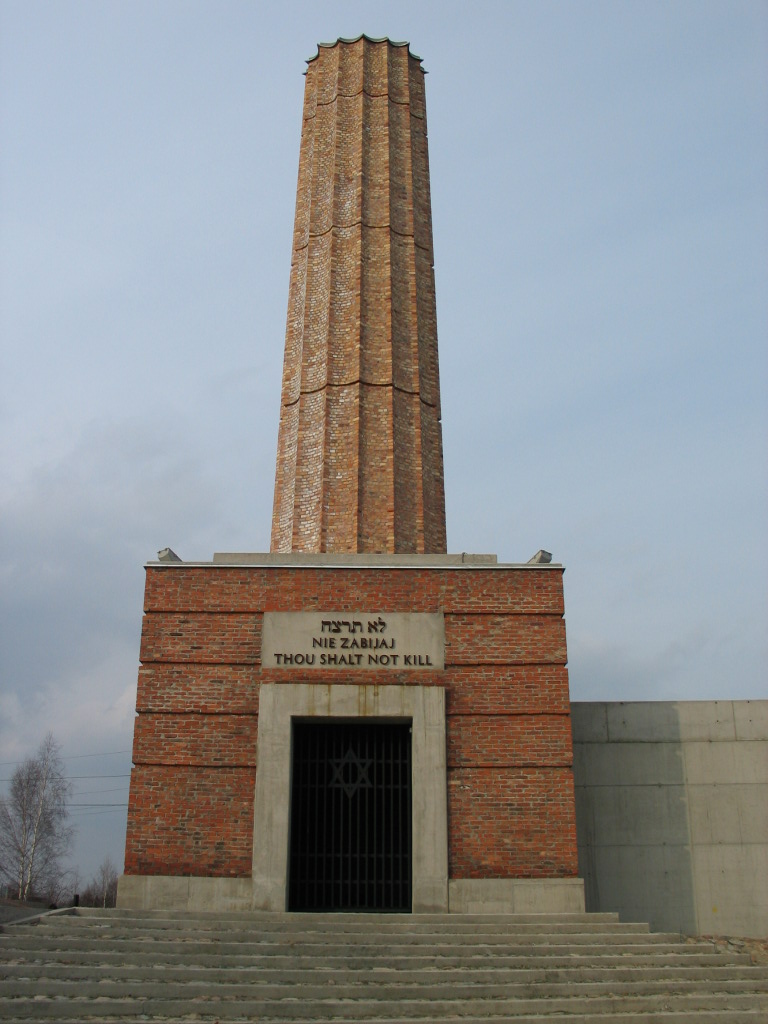
For decades afterward, the station stood almost forgotten, used again for ordinary freight and slowly falling out of memory. In 2005, sixty years after the war's end, the city opened a memorial here. The design keeps the wooden station small and human, and lets a long tunnel and a tall tower speak for the scale of the crime.
The station house is preserved, and inside it, documents and photographs tell the ghetto's story. On the track outside stand original freight wagons of the German railways, the same type used in the deportations. Their doors are heavy, their walls plain wood. Stand beside one for a moment. Their smallness is the terrible fact. In summer, grass grows tall along the rails and birds sing, and the contrast is hard to hold in the mind.
From the station stretches the Tunnel of the Deported, a long concrete passage lined with transport lists. Typed pages, name after name, page after page: the bureaucracy of murder, kept neatly. Find a single name and read it slowly. Each line was a person who once stood where you stand.
At the tunnel's end rises a tall chimney-like tower, and along the way, the Hall of Cities records the places from which Jews were brought to the ghetto: Vienna, Prague, Berlin, Hamburg, Cologne, Luxembourg, and more. On the memorial you will find one commandment, cut in stone: Thou shalt not kill.
The district around you, Marysin, formed the quiet edge of the ghetto, a place of small gardens and, in those years, of graves. The New Jewish Cemetery lies a short walk to the south; tens of thousands of the ghetto's dead were buried there in simple mounds. In Jewish tradition, visitors leave small stones rather than flowers, and you will see pebbles resting on the wagon sills and memorial edges here.
Before you leave, look once more at the modest wooden station. Terror does not always build in granite. Sometimes it uses a country platform and a timetable. Remember one name from the lists, and carry it back with you into the living city.
Key facts
What to look for
Practical tips
Common questions
How long do you need at Radegast Station?
Plan 1–1.5 hours. That is the time most visitors spend at Radegast Station. The free Lokali audio guide adds about 5 minutes of narration you can listen to as you walk, so it fits inside your visit rather than adding to it.
Is there a free audio guide to Radegast Station?
Yes — the Lokali app narrates Radegast Station free of charge in 50+ languages. It covers the history, what to look for on site and practical tips, and it works offline once downloaded.
Where is Radegast Station?
Radegast Station is in Łódź, Poland, at 51.7603, 19.4186. Tap the map link on this page for directions from where you are.
What should you know before visiting Radegast Station?
Allow a quiet hour; this is a place of mourning.
What is Radegast Station known for?
Łódź Ghetto was sealed in the Bałuty district in 1940.
What is the best time to visit Radegast Station?
The platform and ticket hall retain period details.
On the map
Opens directions to Radegast Station from your location.
More to see in Łódź


Hear Radegast Station in your language
The full story, narrated, in 50+ languages. Download it before you go and it plays offline, at your own pace, with no ticket and no tour group.