Free City Guides That Let You Set the Pace
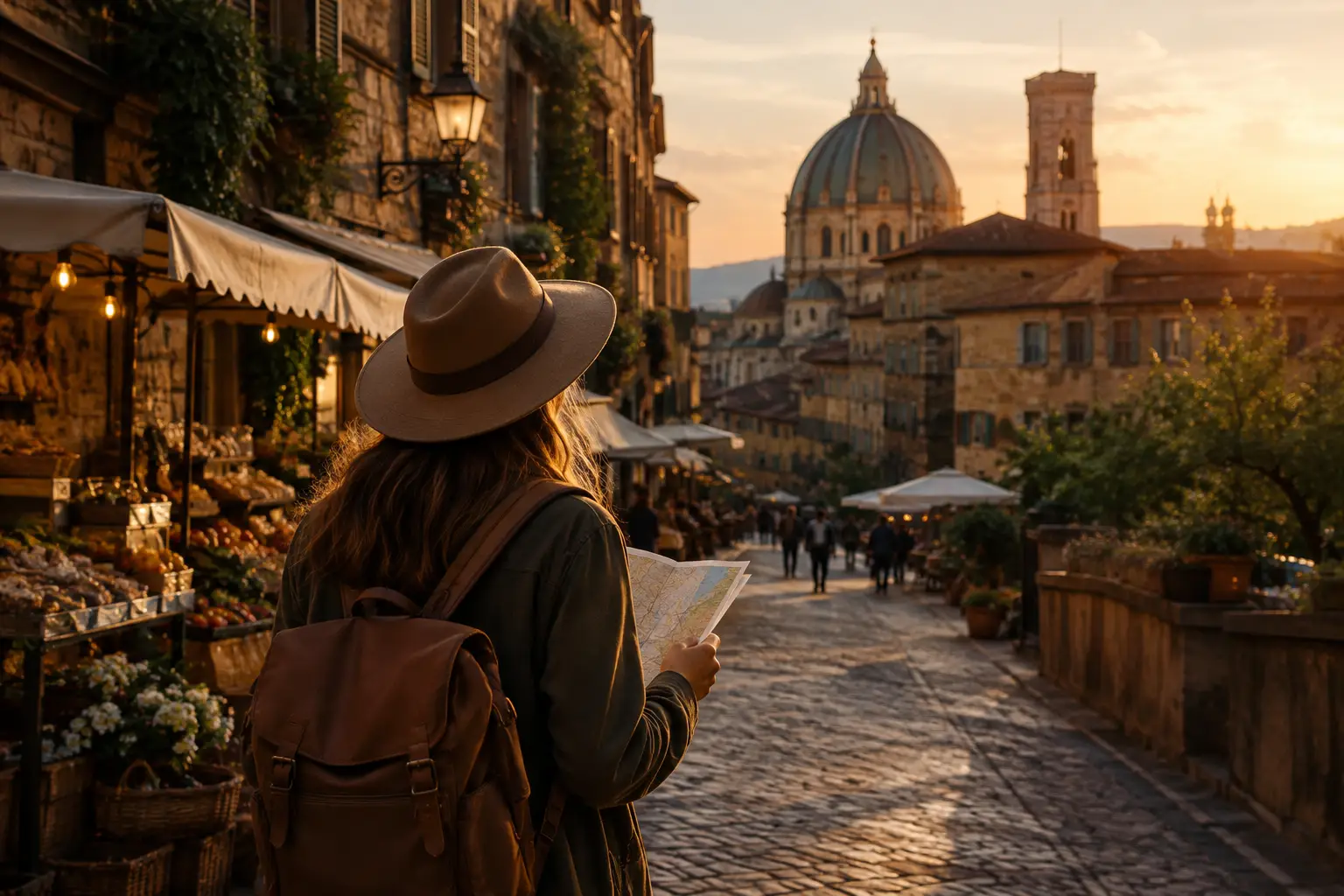
Free city guides can give you context, maps, and audio without a fixed group or a second fee at each museum. Here is how to choose wisely on your phone.
At the Prado, Prague Castle, or the Terracotta Army, free city guides answer a simple question: what am I looking at, and why does it matter? A useful guide does more than name the building or repeat a date. It gives you enough context to notice the brushwork, the gate, the scar in the stone, then lets you move at your own pace.
That freedom matters when you have arrived early, when rain starts halfway through a walk, or when a room in a museum holds your attention longer than expected. A scheduled group tour has its place, but it also has a meeting point, a timetable, and a stranger’s idea of when it is time to leave. A free guide on your phone can be quieter and more personal.
What a free city guide should actually do
The word “guide” covers very different things. Some are little more than a map with pins. Others offer long encyclopedia entries that are difficult to read while standing beside a crowded monument. The useful middle ground is orientation plus interpretation: where to begin, what to look for, and a story that changes the way you see the place.
In a city center, that might mean learning why a market square faces a particular church, or why a broad avenue replaced a dense medieval street. In a museum, it might mean understanding who commissioned a painting, what was ordinary in its original setting, and what later viewers projected onto it. You do not need a lecture for every object. You need a clear thread.
A good guide also respects the physical city. It tells you when two sights make sense together and when they do not. A route that sends you back and forth across a river or up the same hill twice may be technically comprehensive, but it wastes the afternoon. Look for guides arranged as walks, neighborhoods, landmarks, and museum collections rather than one giant list of everything nearby.
Free city guides work best with a small plan
Start with the time you really have, not the list you made at home. If you have ninety minutes before a train, choose one compact district or one museum wing. If you have a full day, combine a morning walk with an indoor visit after lunch, when streets are louder and your feet need a break.
Then choose one question for the day. In Istanbul, it might be how an imperial capital worked across water. In Tbilisi, it could be why sulfur baths, carved wooden balconies, and steep lanes sit so close together. In Rome, it may be how ancient ruins became part of a living city. A question gives your route shape. It stops every statue and facade from competing for equal attention.
Download material before leaving your accommodation when possible. Mobile data can be unreliable inside thick-walled museums, underground passages, and old quarters where streets turn sharply between buildings. Offline maps and audio are not glamorous features, but they prevent the familiar scene of standing on a corner, staring at a loading circle, while the place you came to see is somewhere behind you.
Keep the guide short enough to use. Twenty minutes of audio spread across a walk is often more valuable than two hours waiting in your phone. Pause when a detail catches your eye. Read the written text if the street is noisy or you would rather not wear headphones. The right format depends on the moment.
Audio changes the pace of a walk
Written guides are excellent for planning. You can scan a route in a cafe, compare neighborhoods, and save places for later. Audio is different. It leaves your eyes free for traffic, tilework, shop windows, and the people moving through a square.
This is especially useful at sites where the past is hard to see at first. A fortress wall can look like a long stretch of stone until you understand where the gate stood and who passed through it. A palace courtyard can feel decorative until someone explains the ceremony, labor, or conflict that once organized the space.
Historical scenes can make that context more immediate. Instead of treating a monument as a finished object, a “Time Machine” scene places you at a defining moment: a crowd gathering, an order being given, a city changing direction. It should add clarity, not theatrical noise. If the scene makes you look up at the actual building with more attention, it has done its job.
Lokali offers this mix of audio, written text, maps, offline downloads, and historical scenes across cities around the world in 50+ languages. It is useful when you want a walk to continue on your schedule, whether you are following a route for an hour or saving part of it for another day.
Language is part of the experience
A guide in a language you understand well is not a luxury. It determines whether history feels close or remote. If you are translating every second sentence in your head, the guide becomes work. If the explanation is clear in your own language, you can spend more attention on the building, the painting, or the street itself.
This matters particularly in museums, where labels may be brief and the route can feel abstract. It also matters in places that are visually dense. A city may have layers from different centuries within one block. Plain language helps you separate them without reducing the story to a pile of dates.
Do not assume a guide is useful just because it is available in English. Check whether it offers the language you think and feel in most naturally. Also check whether the writing is readable rather than translated word for word. A short, direct explanation is easier to use outside than elegant but complicated prose.
Know when free is not enough
A self-guided free resource is not the right answer every time. If you have a specialist interest in architecture, archaeology, food, or a particular period, a knowledgeable human guide can respond to your questions and adjust the route around them. That conversation is something recorded audio cannot provide.
A paid small-group walk can also be worth it when the value is the group itself: meeting other people, entering a workshop, or hearing a local specialist explain a subject in depth. Choose it for that human exchange, not because you feel obliged to pay for basic orientation.
On-site guide rentals can be useful when a museum has a carefully made collection-specific program that cannot be found elsewhere. But do not rent one automatically at every entrance. First ask whether you need detailed interpretation for this visit or simply want enough context to wander well. Paying twice for a museum ticket and a device you use for forty minutes can become a habit rather than a choice.
Free guides have limits too. They cannot tell you whether a gallery is unexpectedly closed, answer a question about a painting you have just noticed, or replace years of expert study. Their strength is independence: a solid account of the place, available when you are ready for it.
Build in room to notice the unplanned
The danger of any guide, free or paid, is that it turns a city into a checklist. If every stop arrives with a script, you may miss the bakery with trays cooling by the door, the brass shop sign, or the way late light changes a row of apartment windows.
Use the route as a frame, not a command. After two or three stops, put the phone away for ten minutes. Walk without narration. Then return to the guide when you reach a building or square that needs a story. The contrast makes both parts stronger.
A city does not become memorable because you covered every landmark. It becomes memorable because one explanation, one room, or one ordinary street gave the day a shape. Choose a guide that leaves space for that to happen.