A Louvre Visitor Route That Saves Your Feet
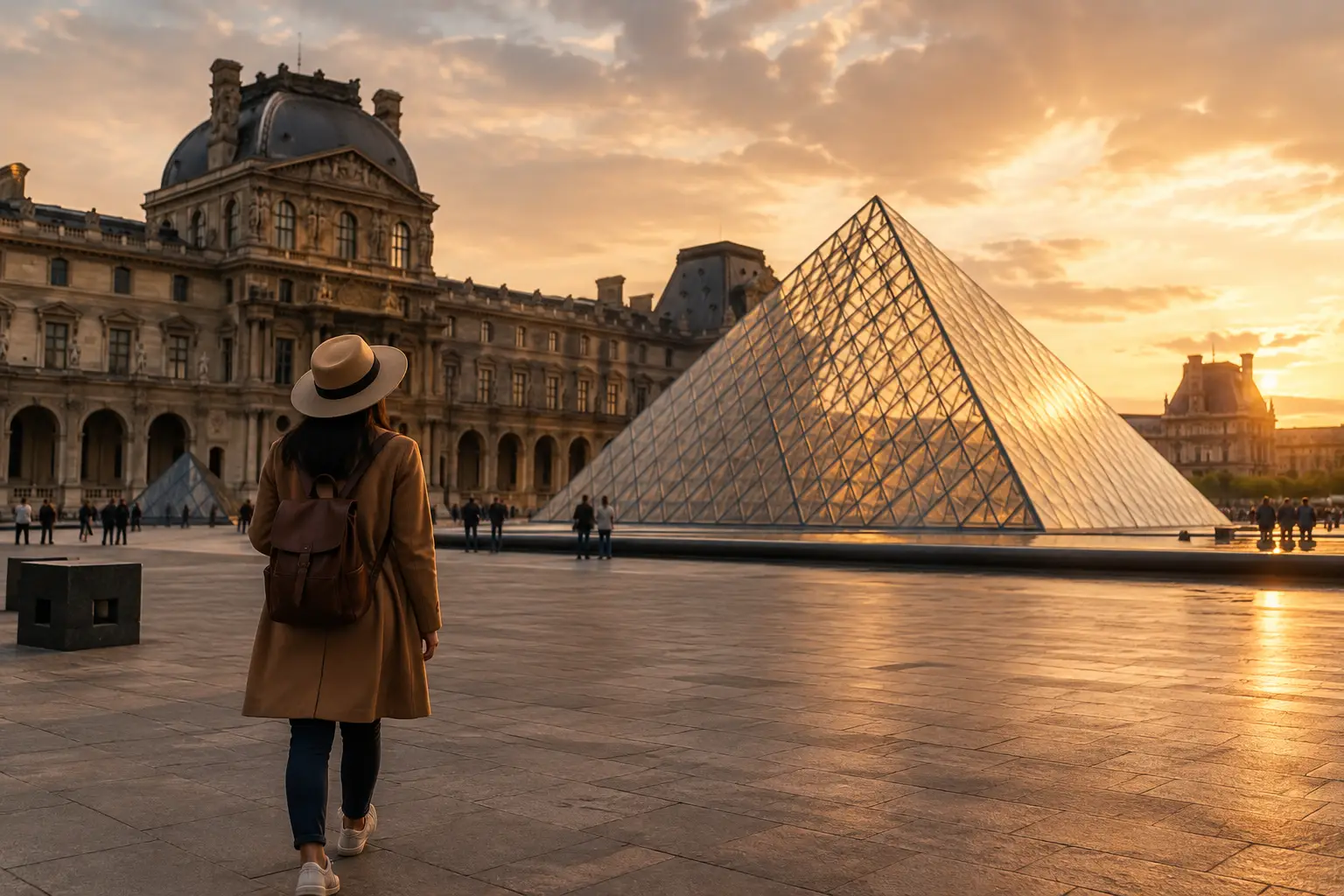
Plan a Louvre visitor route that puts the Mona Lisa in context, avoids needless backtracking, and leaves time for rooms you actually want to see well.
The Louvre visitor route matters because the museum is not a single neat circuit. It is a former royal palace with three long wings, several levels, staircases that appear suddenly, and galleries that can turn a ten-minute detour into an hour. Go in with one route and one fallback plan. You will see more art, and less carpet.
This route begins with the famous highlights, then moves toward rooms where you can slow down. It works well for a first visit of a few hours. If you have most of a day, use it as a spine rather than a schedule.
Start with one wing, not the whole Louvre
The museum is divided into the Denon, Sully, and Richelieu wings. Do not try to cover all three evenly. That sounds fair, but it produces a day of signs, corridors, and tired feet.
Choose the Denon wing as your starting point. It holds the crowded works that many people come to see, and beginning there means you meet the largest crowds before your attention has faded. From there, you can decide whether your second act is ancient Egypt in Sully or quieter French interiors in Richelieu.
Before entering the galleries, take a screenshot of the museum map or pick up a paper copy if one is available. Look for the level names as well as room numbers. At the Louvre, being in the correct wing but on the wrong floor is a common and frustrating mistake.
The Denon route: use the crowds in your favor
From the Denon side, make for the Daru staircase and the Winged Victory of Samothrace. The sculpture stands high above the stairs, with broken marble steps and a view toward the galleries below. It is one of the rare Louvre moments where the architecture and the artwork make the same point: this place was built to stage power.
Do not spend too long searching for an empty view of the statue. There may not be one. Instead, look at the ship-shaped base and the folds of the figure's clothing, pressed against her body as if by sea wind. A minute of close looking is more useful than twenty minutes waiting for other visitors to move.
Continue through the Italian painting rooms toward the Mona Lisa. The painting is small, protected, and surrounded by a crowd that often arrives with raised phones. You may have only a brief clear sightline. That is normal.
The useful way to see the Mona Lisa is to give it a small frame. Notice its unusual landscape, the winding rivers and distant blue hills behind her. Then turn around. The room contains large paintings that many people do not notice because they leave as soon as they have a photo. The Wedding Feast at Cana, directly opposite, fills the wall with musicians, servants, silver vessels, and a crowded Venetian feast. It is worth more of your time than the line suggests.
From here, do not immediately retrace your steps. Continue through the Grande Galerie if your route allows it. The long red rooms, once used for royal display, hold Italian painting on a scale that makes individual works compete for attention. Pick two or three painters rather than reading every label. Leonardo, Raphael, and Titian are a useful trio if you want a simple thread through the room.
A useful rule for famous works
At the Louvre, the famous object is often the doorway, not the destination. Let it draw you into a room, then spend time on the work next to it. The painting with no crowd may be the one you remember at dinner.
Choose your second half: Sully or Richelieu
After Denon, make a real choice. Sully gives you older worlds and a stronger sense of the palace beneath the museum. Richelieu offers sculpture, decorative arts, and a more varied route through French history. Trying to do both in detail is where a good visit usually becomes hurried.
Choose Sully for Egypt and the medieval Louvre
Go to the Sully wing if you want objects that make history feel physical: carved stone, painted coffins, small tools, and walls that have outlived the people who built them. The Egyptian antiquities are extensive, so do not approach them as a checklist of dynasties.
Choose one human-scale object to follow. It might be a statue of a seated official, a painted mummy case, a piece of jewelry, or an everyday vessel. These objects are easier to connect with than a long line of royal names. They show that an ancient civilization was also made of meals, work, clothing, grief, and display.
If you have energy, look for the remains of the medieval Louvre. The rough stone foundations and old moat shift the scale of the place. Before it became a museum or a palace, the site was a fortress. The contrast is useful after the polished galleries above: the Louvre is not simply a container for art. It is an artifact itself.
Choose Richelieu for apartments and sculpture
Go to Richelieu if you want a calmer change of mood. The Napoleon III Apartments are full of chandeliers, gold trim, mirrors, and furniture arranged for ceremony. They can feel theatrical, and that is the point. These rooms show how power is performed through color, light, and controlled excess.
Nearby sculpture courts offer space to breathe. Marble figures stand under glass roofs rather than behind a wall of visitors. You can walk around them, notice a hand, a turned shoulder, or the marks where a sculptor made stone seem like fabric.
Richelieu is also a good choice if paintings have begun to blur together. Changing medium resets your attention. A room of sculpture asks your eyes to move differently.
Build pauses into your Louvre visitor route
The Louvre is exhausting partly because it gives you too much to look at. Plan one proper pause before you feel you need it. Sit down, drink water, and decide what you still care about seeing. A route should leave room for changing your mind.
Avoid treating every long queue as proof that something matters more. A line may simply form because a room is narrow, a staircase is slow, or a popular image has become a social media ritual. If a gallery is packed, move on and return later if it is genuinely important to you.
Photography can also pull the visit apart. Take a few pictures for memory, but do not photograph every label. Museum lighting, crowds, and reflections usually make poor records. A short note on your phone such as “blue hills behind Mona Lisa” or “stone moat under palace” will bring the moment back more clearly.
Use audio when it adds a story
A route solves the geography. Audio can solve the silence. The Louvre contains thousands of objects, and labels cannot always explain why a work changed painting, politics, or daily life.
If you want to follow a self-guided route at your own pace, a free Louvre audio guide on Lokali can be downloaded for offline use before you enter, with written text if you prefer to read. It is useful when you want context in your own language without committing to a scheduled group. Lokali covers 50+ languages, which matters in a museum where the official information may not meet you halfway.
There are limits. If you want expert discussion of a narrow subject, such as one period of French painting or a single collection, a museum lecture or specialist human guide can be worth paying for. The Louvre's own guide, listed at €6 in nine languages, can also suit you if you want the institution's selected route and do not need flexibility. A free guide is not better simply because it costs nothing. It is better when you want control over the pace and stops.
Leave one room unseen
The temptation at the Louvre is to keep going until you have earned the exit. Resist it. Stop while one gallery still feels unfinished.
On your way out, choose the image you will carry into the street: the headless victory at the top of the stairs, the glitter of an imperial dining room, a painted coffin, or the dark water under the old fortress. The Louvre is too large to complete. A good visit gives you one reason to return, not a sore-footed claim that you saw it all.