Audio guide
A glass pyramid glitters in the courtyard of a vast old palace, and beneath it stretches the largest art museum in the world, holding tens of thousands of works from across the ages.
A glass pyramid glitters in the courtyard of a vast old palace, and beneath it stretches the largest art museum in the world, holding tens of thousands of works from across the ages. This is the Louvre, once the home of French kings, now a treasure house that no visitor can hope to exhaust in a single day.
The building began as a fortress and became a royal palace, growing over centuries into the immense complex you see, wrapped around grand courtyards by the river Seine. It became a public museum during the French Revolution, when the royal collection was opened to the nation.
The modern entrance is the glass pyramid, added at the end of the 1980s, a sharp, transparent shape set against the old stone. Controversial when new, it has become loved, and it floods the underground lobby with light while leaving the historic facades clear.
The collection is encyclopaedic, running from ancient Egypt, Greece, and the Near East through to European painting and sculpture up to the nineteenth century. Walking the galleries is a walk through thousands of years of art, and the building itself, with its painted ceilings, is part of the show.
The most famous resident is the Mona Lisa, a small portrait behind glass that draws a constant crowd. Many are surprised by her modest size; the crush around her is part of the experience, and it is worth seeing once, then moving to the quieter masterpieces nearby.
Beyond her hang and stand countless other treasures: an armless ancient Venus, a winged victory poised at the top of a staircase, vast French and Italian paintings, and rooms of crown jewels and royal apartments. Each wing could fill a day on its own.
The scale is the central challenge. The Louvre is enormous, and trying to see everything leaves most people footsore and overwhelmed. The museum works far better if you choose a few wings or themes and accept, gladly, that you will leave the rest for another time.
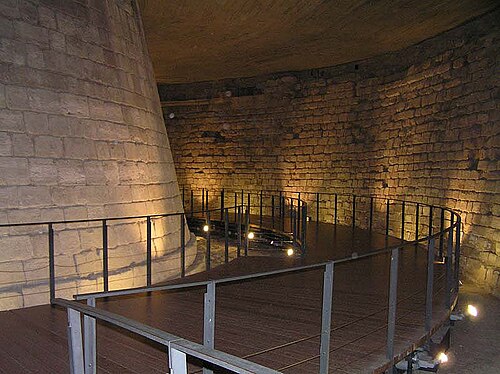
The palace history is everywhere. Grand staircases, painted galleries, and the remains of the original medieval fortress in the basement remind you that this was a seat of power long before it was a museum, and the architecture is as much a draw as the art.
Crowds and queues are real. The Louvre is among the most visited museums on earth, so booking a timed ticket online and arriving early or late makes a large difference, as does using one of the entrances away from the main pyramid.
The setting is grand. The museum opens onto formal gardens stretching toward a great square and avenue, so a visit pairs naturally with a walk along the river or through the gardens, with cafes and benches for the inevitable rest.
A few practical notes. Book a timed ticket ahead, wear comfortable shoes, and pick your wings before you go in; free maps mark the famous works. Some galleries close on a rotating basis, so check if there is something you must see.
Choose one or two things to look at slowly, rather than racing past hundreds, and the Louvre stops being a marathon and becomes a pleasure. A former palace built to hold power now holds beauty for anyone who walks in. When you step back out by the pyramid, the gardens and the river carry the mood on.
Plan around 5 minutes on site. The free Lokali audio guide tells the story as you explore.
Yes. The Lokali app narrates Louvre Museum for free in your own language — history, what to look for and practical tips, right at the site.
Book a timed ticket online ahead.
Opens directions to Louvre Museum from your location.