
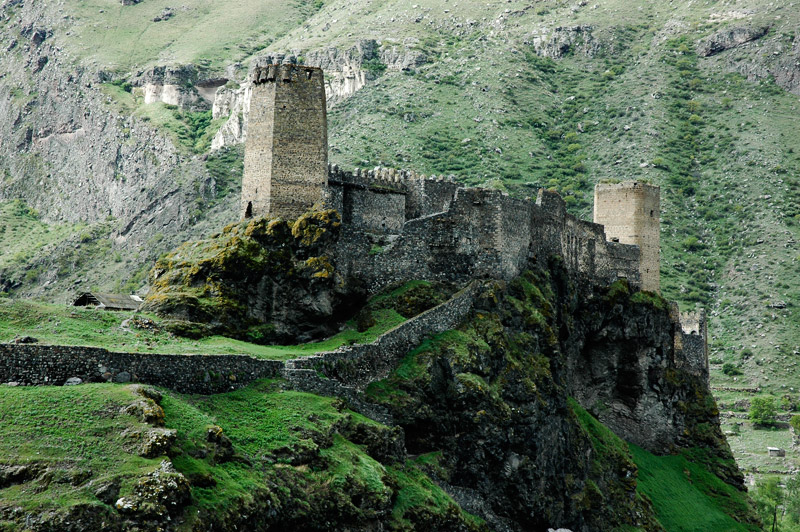
Photo: I kynitsky · CC BY-SA 4.0 · Wikimedia Commons
Akhaltsikhe Castle is a Georgian castle, fortress. It is in Akhaltsikhe, Georgia. Akhaltsikhe means "new castle" in the Georgian language. The free Lokali audio guide runs 6 minutes.
✓ Published October 2026 · how we write these guides
Visitor facts
| Lokali audio guide | 6 min · free |
|---|---|
| Type | Castle |
| Location | Akhaltsikhe, Georgia |
| Coordinates | 41.6429, 42.9781 |
| Languages | 50+, in the Lokali app |
The story
Start with the stone under your feet. It is warm in the afternoon, worn smooth in places, and slightly uneven where old paving meets new. Above you, a golden dome catches the light. Around you rise walls the colour of honey and dry earth. Somewhere below, a car horn sounds in the modern town. Up here, the noise drops away. You are standing inside the castle that most Georgians call Rabati, and it holds more than one country's story inside its walls.
First, the name of the town itself. Akhaltsikhe means "new castle" in Georgian. That tells you something important. A fortress has stood on this rise for a very long time, and the town grew up around it. The word Rabati is older and travels further. It comes from a term used across the Islamic world for a fortified post or a quarter outside the walls. So the two names already carry two worlds. One is Georgian. The other came from the south.
This corner of Georgia is called Samtskhe. For centuries it was a frontier region. To the north and east lay the Georgian kingdoms. To the south and west lay the lands of the great Anatolian and Persian powers. Trade roads crossed here, and so did armies. A fortress on this hill could watch the valley of the Potskhovi River and the roads that followed it. Whoever held this place held a gate between regions.
From around the thirteenth century, the most powerful family here was the Jaqeli dynasty. They ruled Samtskhe as atabegs, a title that meant something like guardian lords or governors. At times they were loyal to the Georgian crown. At other times they acted almost as independent princes. The palace quarter you see inside the walls is linked to their rule. When you look at the heavy stone halls, picture a court here, not just a garrison.
Then the balance of power shifted. In the late sixteenth century, the Ottoman Empire took control of Samtskhe. Akhaltsikhe became the centre of an Ottoman province. Over time, members of the old Jaqeli family converted to Islam and governed as pashas, the Ottoman word for high governors. This is one of the surprises of the castle. The same family line ruled here before and after the change of empire. Only the faith and the titles changed.
That brings you to the building most visitors photograph first: the mosque with the gilded dome. It was built in the mid-eighteenth century and is usually linked to a local governor named Ahmed Pasha. Look at its clean round dome and the slim minaret beside it. These are Ottoman forms. Yet the stone and the masons were local. The mosque is a meeting point of two traditions in a single building.
Now for the second surprise. In 1828, during a war between Russia and the Ottoman Empire, Russian forces captured Akhaltsikhe. After that, the mosque was converted into an Orthodox church. For many decades, Christian services were held under an Ottoman dome. Later, during the Soviet period, the whole complex fell into neglect. Some walls crumbled, and parts of the site became overgrown. The building you see survived several changes of owner and purpose.
The castle you are walking through today is largely the result of a major restoration finished in the early 2010s. The work was large, fast, and ambitious. Some walls were rebuilt almost from the ground up. That has made the site clean, safe, and easy to explore. It has also drawn debate. Some historians feel the new stone is too perfect, and that real age was lost. As you walk, try to notice where older, darker masonry meets the bright new blocks.
Inside the walls, the complex is a small world of its own. There are courtyards, terraces, a church, the mosque, the citadel tower, and the palace buildings. There is also a regional history museum. Its collection covers the long story of Samtskhe, from early archaeology to medieval manuscripts and objects from daily life. If your time is short, the museum is a good place to make sense of everything outside.
Take a moment in one of the courtyards. Listen. You may hear water running in a fountain, birds in the rose bushes, and the steps of other visitors on stone. The gardens are neat and planted, which is part of the restoration. Look at the arches and balconies around you. Some show Georgian building traditions. Others carry clear Ottoman influence, such as pointed arches and carved wooden details. The mix is the point of this place.
Now climb toward the highest walls if you can. The steps can be steep, so take them slowly. From the top, the view opens over the red and grey roofs of modern Akhaltsikhe. Beyond them rise dry, folded hills. On clear days, the light here is sharp and the shadows are long. You can see why someone chose this hill. It watches everything around it.
The town below is also worth a thought. Akhaltsikhe has long been home to several communities. Georgians, Armenians, Jews, and Muslims all lived here at different times. Each group left churches, homes, and houses of prayer in the older streets. The castle sits above them like a summary of the region. Many travellers also use Akhaltsikhe as a base for the cave monastery of Vardzia, which lies further south along the valley.
As you prepare to leave, look back once at the golden dome. It is the same dome a pasha's builders raised, the same dome a Russian garrison heard bells beneath, and the same dome restored for new eyes. Feel the stone under your hand at the gate. Some of it is new. Some of it has seen centuries. Walk down slowly, and notice the moment when the sounds of the modern town return.
Key facts
What to look for
Practical tips
Common questions
Is there a free audio guide to Akhaltsikhe Castle?
Yes — the Lokali app narrates Akhaltsikhe Castle free of charge in 50+ languages. The guide runs about 6 minutes, covers the history, what to look for on site and practical tips, and works offline once downloaded.
Where is Akhaltsikhe Castle?
Akhaltsikhe Castle is in Akhaltsikhe, Georgia, at 41.6429, 42.9781. Tap the map link on this page for directions from where you are.
What is Akhaltsikhe Castle known for?
Akhaltsikhe means "new castle" in the Georgian language. The Jaqeli dynasty ruled Samtskhe from the medieval period.
What should you look for at Akhaltsikhe Castle?
The gilded dome of the mosque beside its slim minaret. Darker original masonry meeting bright new restoration blocks. Pointed Ottoman arches next to Georgian stone balconies.
What should you know before visiting Akhaltsikhe Castle?
Visit the history museum first to understand the whole site. Wear shoes with grip for steep stone steps and ramparts.
When is the best time to visit Akhaltsikhe Castle?
Come in late afternoon for warm light on the walls.
On the map
Opens directions to Akhaltsikhe Castle from your location.
More to see near Akhaltsikhe Castle

Hear Akhaltsikhe Castle in your language
The full story, narrated, in 50+ languages. Download it before you go and it plays offline, at your own pace, with no ticket and no tour group.