
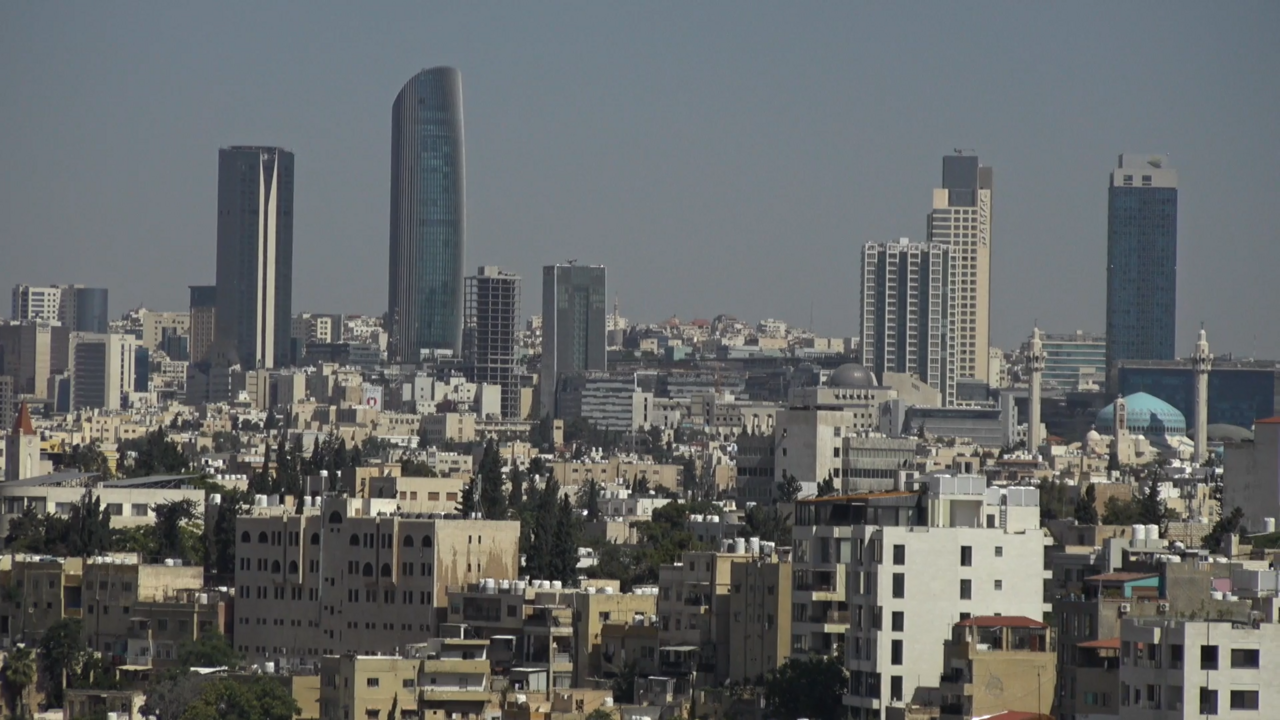
Photo: Jeanhousen · CC BY-SA 3.0 · Wikimedia Commons
Ayn Ghazal is an archaeological site in Jordan. It is in Amman, Jordan. Name means Spring of the Gazelle in Arabic. The free Lokali audio guide runs 6 minutes.
✓ Published October 2026 · how we write these guides
Visitor facts
| Lokali audio guide | 6 min · free |
|---|---|
| Type | Archaeological Site |
| Location | Amman, Jordan |
| Coordinates | 31.9880, 35.9760 |
| Languages | 50+, in the Lokali app |
The story
Listen first. Traffic hums along the highway nearby, and somewhere a dog barks from a rooftop. The ground under your feet is pale and dusty, scattered with small chips of stone. Low terraces of earth step down toward a shallow valley. It does not look like much. But under this ordinary slope lie the remains of one of the largest farming villages of the ancient Near East. People lived here roughly nine to ten thousand years ago.
The name, Ayn Ghazal, means the Spring of the Gazelle. It points to the reason anyone settled here at all: water. The site sits on the edge of the Zarqa River valley, on the north-eastern side of modern Amman. Fresh water, good soil, and open hillsides made this a natural place to stay. Long before Amman had a citadel or a Roman theatre, families were building houses on this slope.
Here is the first surprise. Nobody went looking for this place. It was found by accident in the 1970s, when crews cut a new road through the area. Bulldozers exposed ancient walls and floors in the side of the cut. Archaeologists soon realised what they were seeing. Systematic excavations began in the early 1980s, led by an international team working with Jordan's Department of Antiquities. Their work continued over many seasons.
The village belongs to the Neolithic period, often called the New Stone Age. This was the era when people in this region shifted from hunting and gathering to farming and herding. At Ayn Ghazal, people grew cereals and legumes, and they kept goats. They still hunted wild animals too. The settlement grew over many centuries. At its height, archaeologists believe it was home to a large community — possibly thousands of people. For that time, this was a very big town.
Picture the houses. They were rectangular, built with stone walls, and many had floors coated in lime plaster. Making that plaster was hard work. People had to burn limestone at high heat, and that needed a great deal of fuel. Some researchers think this demand for firewood helped strip the surrounding hills of trees over time. So even here, ten thousand years ago, a growing community changed its own landscape.
Now for the discovery that made Ayn Ghazal known around the world. In the 1980s, excavators found two buried groups of human figures. The statues and busts were made of lime plaster, shaped over a core of bundled reeds or grasses. Some stand close to a metre tall. Others are smaller busts with only a head and shoulders. They had been carefully placed in pits and covered over. Why they were buried remains a mystery.
The faces are what people remember. The eyes are wide and almond-shaped. Their outlines were drawn with bitumen, a dark natural tar, which makes the gaze strong and steady. The noses are small, and the mouths are simple and closed. Some figures seem to show painted details, perhaps clothing or body decoration. These are among the oldest large-scale human figures ever found. When visitors meet them in person, many say the figures look strangely alert.
What did they mean? Honestly, no one knows for certain. Some scholars think they may have represented ancestors. Others suggest gods, heroes, or important members of the community. Some figures have two heads on one body, which adds to the puzzle. Careful burial suggests the statues mattered deeply to the people who made them. Beyond that, the meaning is lost. It is worth sitting with that uncertainty for a moment.
The people of Ayn Ghazal also honoured their dead in a striking way. Some were buried under the floors of houses. In certain cases, the skull was later removed, coated in plaster, and modelled to look like a living face. Plastered skulls like these have been found at several Neolithic sites in the Levant, the lands along the eastern Mediterranean. They suggest a close bond between the living and their ancestors. The dead were kept near, inside the home itself.
Over time, the village changed. In its later phases, the population seems to have shrunk, and the way of life shifted. More people may have moved toward herding, travelling with their animals rather than staying in one place. Eventually the large settlement faded. The hillside became quiet again, and soil slowly covered the walls and floors. For thousands of years, the land kept its secret until those road crews arrived.
The second surprise is about where the statues are now. They are not here on the hillside. Most are kept in museums, where they are protected and studied. Several are on display at the Jordan Museum in downtown Amman. At least one is held abroad, in the British Museum in London. If the faces stay with you, seeing them in person is the natural next step after this visit.
The site itself is now surrounded by the modern city. Roads, workshops, and houses press close on every side. This contrast is part of the experience. Standing here, you can see Amman's concrete blocks rising on the hills, while under your feet lie some of the earliest homes in the region. Access to the excavated area can be limited, and there is little visitor infrastructure. Much of what you see is earth, stone, and open sky.
So take a slow look around. Notice the pale soil and the small fragments of stone in it. Notice the slope of the valley and imagine the spring that once drew people here. Families cooked, farmed, and buried their dead on this ground. They also made faces of plaster that still look back at us today. As you walk away, listen again to the traffic and the voices of the city. Amman is the newest layer of a very old story.
Key facts
What to look for
Practical tips
Common questions
Is there a free audio guide to Ayn Ghazal?
Yes — the Lokali app narrates Ayn Ghazal free of charge in 50+ languages. The guide runs about 6 minutes, covers the history, what to look for on site and practical tips, and works offline once downloaded.
Where is Ayn Ghazal?
Ayn Ghazal is in Amman, Jordan, at 31.9880, 35.9760. Tap the map link on this page for directions from where you are.
What is Ayn Ghazal known for?
Name means Spring of the Gazelle in Arabic. Neolithic farming village roughly nine to ten thousand years old.
What should you look for at Ayn Ghazal?
Pale terraced slopes stepping down toward the Zarqa valley. Small chips of worked stone scattered in the soil. Modern Amman buildings pressing against the ancient site edges.
What should you know before visiting Ayn Ghazal?
Visit the Jordan Museum downtown to see the statues. Ask locally about current access before travelling to the site.
When is the best time to visit Ayn Ghazal?
Go early morning when the light is soft and cooler.
On the map
Opens directions to Ayn Ghazal from your location.
More to see in Amman



Hear Ayn Ghazal in your language
The full story, narrated, in 50+ languages. Download it before you go and it plays offline, at your own pace, with no ticket and no tour group.