
Heshbon (Tall Hisban)
31.8186° N · 35.7989° E · Archaeological Site
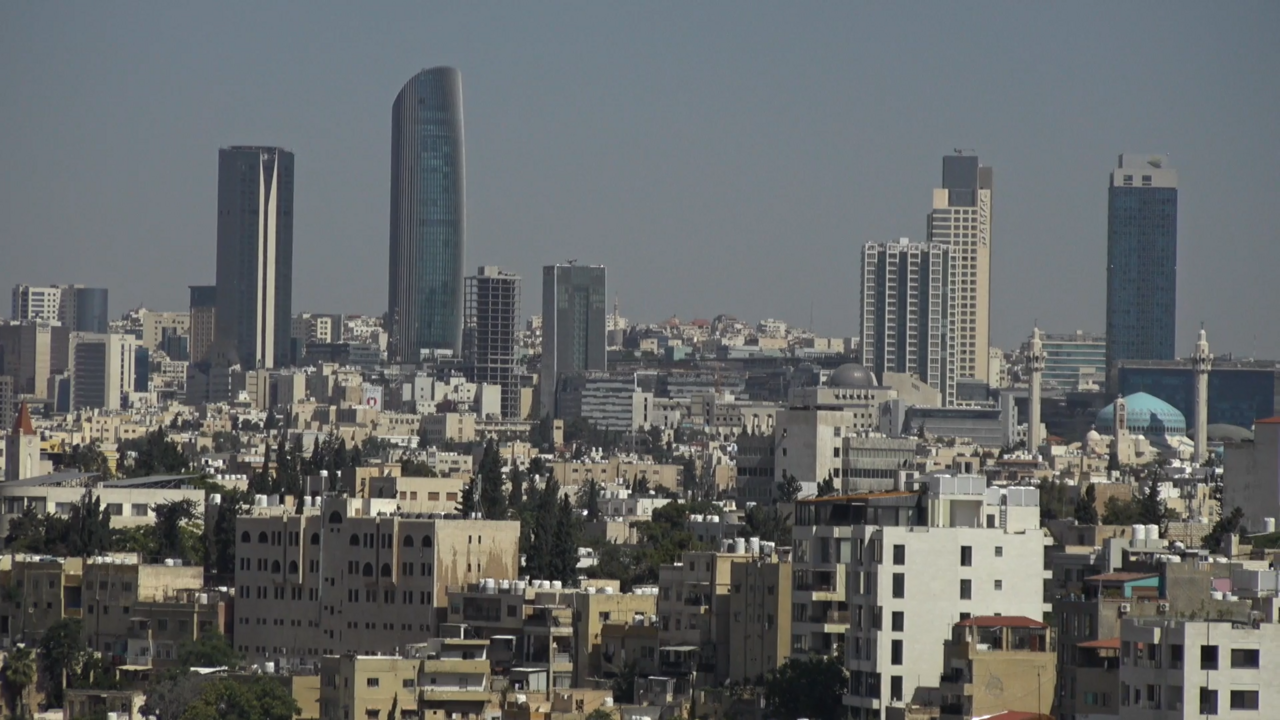
Photo: Bashar Tabbah · CC BY-SA 4.0 · Wikimedia Commons
Heshbon (Tall Hisban) is a human settlement. It is in Amman, Jordan. Widely identified with biblical Heshbon, city of King Sihon. The free Lokali audio guide runs 7 minutes.
✓ Published October 2026 · how we write these guides
Visitor facts
| Lokali audio guide | 7 min · free |
|---|---|
| Type | Archaeological Site |
| Location | Amman, Jordan |
| Coordinates | 31.8186, 35.7989 |
| Languages | 50+, in the Lokali app |
The story
Feel the wind first. On top of this hill it rarely stops. It comes off the open plateau and carries dust, the smell of dry thistle, and sometimes the bleating of sheep from the fields below. Underfoot there is loose limestone, pale and broken, mixed with tiny fragments of pottery. Look down as you walk and you will see them everywhere: red, grey, cream. Each small shard comes from a different century of people who lived on this mound.
You are standing on Tall Hisban, the site most scholars identify with biblical Heshbon. It rises between Amman and Madaba, at the western edge of the high plateau. A tall, in Arabic, is a mound made by human settlement, not by nature. People built here, their houses fell, and the next generation built on top. Over thousands of years, layer upon layer, the hill grew higher. What looks like a natural summit is partly a stack of lost towns.
Heshbon appears in the Hebrew Bible. The Book of Numbers names it as the city of Sihon, king of the Amorites, who refused to let the Israelites pass through his land. Later texts place it among the towns of the tribes east of the Jordan, and later still in the hands of Moab. Whether this exact hill matches every biblical reference is still debated by archaeologists. That honest uncertainty is part of the story here. The name has stayed in the local village of Hesban.
The Song of Songs gives Heshbon one of its most poetic lines. The lover says that her eyes are like the pools of Heshbon. On this site, excavators found a large reservoir cut into the bedrock, dating to the Iron Age, the period of the biblical kingdoms. Some people like to connect it with those famous pools. It is a tempting idea, not a proven one. Still, standing near that cut stone, the old verse feels a little closer.
Here is something many visitors do not know. Tall Hisban was one of the first large excavations in Jordan run by a team from the United States. Andrews University, from Michigan, began digging here in the late 1960s. The work grew into a long project that trained generations of archaeologists. Over the decades, the focus shifted. The researchers became less interested in proving a single biblical story, and more interested in how ordinary people lived on this land across time.
And time is what this hill holds. After the Iron Age came the Hellenistic period, when Greek culture spread east after Alexander the Great. Then came Rome. Under Roman rule the town was known as Esbus. Look for the remains of a broad monumental staircase climbing the slope. It once led toward a temple or public building at the top. Imagine it in use: priests, merchants, and travellers walking up wide stone steps toward the summit.
In the Byzantine centuries, the Christian era that followed Rome in the east, Esbus became the seat of a bishop. Churches rose on the hill. Their floors were decorated with mosaics, small cubes of coloured stone set into patterns and pictures. This whole region, around nearby Madaba, became known for this art. Here at Hisban, the church remains are modest, but they show that this was a real town with clergy, worshippers, and craftsmen working the stone.
Then comes a second surprise. Many visitors assume the story ends with Rome and Byzantium. In fact, one of the most active chapters came much later, under the Mamluks. The Mamluks were a sultanate based in Cairo that ruled Egypt and Syria in the medieval period. For a time, Hisban served as an administrative centre for the surrounding district of the Balqa, before that role moved to Amman. A governor's citadel stood on the summit.
The Mamluk remains are some of the clearest on the hill. You can trace the walls of rooms, storerooms, and vaulted spaces. Excavators also uncovered a small bathhouse, with the remains of channels and heating spaces under the floor. Picture officials coming in from long rides across the plateau, washing off the dust, and then sitting down to plan taxes and harvests. This was not a ruin then. It was a working office of a large state.
After the Mamluk period, the town declined, and the hill was used more by farmers and herders than by governors. This rhythm is one of the main lessons of Tall Hisban. Settlement here rose and fell many times. Big towns grew, then shrank to villages, then grew again. The archaeologists called this a cycle of intensification and abatement. In simple words, people adapted to changing rulers, trade routes, and rainfall, and the land stayed while the empires came and went.
Now turn toward the west. On a clear day the ground falls away toward the Jordan Valley, and the haze over the Dead Sea lies far below. In the other direction, the plateau runs flat with wheat fields, olive trees, and the low houses of the modern village. This position explains much of the history. The hill sits at the meeting point of farmland and the steep descent, a natural place to watch roads and collect harvests.
Take your time as you walk the paths. The site is open and quiet, often with only a few other visitors. Information panels help you read the walls and pits. The stones are uneven, and in summer there is little shade, so the light can be strong and white at midday. In the late afternoon, the low sun turns the limestone gold, and the long shadows make the outlines of ancient rooms much easier to see.
Before you leave, stop once more at the top. Listen to the wind again, and maybe to a call to prayer drifting up from the village. Look at the pottery fragments by your feet. Someone in the Iron Age, someone in Roman Esbus, and someone in a Mamluk kitchen all walked on this same hill. As you go back down the slope, you are adding one more set of footsteps to a very long record.
Key facts
What to look for
Practical tips
Common questions
Is there a free audio guide to Heshbon (Tall Hisban)?
Yes — the Lokali app narrates Heshbon (Tall Hisban) free of charge in 50+ languages. The guide runs about 7 minutes, covers the history, what to look for on site and practical tips, and works offline once downloaded.
Where is Heshbon (Tall Hisban)?
Heshbon (Tall Hisban) is in Amman, Jordan, at 31.8186, 35.7989. Tap the map link on this page for directions from where you are.
What is Heshbon (Tall Hisban) known for?
Widely identified with biblical Heshbon, city of King Sihon. Known as Esbus during the Roman period.
What should you look for at Heshbon (Tall Hisban)?
Iron Age reservoir cut deep into the bedrock. Remains of the broad Roman monumental staircase. Mamluk bathhouse with channels beneath the floor.
What should you know before visiting Heshbon (Tall Hisban)?
Visit in late afternoon when low sun sharpens wall outlines. Wear sturdy shoes for loose stones and uneven paths.
When is the best time to visit Heshbon (Tall Hisban)?
Visit in late afternoon when low sun sharpens wall outlines.
On the map
Opens directions to Heshbon (Tall Hisban) from your location.
More to see in Amman



Hear Heshbon (Tall Hisban) in your language
The full story, narrated, in 50+ languages. Download it before you go and it plays offline, at your own pace, with no ticket and no tour group.