
Ons' Lieve Heer op Solder
52.3751° N · 4.8994° E · Museum
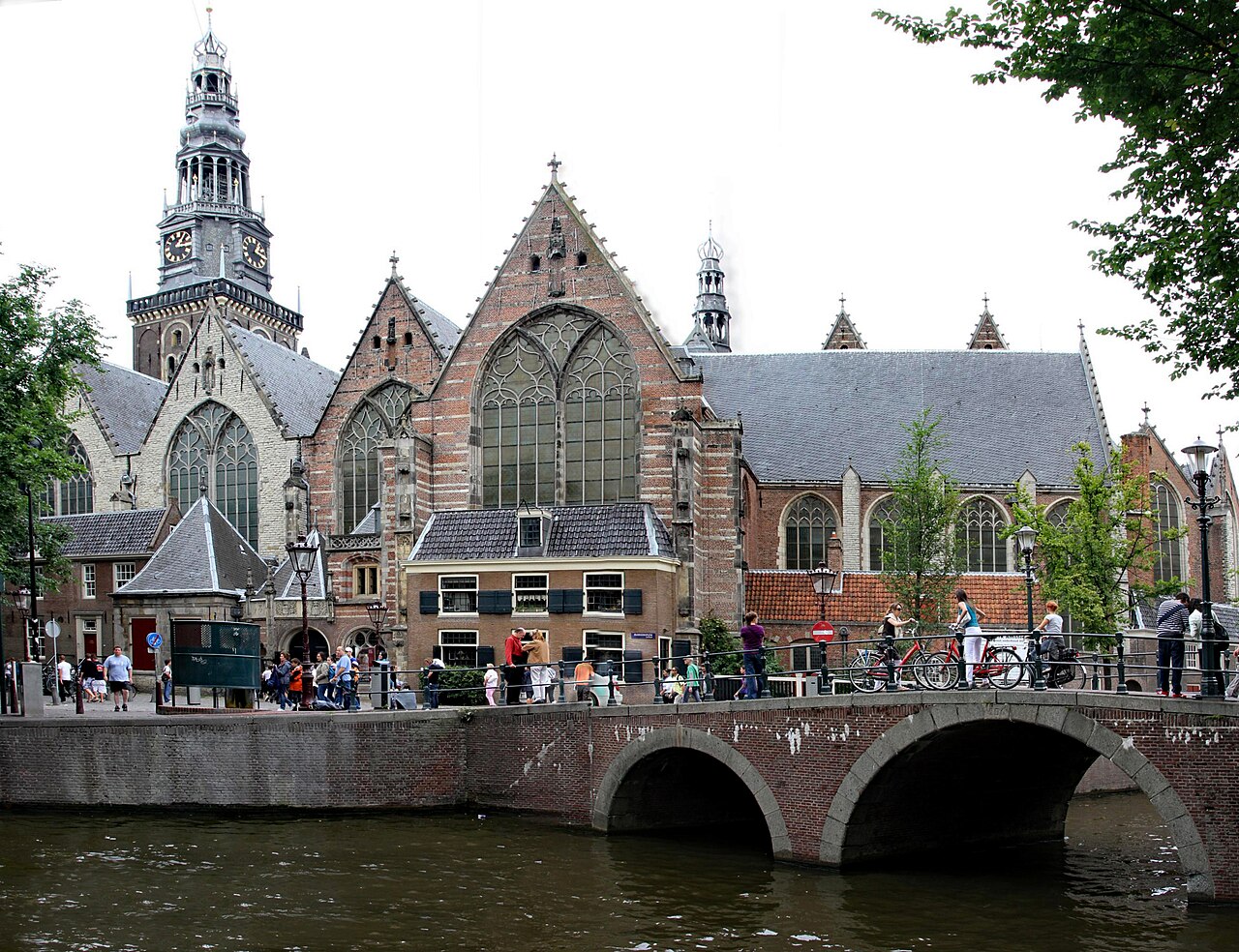
Photo: Remi Mathis · CC BY-SA 3.0 · Wikimedia Commons
Ons' Lieve Heer op Solder is a museum in Amsterdam, the Netherlands. Name means Our Lord in the Attic. The free Lokali audio guide runs 7 minutes.
✓ Published October 2026 · how we write these guides
Visitor facts
| Lokali audio guide | 7 min · free |
|---|---|
| Type | Museum |
| Location | Amsterdam, Netherlands |
| Coordinates | 52.3751, 4.8994 |
| Official website | opsolder.nl |
| Languages | 50+, in the Lokali app |
The story
Listen for a moment. Outside, bicycles rattle over the canal bridges, and voices drift along the water of the Oudezijds Voorburgwal. Inside this narrow canal house, the sound changes. Floorboards creak. A wooden staircase climbs steeply above you, almost like a ship's ladder. The air smells of old timber, wax and cool plaster. You are standing in an ordinary Amsterdam merchant's home, and above your head, out of sight from the street, there is a full church.
The name, Ons' Lieve Heer op Solder, means Our Lord in the Attic. It is not a nickname invented for tourists. It describes exactly what is here. In the seventeenth century, Catholics in Amsterdam could not worship in public. So they worshipped in private, in rooms that looked like nothing from the outside. This house holds one of the best preserved of those hidden churches, and it has survived with remarkably few changes.
To understand why, go back to 1578. In that year, Amsterdam changed sides in the Dutch Revolt and became officially Protestant. The Dutch call this moment the Alteration. Catholic churches passed to the Reformed Church, and Catholic services in public were banned. But Amsterdam was a trading city, practical and commercial. The authorities often looked the other way, as long as Catholics kept their worship discreet. A church that could not be seen from the street was, in effect, tolerated.
This is the paradox at the heart of the building. Almost everyone knew these churches existed. Neighbours heard the footsteps on Sunday mornings. City officials knew where they were. The rule was not really about secrecy — it was about visibility. No bell tower, no grand doorway, no procession through the streets. Worship was permitted behind a facade. Historians often describe this as a very Dutch kind of tolerance: quiet, unspoken, and carefully negotiated.
The house was bought in the seventeenth century by a wealthy Catholic merchant named Jan Hartman. He did something ambitious. He joined the attics of the main canal house and two smaller houses behind it into one long space. In the 1660s, that space became a church. As you climb, notice how you pass through the life of a family first. There are living rooms, a kitchen, narrow corridors. The sacred space sits on top of the domestic one.
On the lower floors, look at the grand front room facing the canal. The Dutch call this kind of room a sael. It was the formal reception room, where a merchant received guests and showed his status. The proportions are calm and balanced, in the classical style that Dutch builders admired in this period. Here is the first small surprise. The house was built to impress visitors downstairs, while its most important room stayed invisible upstairs.
Keep going and you reach smaller spaces. There is a kitchen lined with tiles, practical and cool. There are tiny rooms tucked into the corners of the staircase. One of them is a modest room with a box bed, a bed built into the wall like a cupboard. Tradition links it to a priest who lived in the house. Stand in the doorway and imagine sleeping there, with the church just a few steps above.
Then the stairs open, and the church appears. After the cramped rooms below, the effect is sudden. The space is long and tall, rising through more than one storey. Two galleries run along the sides, stacked one above the other. They let more people fit into a room that could never grow wider than the houses beneath it. Look closely at how the galleries are held up. They hang partly from the roof structure above, rather than resting only on columns.
At the far end stands the altar. Its colours are soft — pinks, creams, gilded details — in contrast with the plain brick of the canal outside. Above the altar hangs a painting of the baptism of Christ by Jacob de Wit, an eighteenth-century Amsterdam painter known for his church art and his painted ceilings. The second surprise is below. The pulpit was designed so it could be folded away when not in use. In a church this tight, every metre had to serve more than one purpose.
Think about the experience of a Catholic family on a Sunday here. They would enter from a side street or a back door, not through a grand portal. They would climb the same stairs you just climbed. They would hear mass in a room filled with candlelight, while carts and traders passed below on the canal. Faith, family life and business all shared one building. That combination is very typical of old Amsterdam.
The church stayed in use for generations. In the late nineteenth century, Catholics could build openly again, and a large new church dedicated to Saint Nicholas rose near the central station. The congregation moved there. Instead of being stripped or rebuilt, this house was saved. It opened as a museum in 1888, which makes it one of the oldest museums in the city. That early decision is why so much original detail survives today.
It is worth remembering where you are standing. This canal runs through De Wallen, the oldest part of Amsterdam, which today is also the city's red light district. Visitors are often surprised by the contrast between the neon outside and the quiet altar upstairs. But this neighbourhood has always held many lives side by side: sailors, merchants, churches, warehouses and taverns. The museum is now entered through a modern building next door, so the old house itself can be protected.
Before you go, pause one last time in the church. Look at the light coming through the windows, falling across wooden pews and painted wood. Notice how quiet it is, even with the city just beyond the walls. When you step back onto the canal, turn and look up at the facade. It looks like its neighbours — tall, narrow, brick. Nothing on the outside tells you what is hidden at the top. And now, walking these streets, you may start to wonder what other stories sit behind ordinary Amsterdam windows.
Key facts
What to look for
Practical tips
Common questions
Is there a free audio guide to Ons' Lieve Heer op Solder?
Yes — the Lokali app narrates Ons' Lieve Heer op Solder free of charge in 50+ languages. The guide runs about 7 minutes, covers the history, what to look for on site and practical tips, and works offline once downloaded.
Where is Ons' Lieve Heer op Solder?
Ons' Lieve Heer op Solder is in Amsterdam, Netherlands, at 52.3751, 4.8994. Tap the map link on this page for directions from where you are.
What is Ons' Lieve Heer op Solder known for?
Name means Our Lord in the Attic. Public Catholic worship was banned after 1578.
What should you look for at Ons' Lieve Heer op Solder?
Two stacked galleries running along the church sides. Jacob de Wit's baptism painting above the altar. The fold-away pulpit designed to save space.
What should you know before visiting Ons' Lieve Heer op Solder?
Enter through the modern building beside the canal house. Expect steep, narrow stairs between the floors.
When is the best time to visit Ons' Lieve Heer op Solder?
Visit early to enjoy the church in quiet.
On the map
Opens directions to Ons' Lieve Heer op Solder from your location.
More to see in Amsterdam


Hear Ons' Lieve Heer op Solder in your language
The full story, narrated, in 50+ languages. Download it before you go and it plays offline, at your own pace, with no ticket and no tour group.