
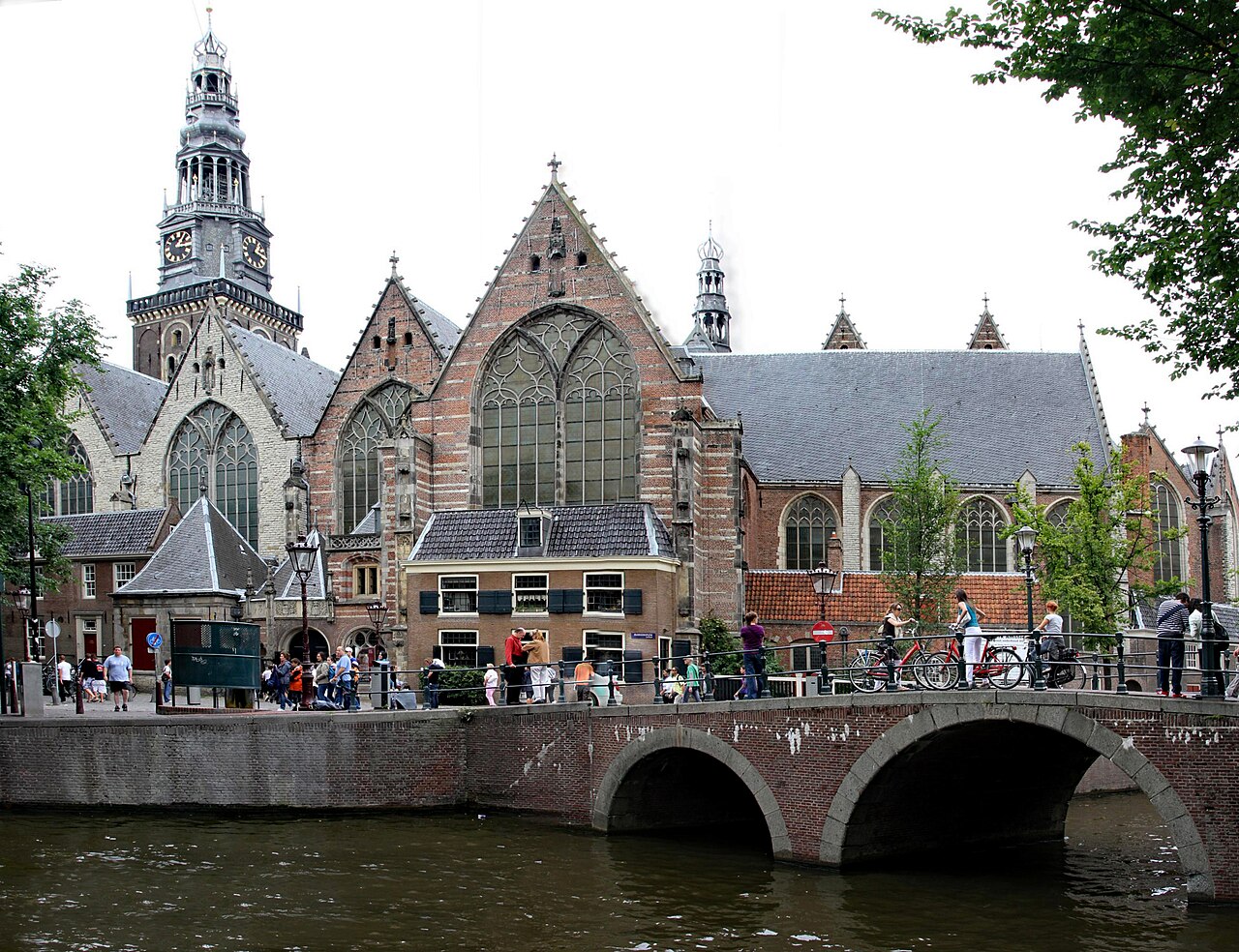
Photo: Hanno Lans · CC0 · Wikimedia Commons
Sexmuseum Amsterdam is a museum in Amsterdam, the Netherlands. Its full name is the Venustempel, the Temple of Venus. The free Lokali audio guide runs 7 minutes.
✓ Published October 2026 · how we write these guides
Visitor facts
| Lokali audio guide | 7 min · free |
|---|---|
| Type | Museum |
| Location | Amsterdam, Netherlands |
| Coordinates | 52.3766, 4.8973 |
| Official website | sexmuseumamsterdam.nl |
| Languages | 50+, in the Lokali app |
The story
Listen for a moment before you go inside. Trams squeal on their rails along Damrak. Suitcase wheels rattle over the paving stones. Somewhere a bicycle bell rings twice, sharp and impatient. You are only a few minutes' walk from Amsterdam Central Station, on one of the first streets that most visitors ever see in this city. And here, between souvenir shops and canal-boat ticket booths, is a doorway that makes many people laugh nervously before they even step through it.
This is the Sexmuseum Amsterdam. Its full name is the Venustempel, which means the Temple of Venus. Venus was the Roman goddess of love and desire, so the name is a small joke and a small promise at the same time. The museum opened in the 1980s, and it describes itself as one of the oldest museums of its kind anywhere in the world. Whether or not that claim is exactly true, it has been part of this street for a long time.
Before you go in, look at the building itself. Like many houses along Damrak, it is tall and narrow, with a long, deep interior behind a modest front. Old Amsterdam houses were often built this way. Land along the water was valuable, so buildings grew upwards and backwards instead of sideways. Inside, you will feel this shape. The museum unfolds as a sequence of rooms and stairs, one after another, deeper and higher into the house.
The street outside has its own story. Damrak was once open water, part of the harbour where the river Amstel met the sea inlet. Ships came almost to the heart of the city here. During the nineteenth century, much of this water was filled in to make room for the station and for traffic. So the ground under your feet was once a working harbour — a place of sailors, merchants, and everything that followed them ashore.
That connection matters. Port cities have always lived closely with the business of desire. A short walk from here is De Wallen, the old red light district, where the city's oldest streets wind around the Oude Kerk, the Old Church. The Sexmuseum sits on the edge of that world, but it is a different kind of place. It is not about commerce. It is about how people, across many centuries, have looked at sex, imagined it, joked about it, and hidden it.
Inside, the collection is a mixture. You will find paintings, prints, and drawings. You will find old photographs, some of them from the early days of photography itself. You will find small objects in wood, stone, porcelain, and metal, some decorative and some clearly designed to make people laugh. The displays are dense, and the lighting is often low. Take your time. The most interesting pieces are frequently the small ones, tucked into a corner of a glass case.
Here is something many visitors miss. Erotic images are almost as old as image-making itself. Many cultures made them — for fertility, for luck, for humour, or simply for pleasure. When you walk through these rooms, notice how often the same ideas appear again and again, in very different styles and materials. A carving from one part of the world and a print from another can share the same joke. Desire, it turns out, travels well.
The early photographs are worth a slower look. When cameras first appeared in the nineteenth century, people very quickly used them for erotic pictures. These images were often sold quietly, passed hand to hand, and hidden in drawers. Look at the faces in them. Look at the furniture, the painted backdrops, the stiff poses. They tell you as much about ordinary life in that century as they do about sex. The models were real people, with names we mostly no longer know.
Not everything here is serious. Some displays are deliberately playful, built to startle or amuse you as you turn a corner. You will hear laughter in these rooms — groups of friends, couples, sometimes a whole hen party. That sound is part of the experience. Many visitors arrive feeling a little awkward. Most leave feeling lighter. The museum seems to understand that humour is often how people talk about things they find hard to say directly.
It also helps to understand a Dutch idea called gedogen. It roughly means tolerance — a practical choice to allow and regulate something rather than pretend it does not exist. This attitude has shaped Amsterdam's approach to many things over the past decades. A museum like this one, right on a main street near the station, says something about that approach. It treats sexuality as part of human history, open to view, rather than something to keep behind closed doors.
A few practical thoughts. The rooms can feel crowded at busy times, especially in summer and on weekend afternoons. The museum has an age limit for visitors, so families with younger children should check before planning a visit. The stairs are narrow in places, as they are in most old Amsterdam houses. And some material is explicit. If you are visiting with others, it is worth agreeing beforehand how you all feel about that.
One more surprise. Many people walk past this doorway every day without noticing it at all. They are focused on the station, the canal boats, or the route to Dam Square. Yet the museum has quietly welcomed visitors from every corner of the world for decades. In a city full of grand institutions — the Rijksmuseum, the Van Gogh Museum — this small, odd house on Damrak has found its own loyal audience.
When you step back out onto the street, pause on the pavement for a moment. Notice the light on the facades opposite, the trams sliding past, the crowds pulling their luggage toward the station. Everything looks the same as it did when you went in. But perhaps you see it a little differently now — a harbour city, a city of travellers, a city that has always made room for very human appetites. Turn toward Dam Square, and let the walk carry you on.
Key facts
What to look for
Practical tips
Common questions
Is there a free audio guide to Sexmuseum Amsterdam?
Yes — the Lokali app narrates Sexmuseum Amsterdam free of charge in 50+ languages. The guide runs about 7 minutes, covers the history, what to look for on site and practical tips, and works offline once downloaded.
Where is Sexmuseum Amsterdam?
Sexmuseum Amsterdam is in Amsterdam, Netherlands, at 52.3766, 4.8973. Tap the map link on this page for directions from where you are.
What is Sexmuseum Amsterdam known for?
Its full name is the Venustempel, the Temple of Venus. The museum opened on Damrak in the 1980s.
What should you look for at Sexmuseum Amsterdam?
The tall, narrow facade typical of old Damrak houses. Painted backdrops behind models in the early photographs. Small carved objects tucked into corners of glass cases.
What should you know before visiting Sexmuseum Amsterdam?
Check the age limit before bringing teenagers or children. Visit on a weekday morning to avoid crowded rooms.
When is the best time to visit Sexmuseum Amsterdam?
Visit on a weekday morning to avoid crowded rooms.
On the map
Opens directions to Sexmuseum Amsterdam from your location.
More to see in Amsterdam



Hear Sexmuseum Amsterdam in your language
The full story, narrated, in 50+ languages. Download it before you go and it plays offline, at your own pace, with no ticket and no tour group.