
Treasury of Atreus
37.7268° N · 22.7536° E · Archaeological Site
Photo: Ken Russell Salvador · CC BY 2.0 · Wikimedia Commons
Treasury of Atreus is a "tholos" tomb located on the Panagitsa Hill at Mycenae, Greece, that dates ca.1250 BC. Built around 1250 BC, in the Late Bronze Age. The free Lokali audio guide runs 7 minutes.
✓ Published October 2026 · how we write these guides
Visitor facts
| Lokali audio guide | 7 min · free |
|---|---|
| Type | Archaeological Site |
| Location | Argos-Mykines, Greece |
| Coordinates | 37.7268, 22.7536 |
| Languages | 50+, in the Lokali app |
The story
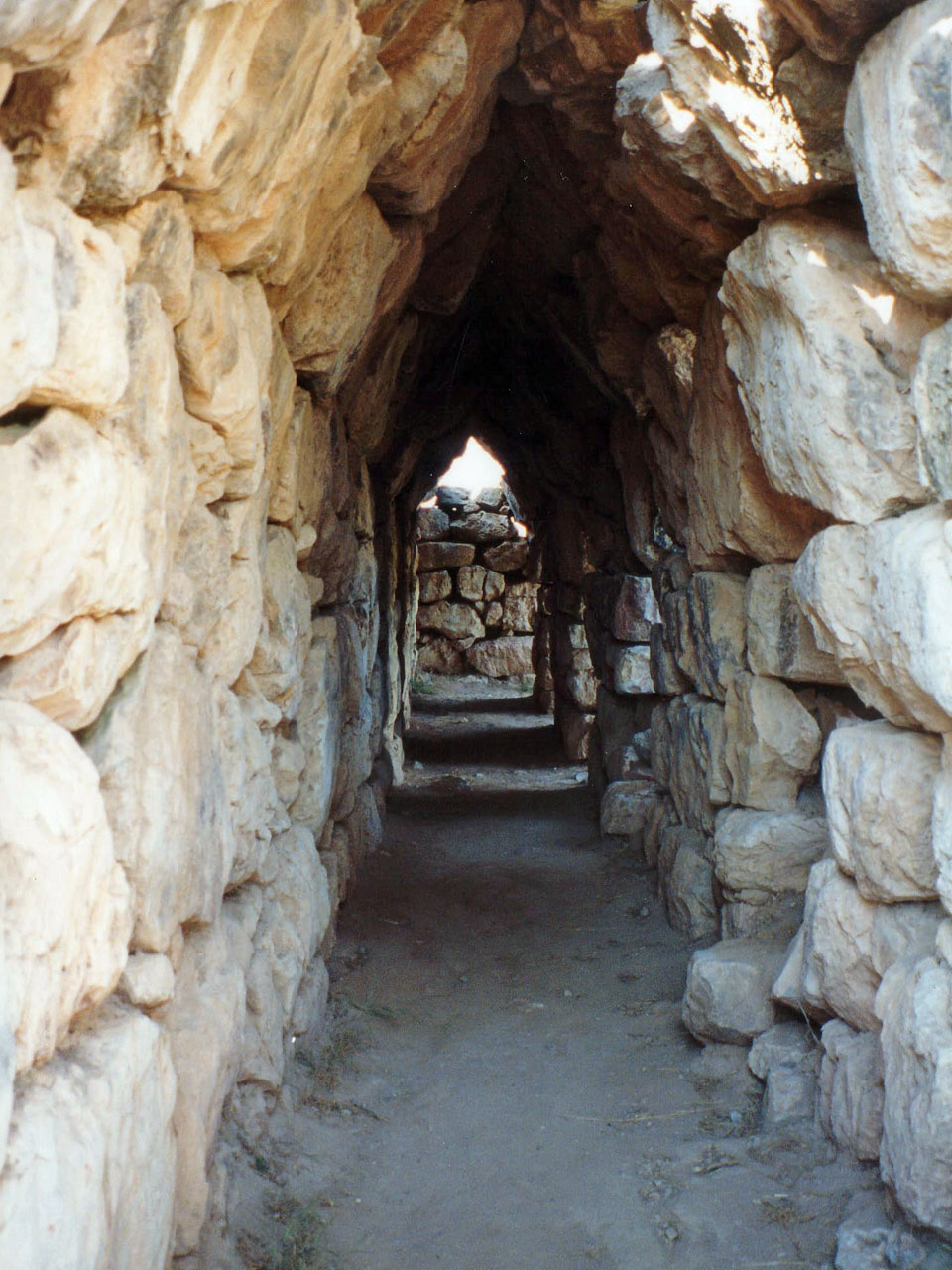
Stop for a moment at the mouth of the long stone corridor. The ground is packed earth and pale dust, and it slopes gently toward a dark doorway ahead. On either side, walls of rough, honey-grey blocks rise higher with every step. The air grows cooler as you walk. Somewhere ahead, the doorway is waiting, and the open hillside is falling away behind you.
You are walking into one of the great buildings of the ancient world. This is the Treasury of Atreus, also called the Tomb of Agamemnon. It sits on a slope below the citadel of Mycenae, in the northeast of the Peloponnese. It was built in the Late Bronze Age, most likely around 1250 BC. That puts it more than three thousand years in the past, and centuries before classical Athens.
First, the name. It is not a treasury, and it almost certainly has nothing to do with Atreus or Agamemnon. In Greek myth, Atreus was a king of Mycenae and the father of Agamemnon, the leader of the Greeks at Troy. The travel writer Pausanias visited in the second century of our era. He wrote about underground treasure houses linked to Atreus and his sons. Over time, the old name stuck. In reality, this was a tomb, built for a ruler whose name we do not know.
The corridor under your feet has a name of its own — the dromos, an ancient Greek word for a passage or running track. It is roughly thirty-six metres long. Its side walls are built from large, carefully cut blocks of conglomerate. Conglomerate is a natural stone full of small pebbles cemented together. Run your eye along the courses. The blocks are set in level rows, with tight joints and no mortar. This was expensive, prestige work. It was meant to impress everyone who walked this way.
Now look up at the doorway itself. It is tall and narrow, and it leans in slightly toward the top. Above it rests the inner lintel — a single slab of stone. Scholars estimate that it weighs around 120 tonnes. Nobody knows exactly how the builders lifted it into place. Earth ramps, levers, ropes and a great many people are the usual explanations. Whatever method they used, the stone has stayed in position for over three thousand years.
Above the lintel, notice the empty triangle in the stonework. This is called a relieving triangle. It is a clever piece of engineering. The gap moves the weight of the wall above away from the middle of the lintel and onto the sturdy sides of the doorway. Without it, the great slab might have cracked. Today the triangle is open. In the Bronze Age it was covered with carved, coloured stone panels.
That brings us to a surprise most visitors miss. The front of this tomb was once brightly decorated. Half-columns of green stone stood on either side of the door. They carried carved zigzags and spirals. Red stone panels with more carving filled the space above. Fragments of this decoration were taken away in the nineteenth century. Many of them are now in the British Museum in London, and others are in the National Archaeological Museum in Athens. Try to picture the bare facade in colour.
Now step through the doorway. Give your eyes a moment to adjust. You are standing inside the tholos — a Greek word for a round, beehive-shaped chamber. The room is about fourteen and a half metres across. The dome rises to a little over thirteen metres above you. For well over a thousand years, nothing else in the world had a wider unsupported dome. Only the great domes of Roman times finally surpassed it.
This is not a true dome in the Roman sense. It is a corbelled vault. The builders laid ring after ring of cut stone. Each ring sits slightly further inward than the ring below. As the circles get smaller, they close at the top with a single capstone. Afterward, the masons cut away the inner edges so the surface became smooth and curved. Then the whole structure was covered with a large mound of earth. That mound helps press the rings together and keep them stable.
Look closely at the walls inside, especially in the upper courses. You may see small holes in the stone. Many archaeologists believe these held bronze nails. The nails may have fixed bronze decorations, perhaps rosettes, across the surface of the dome. If so, the chamber would have caught torchlight in hundreds of small points. Now try something simple. Speak quietly, or clap once. The curved stone sends the sound back to you in a soft, lingering echo.
To your right, a smaller doorway leads to a side chamber cut into the rock of the hill. This room may have been the main burial place, or a space for grave goods. We cannot be sure. The tomb was robbed long ago, probably in ancient times. When archaeologists studied it, they found no royal burial and none of the treasure the name promises. Excavations in the twentieth century helped to date the building to the later phase of Mycenaean power.
It helps to place this tomb in a wider landscape. Several other tholos tombs stand around Mycenae, but this is the largest and the most finely built. Up on the hill behind you is the citadel, with its Lion Gate and its massive walls. Together with nearby Tiryns, Mycenae is listed by UNESCO as a World Heritage Site. This chamber shows how much wealth and labour a Mycenaean ruler could command.
Before you leave, step back out into the dromos and turn around. Look at the dark doorway framed by those huge blocks. Feel the warmth of the sun again after the cool air inside. Listen to the wind on the hillside, and perhaps the hum of insects in the dry grass. As you walk back up the corridor, notice how the walls get lower and the sky gets wider. The builders designed the walk this way, so the living walk out into the light.
Key facts
What to look for
Practical tips
Common questions
Is there a free audio guide to Treasury of Atreus?
Yes — the Lokali app narrates Treasury of Atreus free of charge in 50+ languages. The guide runs about 7 minutes, covers the history, what to look for on site and practical tips, and works offline once downloaded.
Where is Treasury of Atreus?
Treasury of Atreus is near Argos-Mykines, Greece, at 37.7268, 22.7536. Tap the map link on this page for directions from where you are.
What is Treasury of Atreus known for?
Built around 1250 BC, in the Late Bronze Age. Inner lintel stone weighs an estimated 120 tonnes.
What should you look for at Treasury of Atreus?
The open relieving triangle above the main doorway. Tiny nail holes in the upper courses of the dome. The small side chamber cut into rock on the right.
What should you know before visiting Treasury of Atreus?
Visit early morning to share the chamber with fewer people. Wear sturdy shoes for the uneven, dusty dromos floor.
When is the best time to visit Treasury of Atreus?
Visit early morning to share the chamber with fewer people.
On the map
Opens directions to Treasury of Atreus from your location.
More to see in Argos-Mykines


Hear Treasury of Atreus in your language
The full story, narrated, in 50+ languages. Download it before you go and it plays offline, at your own pace, with no ticket and no tour group.