
Ancient Stageira
40.5908° N · 23.7942° E · Archaeological Site
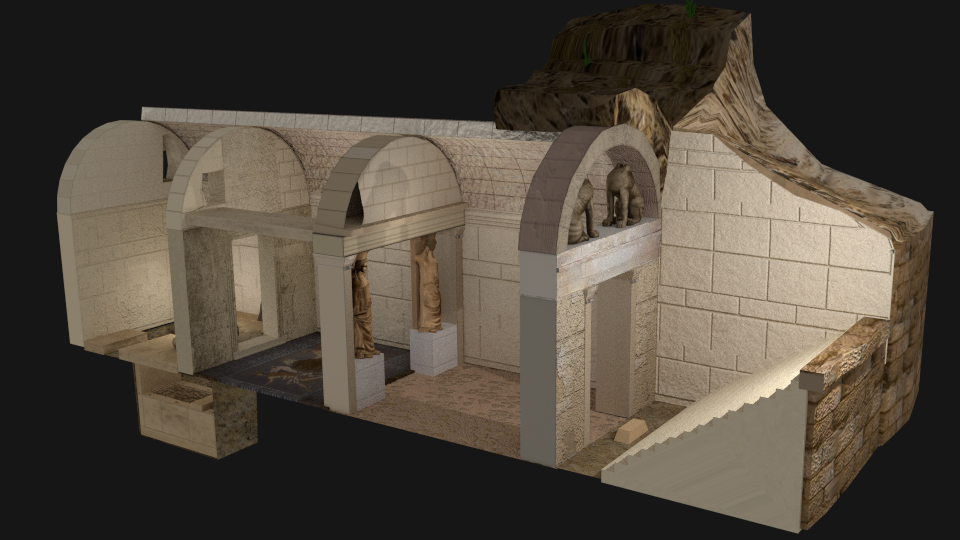
Photo: Christaras A · Copyrighted free use · Wikimedia Commons
Ancient Stageira is an ancient city in Macedonia, Greece. Aristotle was born in Stageira in 384 BCE. The free Lokali audio guide runs 7 minutes.
✓ Published October 2026 · how we write these guides
Visitor facts
| Lokali audio guide | 7 min · free |
|---|---|
| Type | Archaeological Site |
| Location | Aristotelis, Greece |
| Coordinates | 40.5908, 23.7942 |
| Official website | odysseus.culture.gr |
| Languages | 50+, in the Lokali app |
The story
Listen first. Cicadas fill the pine trees, and below you the sea moves against a rocky shore. Under your feet, the path is dry earth and loose stone, warm even in the morning. The air smells of resin and salt. You are standing on a small, steep peninsula that pushes out into the northern Aegean. Low walls of grey stone run across the slope. This quiet headland was once a Greek city. It is also the birthplace of one of the most influential thinkers who ever lived.
This is Ancient Stageira. Its most famous son was Aristotle, born here in 384 BCE. Aristotle went on to study with Plato in Athens and to tutor the young Alexander the Great. He wrote on logic, ethics, politics, biology and poetry. Many of the ways we sort and classify knowledge still follow paths he laid down. For centuries, scholars across Europe and the Islamic world simply called him the Philosopher. Some writers also called him the Stagirite, after this very place.
The city is much older than its famous son. Greek colonists from the island of Andros settled here in the seventh century BCE. They chose the site carefully. The peninsula has two low hills, natural harbours on either side, and fertile land behind it. A city on this headland could watch the sea and defend itself from the land. Look around and you can see the logic. Water surrounds you on almost every side, and the slope makes any attacker climb.
Now turn your attention to the walls. The fortifications are the most visible part of the site. Long stretches of stone still trace the line of the old defences, with the bases of towers set along them. Some sections belong to the Classical city. Others are later, because people kept repairing and rebuilding these defences over many centuries. Look closely at the stonework. In places, large carefully fitted blocks sit next to smaller, rougher stones. Each change in style marks a different period of building.
Stageira was never a large city, but it lived through large events. In the fifth century BCE it belonged to the Athenian alliance known as the Delian League. During the long Peloponnesian War, the historian Thucydides records that Stageira broke away from Athens and joined the Spartan side. So this small town appears in one of the great history books of the ancient world. Its people were caught, like many coastal towns, between powerful neighbours.
The most dramatic moment came in the middle of the fourth century BCE. Philip the Second of Macedon, Alexander's father, was expanding his kingdom across this region. Stageira was part of a league of local cities that stood against him. Around 348 BCE, Philip's forces destroyed the city. Many of its people were scattered or enslaved. For a while, the birthplace of Aristotle was little more than a ruin on a hill above the sea.
Here is the twist that many visitors miss. Ancient writers, including Plutarch, tell us that Stageira was later rebuilt — and that Aristotle himself asked for it. According to these accounts, the restoration of his home town was a kind of reward for his work as tutor to Alexander. The same king who destroyed the city had a family connection to its rebuilding. We cannot check every detail of this story, but it comes to us from the ancient sources themselves.
As you walk, you will pass the remains of public buildings. Archaeologists have uncovered the area of the marketplace, the agora, which was the heart of daily life in a Greek city. Here people traded, argued, voted and gossiped. They have also found the foundations of a long stoa. A stoa is a roofed walkway with columns, open on one side, where citizens could shelter from sun and rain. Try to imagine it in the heat of a summer afternoon.
The city also had its sacred places. On the higher ground, excavators found the remains of an early temple, and elsewhere a sanctuary linked to the goddess Demeter, protector of grain and harvest. For a farming and fishing community, her favour mattered. Offerings, prayers and festivals tied the town together. Today only foundations remain, but the hilltop location still feels deliberate. From up here, the gods and the people both had a clear view of the sea.
Another surprise is how recently most of this came to light. Systematic excavation here began only around 1990. Before that, the site was largely covered by soil and scrub. Much of what you see — the paths, the cleared walls, the exposed foundations — is the result of patient work over the past few decades. Excavation and study continue. In a sense, you are visiting a city that is still being uncovered.
Aristotle's connection to Stageira did not end with his death. Ancient tradition says that the people of the city brought his remains home and honoured him here with an altar. In recent years, some archaeologists have suggested that a structure on this site could be connected to that memorial. Others are more cautious. It is an open question, and that uncertainty is part of the place. You are walking where his fellow citizens may have remembered him.
It also helps to know the geography. The modern seaside village of Olympiada sits just below the peninsula, with its beach and tavernas. The inland village called Stagira, a short drive away, is a different place. It has a large statue of Aristotle and a park with simple scientific devices for visitors to try. Many people confuse the two. The ancient city you are standing in now is here, on the headland by the sea.
Before you leave, pause at a high point and look out. The bay curves away, the water shifts from green to deep blue, and the pines move in the breeze. It is easy to picture a boy growing up with this view — watching fishermen, studying plants, asking how things work. Aristotle spent his life looking closely at the natural world. As you walk back down the path, look closely too. Notice the stones, the insects, the light on the water. That habit of attention began somewhere like this.
Key facts
What to look for
Practical tips
Common questions
Is there a free audio guide to Ancient Stageira?
Yes — the Lokali app narrates Ancient Stageira free of charge in 50+ languages. The guide runs about 7 minutes, covers the history, what to look for on site and practical tips, and works offline once downloaded.
Where is Ancient Stageira?
Ancient Stageira is near Aristotelis, Greece, at 40.5908, 23.7942. Tap the map link on this page for directions from where you are.
What is Ancient Stageira known for?
Aristotle was born in Stageira in 384 BCE. Colonists from the island of Andros founded the city.
What should you look for at Ancient Stageira?
Tower bases set along the old defensive walls. Mixed stonework showing repairs from different centuries. Foundations of the long stoa near the agora.
What should you know before visiting Ancient Stageira?
Visit early morning to avoid the strongest summer heat. Wear sturdy shoes for steep, uneven stone paths.
When is the best time to visit Ancient Stageira?
Visit early morning to avoid the strongest summer heat.
On the map
Opens directions to Ancient Stageira from your location.
More to see near Ancient Stageira


Hear Ancient Stageira in your language
The full story, narrated, in 50+ languages. Download it before you go and it plays offline, at your own pace, with no ticket and no tour group.