
Asen's Fortress
41.9867° N · 24.8733° E · Fortification
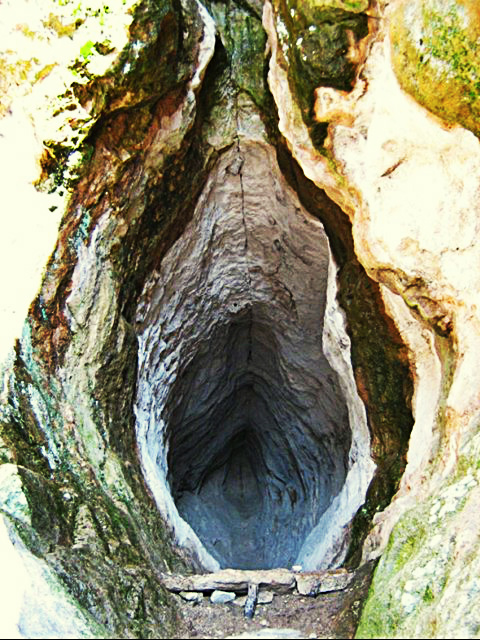
Photo: Todor Bozhinov / Тодор Божинов · CC BY-SA 3.0 · Wikimedia Commons
Asen's Fortress is a medieval fortress in the Bulgarian Rhodope Mountains above Asenovgrad. Stone inscription dates Ivan Asen the Second's rebuilding to 1231. The free Lokali audio guide runs 7 minutes.
✓ Published October 2026 · how we write these guides
Visitor facts
| Lokali audio guide | 7 min · free |
|---|---|
| Type | Fortification |
| Location | Asenovgrad, Bulgaria |
| Coordinates | 41.9867, 24.8733 |
| Official website | asenovakrepost.eu |
| Languages | 50+, in the Lokali app |
The story
Listen first to the wind. Up here, on this narrow spine of rock, it moves through pine and juniper, and somewhere far below, the river runs over stones. The ground underfoot is uneven, grey limestone worn smooth by centuries of boots. Look down the slope and you will see the road twisting into the gorge. This is Asen's Fortress, perched above the town of Asenovgrad, at the edge of the Rhodope Mountains, the long, forested range that stretches across southern Bulgaria into Greece.
Before any king built here, the rock itself chose the spot. The ridge drops away steeply on almost every side, so the fortress needed walls only where nature left an opening. Below runs the Chepelarska River, also called the Asenitsa. For travellers, this valley was one of the old routes between the Thracian plain and the high mountain passes to the south. Whoever held this ridge could watch that road, stop it, or tax it.
People understood this very early. Archaeologists have found traces of settlement here that reach back to the ancient Thracians, the people who lived across this region long before the Romans arrived. Later, the Byzantines fortified the height. The stones you see today belong to many building phases. Some sections were rebuilt, patched, and rebuilt again, and the walls show this. Different sizes of stone, different kinds of mortar, all stacked on top of each other like pages in a book.
Here is a detail most visitors never hear. One of the earliest written mentions of this fortress does not come from a battle report. It comes from a monastery rulebook. In the late eleventh century, a Byzantine military commander named Gregory Pakourianos founded the nearby Bachkovo Monastery, just a few kilometres further up this same valley. Its founding charter lists properties and places in the area, and this stronghold appears there under the name Petrich.
So why do we call it Asen's Fortress today? The name comes from Tsar Ivan Asen the Second, one of the most powerful rulers of the medieval Bulgarian state, in the thirteenth century. Under his reign, Bulgaria stretched from the Black Sea toward the Adriatic. This ridge sat on the southern edge of his lands, facing the Byzantine and Latin powers of the time. A strong fortress here was not decoration. It was a door that he needed to keep locked.
And he left his signature. An inscription carved in stone, dated to 1231, records that Ivan Asen the Second renewed the fortress. It is one of the most valuable written sources from medieval Bulgaria, because so few royal inscriptions from that era survive at all. Think about that for a moment. Almost eight hundred years ago, a king wanted people to know that he, personally, had rebuilt these walls. The town below now carries his name too.
Now turn toward the one building that still stands whole. This is the Church of the Holy Mother of God of Petrich. It is the heart of the site, and the reason many people climb up here. The church has two storeys, which is unusual for a small fortress church, and a square bell tower rises above the entrance. Its walls alternate bands of stone and red brick. That striped pattern is a classic feature of Byzantine and medieval Balkan building.
Why two storeys? Historians suggest the lower level may have served as a crypt or burial space, while the upper level held the main church. Look at the brickwork around the windows and arches. The builders used brick not only for strength but for decoration, setting small patterns into the facade. Even in a frontier fortress, with soldiers and supplies and constant watchfulness, someone took the time to make this wall beautiful.
If you can step inside, let your eyes adjust to the dim light. Fragments of wall paintings still survive, faded and broken, but you can still find faces, robes, and the outlines of saints. These frescoes come from more than one period. Time, damp, and damage have taken much of them. What remains is quiet and intimate, nothing like the grand painted churches of the capital cities. It feels like a prayer whispered rather than sung.
The fortress did not stay Bulgarian forever. Control of the ridge shifted between powers in the decades after Ivan Asen. Then, at the end of the fourteenth century, the Ottoman Empire took the region. After that, the stronghold slowly lost its military purpose and fell into ruin. Much of the stone was likely taken away for other buildings over time. Only the church survived as something more than walls, kept alive as a place of worship.
Here is the second surprise. This small church is not only a monument. Local people still treat it as a living church. On certain feast days, services take place here, and families walk up the hill to light candles. So when you stand inside, you are standing in a room that has heard prayers, in some form, for many hundreds of years. The ruins around it are history. The church is still part of daily life.
Before you go, walk to the edge of the ridge where it is safe and look out. To the north, the valley opens toward Asenovgrad and the wide Thracian plain beyond, and on a clear day you can follow it far into the distance. To the south, the Rhodopes fold into each other, darker and greener. Now you understand the whole idea of this place in a single glance. Mountain behind you, open land in front, and a road you can watch from above.
Take one more moment here. Listen again to the river below and the wind in the trees. Notice the warmth of the stone under your hand, and the striped brick of the church catching the light. As you walk back down the path, look up once or twice over your shoulder. The tower will stay in view for a while, small against the cliff, still keeping watch over the valley, just as its builders intended.
Key facts
What to look for
Practical tips
Common questions
Is there a free audio guide to Asen's Fortress?
Yes — the Lokali app narrates Asen's Fortress free of charge in 50+ languages. The guide runs about 7 minutes, covers the history, what to look for on site and practical tips, and works offline once downloaded.
Where is Asen's Fortress?
Asen's Fortress is in Asenovgrad, Bulgaria, at 41.9867, 24.8733. Tap the map link on this page for directions from where you are.
What is Asen's Fortress known for?
Stone inscription dates Ivan Asen the Second's rebuilding to 1231. Mentioned as Petrich in Bachkovo Monastery's eleventh-century charter.
What should you look for at Asen's Fortress?
Alternating bands of stone and red brick on the church. The square bell tower above the church entrance. Faded fresco fragments of saints inside the church.
What should you know before visiting Asen's Fortress?
Wear sturdy shoes for the uneven limestone paths. Combine your visit with nearby Bachkovo Monastery up the valley.
When is the best time to visit Asen's Fortress?
Bring water, since the climb gets warm in summer.
On the map
Opens directions to Asen's Fortress from your location.
More to see near Asen's Fortress


Hear Asen's Fortress in your language
The full story, narrated, in 50+ languages. Download it before you go and it plays offline, at your own pace, with no ticket and no tour group.