
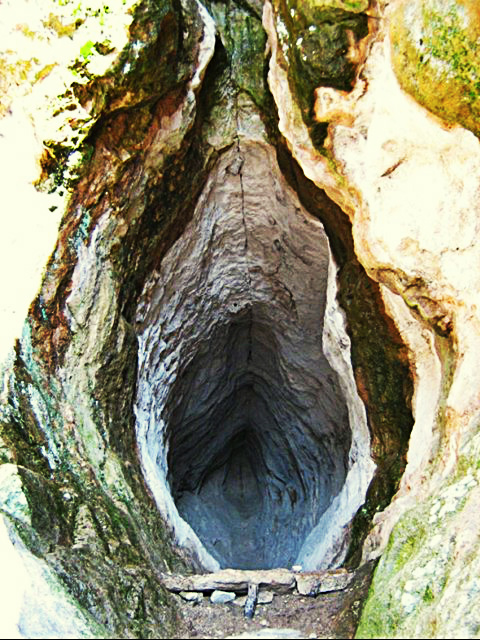
Photo: Reneman · CC BY 2.0 de · Wikimedia Commons
Bachkovo Monastery is a Stavropigal monastery in Bulgaria. Founded in 1083 by Byzantine commander Gregory Pakourianos. The free Lokali audio guide runs 7 minutes.
✓ Published October 2026 · how we write these guides
Visitor facts
| Lokali audio guide | 7 min · free |
|---|---|
| Type | Monastery |
| Location | Asenovgrad, Bulgaria |
| Coordinates | 41.9423, 24.8499 |
| Official website | bachkovskimanastir.com |
| Languages | 50+, in the Lokali app |
The story
Listen first. Somewhere below you, the river runs fast over stones, and the sound carries up between the walls. The air here is cooler than in town. It smells of wax, pine, and wet rock. Underfoot the old cobbles are uneven, polished smooth by many centuries of pilgrims. You are in a narrow valley of the Rhodope Mountains, a short drive south of Asenovgrad. In front of you stands one of the oldest working monasteries in Bulgaria. It is still home to monks today.
The story begins in 1083. Two brothers founded this place. The elder, Gregory Pakourianos, was a senior military commander in the service of the Byzantine Empire, the Greek-speaking Christian empire ruled from Constantinople. Here is the first surprise. Gregory was not Greek, and he was not Bulgarian. He was Georgian, from the far side of the Black Sea. In Georgia today he is remembered as Grigol Bakurianisdze. He built this monastery for monks from his own homeland.
Gregory left behind a founding charter, called a typikon. It is a rulebook for monastic life. It sets out how the monks should pray, eat, and govern themselves. Remarkably, the text was written in three languages: Greek, Georgian, and Armenian. That one detail shows how international this corner of the empire was. Soldiers, scholars, and monks from the Caucasus moved freely through these mountains. For a time, this valley was one of the important centres of Georgian learning outside Georgia itself.
Now look around the courtyard. Most of what you see is not from the eleventh century. In the late Middle Ages, after the Ottoman conquest of the Balkans, the monastery was damaged and largely destroyed. It was rebuilt from the late sixteenth century onward. The buildings grew in layers. Wooden balconies, white walls, and stone arcades wrap around the inner space. Monks' cells sit above. The effect is closer to a small village than a single grand building.
The heart of the complex is the main church, dedicated to the Dormition of the Virgin. The Dormition is the Orthodox name for the moment Mary fell asleep in death and was taken into heaven. The church was built at the start of the seventeenth century. Step inside and your eyes need a moment. It is dark, warm, and crowded with painted saints. Candles flicker in sand trays near the door. The walls carry centuries of soot.
Inside this church is the monastery's most treasured object. It is an icon of the Virgin Mary holding the Christ child, covered in a shining silver casing. Many pilgrims come to Bachkovo for this icon alone. Local tradition says it was brought here from Georgia, connecting it to the founders. That origin is a tradition, not proven history. But the devotion around it is very real. Watch how people approach it, cross themselves, and bend forward to kiss the glass.
Twice a year the whole valley fills with people. The great feast is the Dormition in mid-August, when pilgrims arrive from across Bulgaria. Some walk long distances. Others camp overnight near the walls. There is another custom in spring, in the week after Easter. Monks carry the icon out of the church and in procession to a chapel in the hills nearby. For believers, these days are the true life of the monastery, far more than any tourist season.
Turn now to the smaller Church of Saint Nicholas. Its painted porch belongs to the nineteenth century, and the artist was Zahari Zograf. He is one of the most celebrated Bulgarian painters of the period known as the National Revival, when Bulgarian culture and identity grew strong again under Ottoman rule. Look for his scene of the Last Judgement. Sinners, devils, and saints crowd together in bright colour. Zograf painted with a lively, almost cheerful hand, even when the subject is damnation.
The old refectory also deserves a look. A refectory is the dining hall where monks eat together, often in silence while one of them reads aloud. Its long walls are covered in paintings. Among the expected saints, some walls show figures that surprise many visitors. Painters in this region sometimes included scenes and personalities beyond the strictly biblical. Stand at one end and let your eye travel slowly along the room. Imagine the long tables full, and only one voice speaking.
Here is the second surprise, and most visitors miss it. The oldest building of the monastery is not inside these walls at all. It stands a short walk away, up the slope. It is the ossuary, a two-storey burial church. Its lower level once held the bones of the monks. Its walls preserve paintings from the founding era, made by artists working in a style linked to Georgia and Byzantium. It is often locked, so ask at the monastery whether a visit is possible.
Bachkovo also sheltered a famous exile. At the end of the fourteenth century, the Bulgarian capital Tarnovo fell to the Ottomans. Its patriarch, Euthymius, was a great scholar and church reformer. According to the generally accepted account, he was sent away to spend his last years at this monastery. So this valley holds two threads of memory. One leads to medieval Georgia. The other leads to the final days of the medieval Bulgarian state.
When you walk back down to the gate, you will pass a line of stalls. Local sellers set out jars of dark mountain honey, homemade jams, dried herbs, and small wooden crafts. Their tables are part of the experience here. Many of these families come from villages in the surrounding hills. Buy a jar, ask what flowers the bees visited, and listen to the answer. It is a small, ordinary exchange, and it has happened at this gate for a very long time.
Before you leave, pause in the courtyard one more time. Look up at the wooden balconies and the green slopes beyond the roofs. Hear the river again, and perhaps a bell. A Georgian general chose this narrow valley almost a thousand years ago. Empires rose and fell around it. The walls burned and were rebuilt. Yet the candles are still lit each morning. As you walk out, notice how quickly the quiet stays behind you... and how the sound of the water follows you down the road.
Key facts
What to look for
Practical tips
Common questions
Is there a free audio guide to Bachkovo Monastery?
Yes — the Lokali app narrates Bachkovo Monastery free of charge in 50+ languages. The guide runs about 7 minutes, covers the history, what to look for on site and practical tips, and works offline once downloaded.
Where is Bachkovo Monastery?
Bachkovo Monastery is near Asenovgrad, Bulgaria, at 41.9423, 24.8499. Tap the map link on this page for directions from where you are.
What is Bachkovo Monastery known for?
Founded in 1083 by Byzantine commander Gregory Pakourianos. Founder was Georgian, remembered as Grigol Bakurianisdze.
What should you look for at Bachkovo Monastery?
Silver-covered icon of the Virgin inside the main church. Zograf's crowded Last Judgement on the Saint Nicholas porch. Wooden balconies of the monks' cells around the courtyard.
What should you know before visiting Bachkovo Monastery?
Dress modestly, with covered shoulders and knees, inside churches. Ask before taking photographs inside the painted churches.
When is the best time to visit Bachkovo Monastery?
Arrive early to avoid weekend tour bus crowds.
On the map
Opens directions to Bachkovo Monastery from your location.
More to see near Bachkovo Monastery


Hear Bachkovo Monastery in your language
The full story, narrated, in 50+ languages. Download it before you go and it plays offline, at your own pace, with no ticket and no tour group.