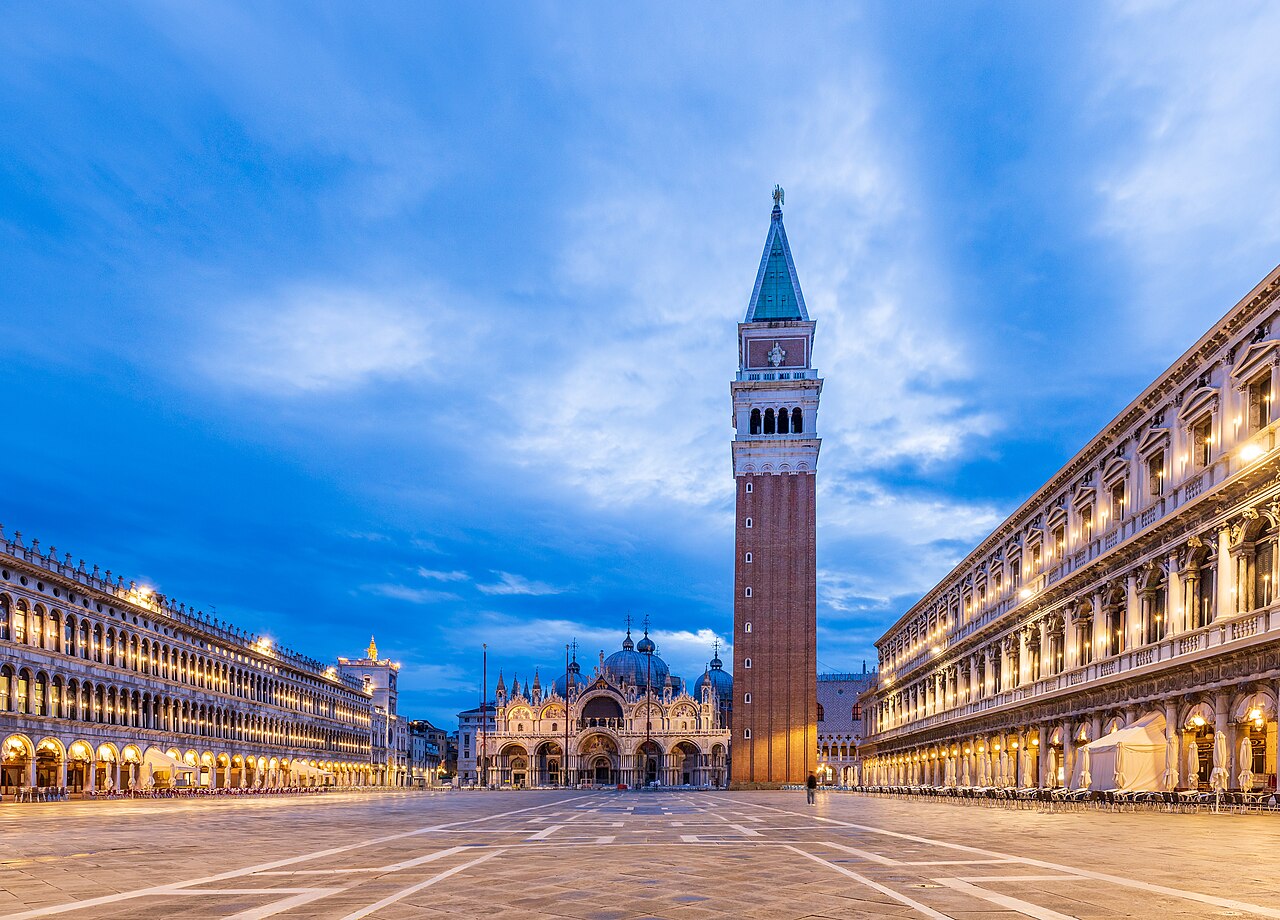
Piazza Square is a small Italian-style plaza in the old town, surrounded by buildings with mosaic facades, stained glass, and ornamental balconies. It is in Batumi, Georgia. Most visitors spend 20–40 min here. The free Lokali audio guide runs 9 minutes.
✓ Verified August 2026 · how we write these guides
Visitor facts
| Time needed | 20–40 min |
|---|---|
| Lokali audio guide | 9 min · free |
| Type | Square |
| Best for | Romantic |
| Location | Batumi, Georgia |
| Coordinates | 41.6425, 41.6364 |
| Languages | 45, in the Lokali app |
The story
The cobblestones beneath your feet are smooth from centuries of footsteps — polished by merchants, soldiers, lovers, tourists, all leaving their invisible mark on this open space. The light here changes by the hour, throwing long shadows across the pavement at dawn, flooding the square with hard brilliance at noon, softening into honey tones as the sun drops behind the surrounding buildings.
Squares like this one have always been the heart of urban life — the place where announcements were made, markets were held, justice was dispensed, revolutions began. Stand in the centre and turn slowly. Notice how the buildings frame the space, each facade a different era, a different ambition. Some rise tall and narrow, others spread wide with arcades at ground level. The rhythm of windows, the materials — stone, stucco, brick — tell you which century each structure belongs to.
Look for the paving pattern. Often these designs are not random. Radiating lines might point toward a monument or fountain that once stood here. Contrasting stone colours sometimes mark old property boundaries or the footprint of a building long demolished. The ground itself is an archive, if you know how to read it.
The name "piazza" simply means square in Italian, and the word has travelled across Europe, sometimes keeping its original form, sometimes translated, sometimes adopted wholesale. What matters is the function — a void in the dense fabric of the city, a place to gather, to see and be seen. In medieval times, squares were often irregular, shaped by the buildings that grew up around them. Later, during the Renaissance and Baroque periods, architects began designing squares as deliberate compositions, symmetrical and grand.
Pay attention to the edges. Cafes and shops line the perimeter, their chairs spilling onto the pavement. This is where the square breathes — the transition between public space and private commerce. Locals know which cafe catches the morning sun, which corner stays cool in summer, where to sit if you want to watch the world pass by without being noticed.
If there is a fountain or monument at the centre, walk around it. Notice the water's sound, how it masks the traffic noise from adjacent streets. Fountains were not just decorative — they were essential infrastructure, providing drinking water before modern plumbing. The sculptures and inscriptions often commemorate a ruler, a victory, a saint, or an idea the city wanted to celebrate in stone.
The square changes character with the time of day. Early morning, it belongs to street cleaners and delivery trucks. By mid-morning, market stalls might appear, vendors setting up fruit, flowers, cheese, bread. Lunchtime brings office workers with sandwiches. Late afternoon, children run across the open space while parents sit on benches. Evening transforms it again — restaurants set tables, musicians sometimes perform, the architecture glows under artificial light.
Listen to the acoustics. Open squares have a particular sound signature — voices carry differently than on a narrow street, footsteps echo off the surrounding walls, the clatter of a dropped coin rings out clearly. This is why squares have always been stages for public speech, theatre, music. The space amplifies the human voice.
Some squares have underground layers — Roman ruins beneath medieval paving beneath modern asphalt. Archaeologists occasionally dig test trenches and discover earlier versions of the same gathering place, proof that certain spots in a city hold their function across millennia. The location might have been chosen for practical reasons — a crossroads, a water source, high ground safe from floods.
Notice who uses the square now. Tourists with cameras, yes, but also locals cutting through on their way to work, elderly residents feeding pigeons, teenagers meeting before heading elsewhere. A healthy square serves both visitors and the neighbourhood. It is not a museum piece — it is a living room for the city.
Before you leave, find a spot at the edge and watch for a few minutes. See how people move through the space — the desire lines they trace, the places they pause, the corners they avoid. Every square has its own unwritten rules, its own rhythms. You are standing in a place that has absorbed centuries of human energy, and it continues to absorb yours now.
As you walk away, glance back. The square will look different from this angle, the proportions shifting, new details emerging. That is the beauty of open space — it reveals itself slowly, depending on where you stand and what you are willing to notice.
Key facts
What to look for
Practical tips
Common questions
How long do you need at Piazza Square?
Plan 20–40 min. That is the time most visitors spend at Piazza Square. The free Lokali audio guide adds about 9 minutes of narration you can listen to as you walk, so it fits inside your visit rather than adding to it.
Is there a free audio guide to Piazza Square?
Yes — the Lokali app narrates Piazza Square free of charge in 50+ languages. It covers the history, what to look for on site and practical tips, and it works offline once downloaded.
Where is Piazza Square?
Piazza Square is in Batumi, Georgia, at 41.6425, 41.6364. Tap the map link on this page for directions from where you are.
What should you know before visiting Piazza Square?
Visit at different times to see how the square changes character.
What is Piazza Square known for?
Piazza means square in Italian, adopted across Europe.
What is the best time to visit Piazza Square?
The mosaic work on the building facades is most vivid in late afternoon light.
On the map
Opens directions to Piazza Square from your location.
More to see in Batumi


Hear Piazza Square in your language
The full story, narrated, in 50+ languages. Download it before you go and it plays offline, at your own pace, with no ticket and no tour group.