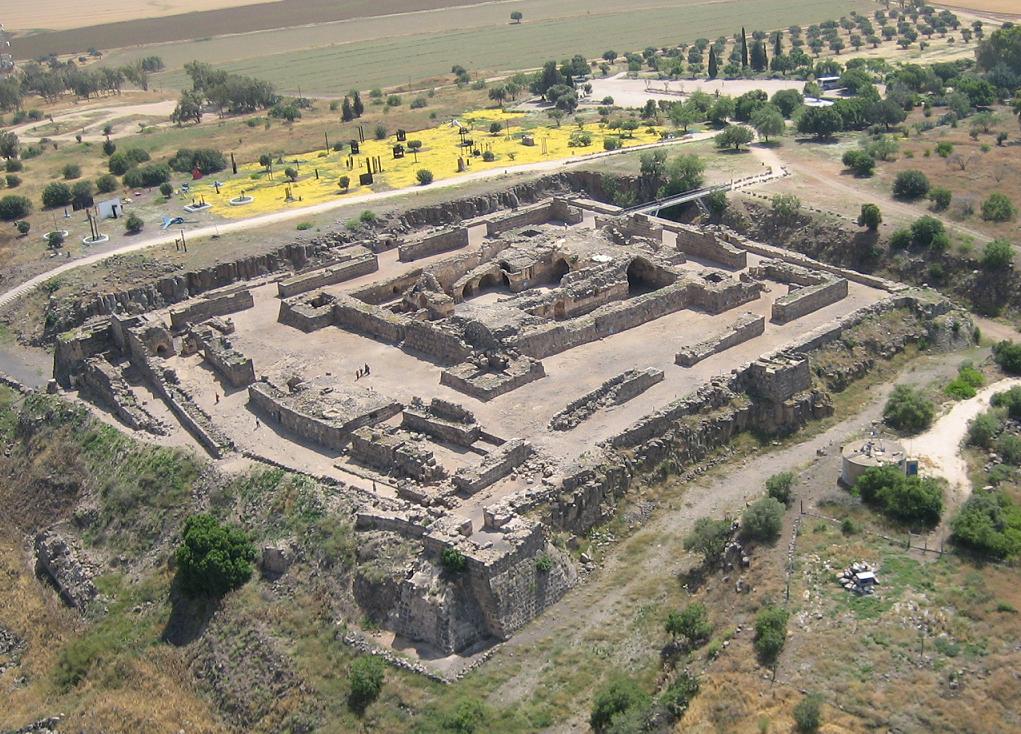
Belvoir Fortress
32.5956° N · 35.5214° E · Archaeological Site
Photo: אסף.צ at Hebrew Wikipedia · Public domain · Wikimedia Commons
Belvoir Fortress is a crusader castle in Israel. Built by the Knights Hospitaller in the twelfth century. The free Lokali audio guide runs 6 minutes.
✓ Published October 2026 · how we write these guides
Visitor facts
| Lokali audio guide | 6 min · free |
|---|---|
| Type | Archaeological Site |
| Location | Beit She'an, Israel |
| Coordinates | 32.5956, 35.5214 |
| Languages | 50+, in the Lokali app |
The story
Wind comes first. It moves up from the Jordan Valley, crosses the open plateau, and pushes against the dark stone around you. Underfoot the ground is rough basalt, black and pitted, warm in the afternoon sun. Below, the valley floor lies in a patchwork of fields and fish ponds. On a clear day the far side of the valley rises in a long line of hills. This is Belvoir Fortress, and that wide view explains everything about why it was built here.
The name is French, and it means beautiful view. The Crusaders who held this ridge in the twelfth century spoke French, so the name came naturally. The local Arabic name was Kawkab al-Hawa, which means star of the wind. Today the site is also known in Hebrew as Kochav HaYarden, the Star of the Jordan. Three languages, three names... and every one of them looks outward, to the sky or to the view.
So who built it? The castle belonged to the Knights Hospitaller. They were a military religious order, a brotherhood of monks who were also soldiers. They began as caretakers of a hospital for pilgrims in Jerusalem. Over time they became one of the most powerful military forces in the Crusader kingdoms. The Hospitallers acquired this land in the 1160s, and they raised the fortress in the years that followed.
Now look at the shape of the walls. The fortress is built as a square inside a square. An outer wall with towers at the corners surrounds a smaller inner castle. An attacker who broke through the first line would face a second, higher wall. Historians often describe Belvoir as one of the earliest concentric castles. That design — rings of defence, one inside another — later shaped castles across Europe.
Walk to the edge of the outer wall and look down. Here is the first surprise for many visitors. A deep, dry moat runs around the fortress on three sides. It was not dug through soft earth. It was cut directly into the hard rock of the plateau. The quarried stone from this moat very likely went straight into the walls above it. The builders turned their ditch into their quarry.
The fourth side needed no moat. On the east, the land falls away steeply toward the Jordan Valley. That slope did the defending work by itself. Stand near the eastern wall and feel the drop. Any army climbing from the valley floor would arrive tired, exposed, and in full view of the archers above. The Hospitallers chose the ground well.
Inside, the castle was built to survive a long siege. Look for the cisterns, the stone chambers that stored rainwater through the dry months. Look for the long vaulted halls along the walls. These rooms held stores, stables, and living space for the garrison. A castle like this was a small town under siege conditions. Water, grain, and patience mattered as much as swords.
And patience was tested. In 1187, the Muslim sultan Saladin defeated the main Crusader army at the Battle of Hattin, not far from here. After that battle, castle after castle fell across the region. Belvoir did not. Its garrison held out for about a year and a half. Saladin's forces surrounded the hill, and his miners worked to bring down the walls from below.
The end came in January 1189. The defenders finally surrendered. They were allowed to leave under terms, rather than be killed. This was the second surprise in the story: one of the last strongholds to resist in this region was a castle that most travellers have never heard of. Its long stand shows how strong the double walls truly were.
After the fall, the fortress passed into the hands of the Ayyubid dynasty, the family of Saladin. In the early thirteenth century they faced a new threat of Crusader armies returning. Their answer was practical. They pulled down much of the castle, so that no enemy could use it again. That is why you see broken walls and open rooms today. The ruin is partly deliberate.
Life did not leave the ridge. Over the following centuries a village grew on and around the old stones. It took the Arabic name of the place, Kawkab al-Hawa. In the twentieth century archaeologists cleared and studied the site, and it became part of a national park. Some of what you walk through today was buried under later buildings and rubble for hundreds of years.
Notice how the light changes the stone. Basalt is a volcanic rock, and here it is almost black. In strong noon light it looks heavy and dull. Late in the day the low sun brings out the texture of every block. In places you may see paler limestone used in arches and details. The contrast between dark and light stone is easy to miss at first glance.
Take a moment at the lookout point before you leave. To the north, on a clear day, you may catch a glimpse toward the Sea of Galilee. To the east, the hills of Jordan rise beyond the river. The Hospitallers stood here and watched for dust on the roads below. Travellers, armies, and caravans all moved through this valley, and from this ridge the guards could see them coming.
As you walk back across the moat, listen again for the wind. It is the same wind that gave this place its old Arabic name. Run a hand along the rough basalt. Somebody cut this stone by hand more than eight hundred years ago, and somebody defended it for a year and a half against impossible odds. The walls are broken now. The view they were built for is still here.
Key facts
What to look for
Practical tips
Common questions
Is there a free audio guide to Belvoir Fortress?
Yes — the Lokali app narrates Belvoir Fortress free of charge in 50+ languages. The guide runs about 6 minutes, covers the history, what to look for on site and practical tips, and works offline once downloaded.
Where is Belvoir Fortress?
Belvoir Fortress is near Beit She'an, Israel, at 32.5956, 35.5214. Tap the map link on this page for directions from where you are.
What is Belvoir Fortress known for?
Built by the Knights Hospitaller in the twelfth century. Belvoir is French for beautiful view.
What should you look for at Belvoir Fortress?
The dry moat cut straight into solid rock. Black basalt walls with paler limestone details. Rock-cut cisterns that stored rainwater for sieges.
What should you know before visiting Belvoir Fortress?
Visit late afternoon when low sun lights the basalt. Bring a windproof layer for the exposed plateau.
When is the best time to visit Belvoir Fortress?
Visit late afternoon when low sun lights the basalt.
On the map
Opens directions to Belvoir Fortress from your location.
More to see near Belvoir Fortress


Hear Belvoir Fortress in your language
The full story, narrated, in 50+ languages. Download it before you go and it plays offline, at your own pace, with no ticket and no tour group.