Turtle Farm (Granja de Tortugas)
21.2414° N · 86.7347° W · Wildlife Center
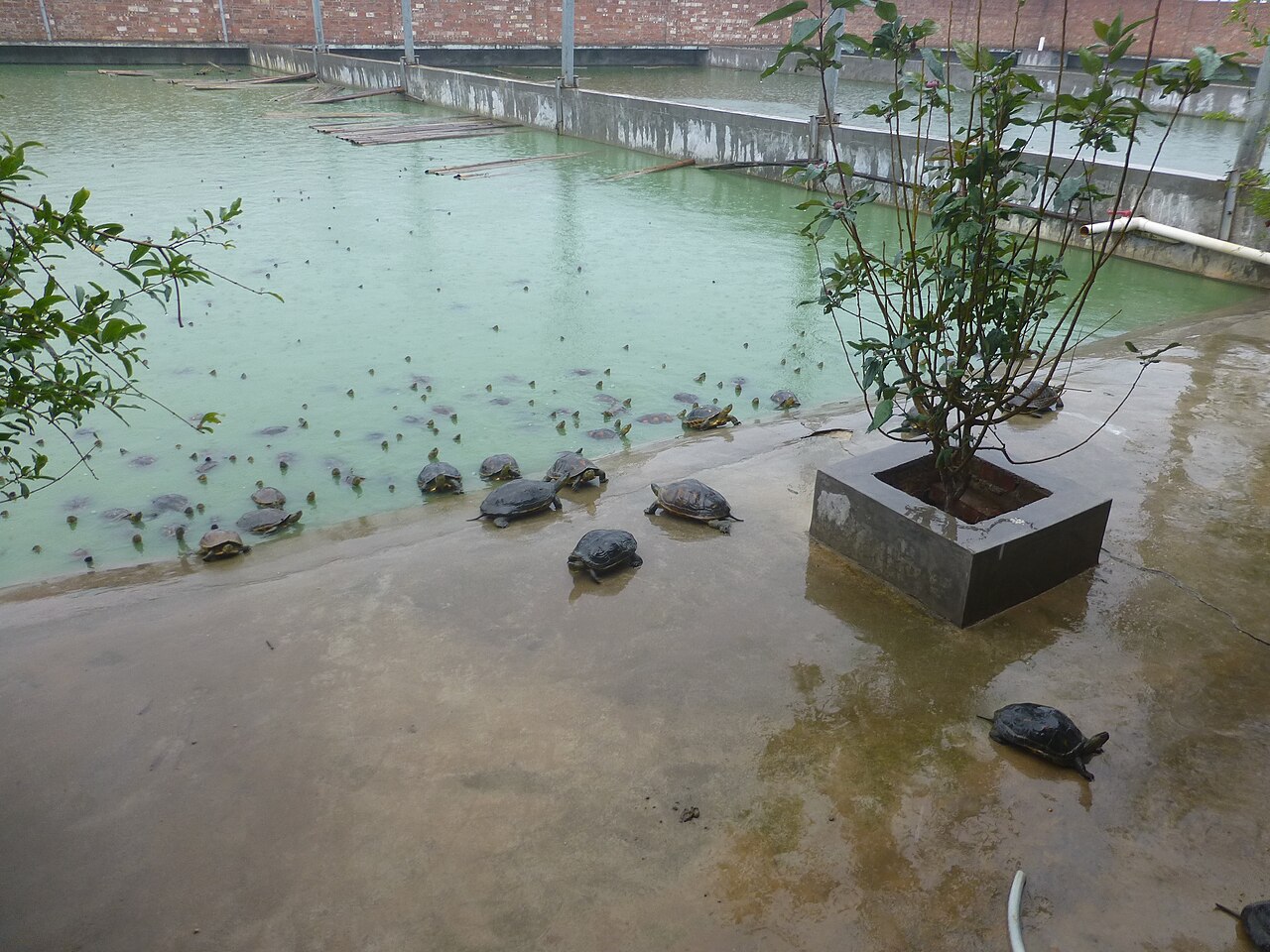
Turtle Farm (Granja de Tortugas) is a marine-turtle rescue and breeding facility where visitors observe hatchlings, juveniles, and adults in various pools. It is in Cancún, Mexico. Most visitors spend 1–1.5 hours here. The free Lokali audio guide runs 5 minutes.
✓ Verified August 2026 · how we write these guides
Visitor facts
| Time needed | 1–1.5 hours |
|---|---|
| Lokali audio guide | 5 min · free |
| Type | Wildlife Center |
| Best for | Family |
| Location | Cancún, Mexico |
| Coordinates | 21.2414, -86.7347 |
| Languages | 45, in the Lokali app |
The story
In a round concrete tank, dozens of sea turtles the size of your palm paddle in slow circles. Their small flippers tap against the walls with a sound like soft applause. Salt and sunlight hang in the air. This is the Tortugranja, the turtle farm of Isla Mujeres, a small working sanctuary on the quiet, western side of the island.
The sanctuary stands on Sac Bajo, a narrow arm of land on the lagoon side of Isla Mujeres. The water here is calm and shallow. Mangroves line parts of the shore. Herons pick along the waterline, and small rays sometimes pass near the pens. The location is practical: sea pens sit right off the building, in water gentle enough for young turtles.
Sea turtles shaped life on this island long before tourism did. For generations, island fishermen hunted them. Turtle meat fed families, eggs were gathered from beach nests, and polished shells were sold to traders. The animals were treated as a resource, taken freely from the sea the way fish were. Nobody thought the supply could end. A turtle was food, income, and habit, all at once.
Then the turtles began to disappear, here and across the Caribbean. In the 1980s, the story turned. Local fishermen, the same community that had hunted turtles, began protecting nesting beaches instead. That effort grew into an organized hatchery, supported over time by the government. Hunters became keepers within a single generation. It is one of the clearest stories of change this coast can offer.
The work follows the turtles' own calendar. Nesting season on this coast runs roughly from May through October. Females crawl ashore at night, dig nests in the sand, and lay their eggs. Staff and volunteers patrol the beaches, mark the nests, and move the eggs to protected sand pens, out of reach of poachers, dogs, and storm tides.
Three species matter most in these waters: the green turtle, the loggerhead, and the hawksbill. Signs beside each tank give their names in Spanish and English. Green turtles grow large on a diet of sea grass. Loggerheads carry broad, heavy heads. Hawksbills, with their pointed beaks, feed among the reefs. All three face threats across their range.
The tanks sort the residents by age and size. In one, hatchlings smaller than a saucer swim in restless, constant motion. In the next, year-old turtles the size of dinner plates rest stacked half on top of each other, unbothered. Outside, in fenced sea pens, larger turtles glide through natural lagoon water, waiting for their release date. Lean on the rail and watch them rise for air.
Release is the point of everything here. Each season, when hatchlings are ready, staff carry them to the beach and set them on the sand near the waterline. The small bodies rush the surf in a scrambling line. Handlers let them cross the last stretch of sand themselves, because that crawl is thought to help the young turtles fix their home beach in memory. Visitors sometimes join these releases in the summer and autumn months. Ask the staff whether one is scheduled.
The sea is not kind to young turtles. Of every large group of hatchlings, only a very small number live to adulthood. Birds take some, fish take more, and nets and plastic take their share. A protected first year raises the odds. Every guarded nest is a bet against those numbers. That is the sanctuary's whole argument, made in concrete and salt water.
Adult females carry a quiet mystery: they return to nest on the same stretch of coast where they hatched. Scientists call it natal homing. No one fully understands how they navigate; the leading theory points to the earth's magnetic field. A hatchling that scrambles off this beach may cross decades of ocean and come back to this exact sand.
Keep your expectations honest: this is a modest, working facility, not a polished attraction. Paint peels in places, and the smell is the smell of real sea water and fish feed. The entrance fee is small. A visit takes under an hour. Golf carts reach it easily along the Sac Bajo road, past the lagoon and the mangroves. Morning visits catch feeding time and cooler air.
Before you go, watch the smallest tank one more time. Each turtle there weighs less than a phone, and each carries the full map of an ocean somewhere in its body. Most will not make it. Some will, because fishermen on this island changed their minds. Small places can hold that much.
Key facts
What to look for
Practical tips
Common questions
How long do you need at Turtle Farm (Granja de Tortugas)?
Plan 1–1.5 hours. That is the time most visitors spend at Turtle Farm (Granja de Tortugas). The free Lokali audio guide adds about 5 minutes of narration you can listen to as you walk, so it fits inside your visit rather than adding to it.
Is there a free audio guide to Turtle Farm (Granja de Tortugas)?
Yes — the Lokali app narrates Turtle Farm (Granja de Tortugas) free of charge in 50+ languages. It covers the history, what to look for on site and practical tips, and it works offline once downloaded.
Where is Turtle Farm (Granja de Tortugas)?
Turtle Farm (Granja de Tortugas) is in Cancún, Mexico, at 21.2414, -86.7347. Tap the map link on this page for directions from where you are.
What should you know before visiting Turtle Farm (Granja de Tortugas)?
Visit in summer or autumn to see hatchlings.
What is Turtle Farm (Granja de Tortugas) known for?
Green, loggerhead, and hawksbill turtles nest on this coast.
What is the best time to visit Turtle Farm (Granja de Tortugas)?
The hatchery pools are hypnotic—watch dozens of tiny turtles paddle in circles.
On the map
Opens directions to Turtle Farm (Granja de Tortugas) from your location.
More to see in Cancún


Hear Turtle Farm (Granja de Tortugas) in your language
The full story, narrated, in 50+ languages. Download it before you go and it plays offline, at your own pace, with no ticket and no tour group.