
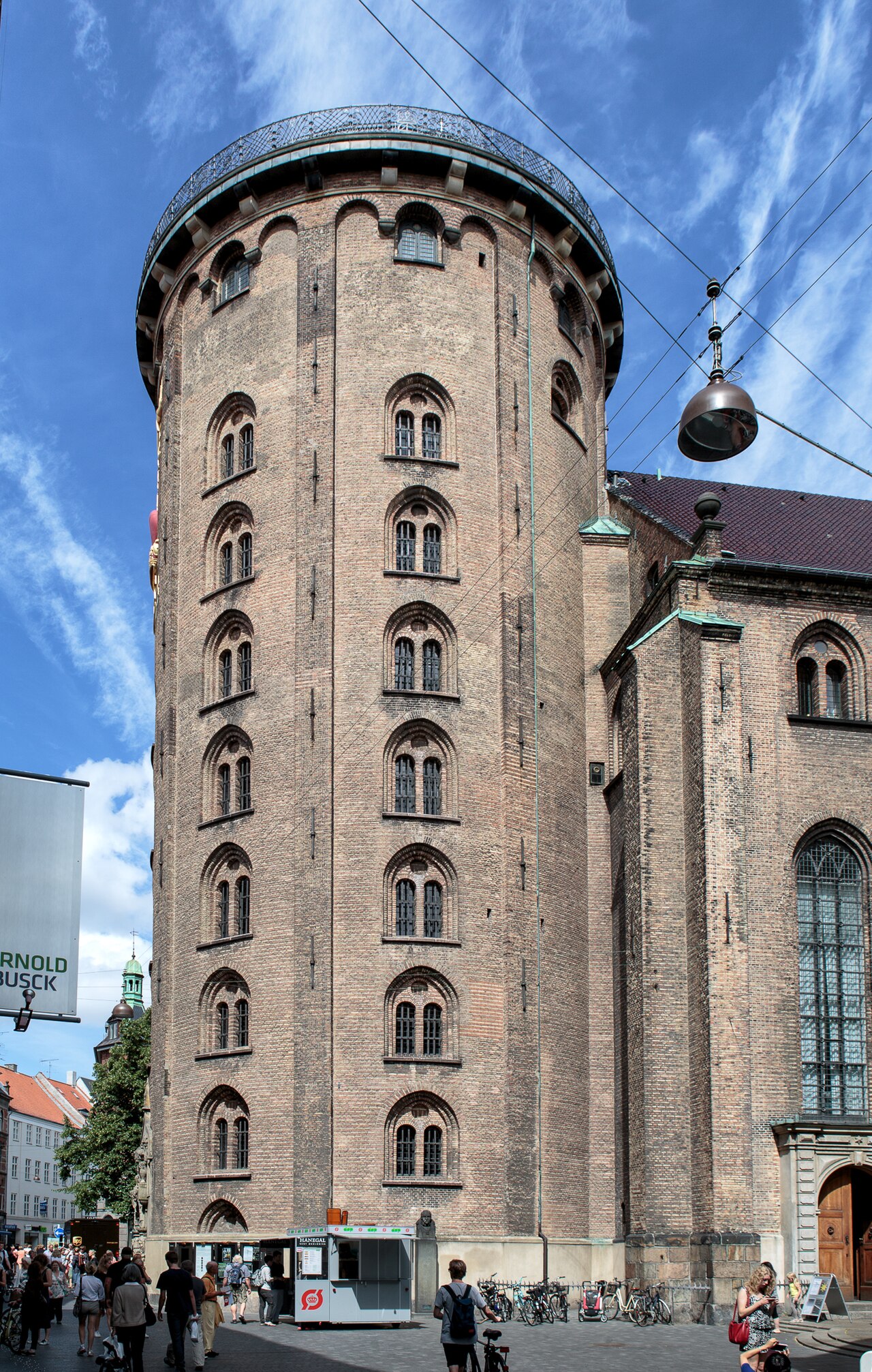
Photo: kallerna · CC BY-SA 4.0 · Wikimedia Commons
Rosenborg Castle is a palace in Copenhagen. Built by King Christian the Fourth in the seventeenth century. The free Lokali audio guide runs 7 minutes.
✓ Published October 2026 · how we write these guides
Visitor facts
| Lokali audio guide | 7 min · free |
|---|---|
| Type | Museum |
| Location | Copenhagen, Denmark |
| Coordinates | 55.6857, 12.5775 |
| Official website | kongernessamling.dk |
| Languages | 50+, in the Lokali app |
The story
Listen for a moment. Gravel crunches under passing feet, and somewhere a guard's boots strike the path in a steady rhythm. In front of you stand walls of deep red brick, cut with bands of pale sandstone. Copper spires rise above them, turned green by centuries of Danish rain. Rosenborg Castle does not tower over you. It feels closer to a large and very confident country house, and that is exactly what it was meant to be.
The man behind it was King Christian the Fourth. He ruled Denmark and Norway for about sixty years, one of the longest reigns in European history. He was a restless builder, and much of old Copenhagen still carries his mark. Early in the seventeenth century he began a modest summer house here. At the time this spot lay just outside the city walls. Over the next two decades he kept adding to it, piece by piece, until the summer house became the castle you see today.
Look at the style. The red brick, the sandstone trim, the tall decorated gables are all typical of the Dutch Renaissance. That was a style borrowed from the Netherlands, then the busiest trading nation in northern Europe. Danish kings looked to Dutch builders and Dutch taste. Notice how the building feels vertical and slightly playful. The towers are not identical. One of them, a stair tower, is broader than the rest. It is a castle designed for pleasure, not for war.
And here is the first surprise. Rosenborg was a royal home for only about a century. In the early eighteenth century the court moved its favour to other palaces, and this castle became something different. It turned into a royal storehouse. Furniture, portraits, silver, and personal belongings of the kings were kept here, room by room. Because of that, the interiors were frozen in an unusual way. In the nineteenth century the castle opened to the public as a museum, and it has stayed one ever since.
This gives Rosenborg its special character. Many palaces are arranged by curators to show one period. Here, the rooms are laid out roughly in order of the kings who ruled. As you walk through, you move forward through Danish royal history. The early rooms belong to Christian the Fourth. Later rooms show the taste of his successors. You can watch fashions change around you, from dark carved wood to lighter colours and more delicate decoration.
Inside, one of the most personal rooms is the Winter Room, Christian the Fourth's private study. The walls are covered with wooden panels and inset paintings. A popular story says the king had hidden pipes running from this room to other floors. Through them, the tale goes, musicians below could play for him without being seen. Whether every detail is true is hard to say. But it fits a king who loved music, comfort, and a little theatre.
Christian the Fourth also died at Rosenborg, in the winter of 1648. By then his reign had seen great ambition and painful defeats. Wars with Sweden had cost Denmark dearly. The castle he built for summer pleasure became the place where his long life ended. Standing in these rooms, it is easy to picture an old king who had outlived much of his own success.
Now climb to the top floor and the Long Hall. This was the great ceremonial room, used for banquets and important royal events. The ceiling is richly decorated. Along the walls hang large tapestries showing battles from a war between Denmark and Sweden in the late seventeenth century. They were woven to celebrate Danish victories. Remember that the war did not end as the tapestries suggest. They are history told the way the king wanted it told.
At one end of the hall stands the second surprise. It is a throne made largely from narwhal tusk. A narwhal is an Arctic whale with a single long, spiralling tooth. For centuries, Europeans sold these tusks as unicorn horns, and they were worth more than gold. Denmark had access to them through its northern lands, including Greenland. A throne of unicorn horn was a powerful message. It told visitors the Danish king ruled by something close to divine right.
In front of the throne sit three silver lions, close to life size. They guard the seat like watchful animals. During the age of absolute monarchy, Danish kings were anointed on this throne in a solemn ceremony. Today the throne and the lions still stand together. Look closely at the lions' faces. Each one has its own expression, which makes them feel less like furniture and more like companions.
Then go down, below ground, to the Treasury. This is where Denmark keeps its Crown Jewels and the royal regalia. The rooms are cool and dim, and the glass cases glow. Here you will find the crown of Christian the Fourth, made at the end of the sixteenth century, glittering with gold, enamel, and pearls. You will also see the crown of the absolute kings, and the jewels still worn by the Danish royal family on special occasions. These objects are not only museum pieces.
The soldiers outside are part of that story. The Royal Life Guards have their barracks right beside the castle. Their uniforms are dark blue, topped with tall black bearskin hats. Every day a detachment marches from here through the city streets to Amalienborg, the palace where the royal family lives today. If you hear drums or see a line of bearskins moving off, you are watching a ceremony that links this old castle to the modern monarchy.
Around you spreads the King's Garden, the oldest royal garden in Copenhagen. Christian the Fourth planted it for fruit, flowers, and herbs. Today it is a public park, and locals treat it as their own. On warm days people lie on the grass, read on benches, and share picnics under the trees. In autumn the paths fill with fallen leaves. It is one of the calmest places in the city centre.
Before you leave, step back and look at the castle once more. Notice how the red brick changes colour as clouds move across the sun. Listen to the gravel, the voices, the wind in the trees. A king once walked these paths, planning his next building. Now the castle holds his crowns, his study, and his throne, and the garden belongs to everyone. Take your time as you walk away.
Key facts
What to look for
Practical tips
Common questions
Is there a free audio guide to Rosenborg Castle?
Yes — the Lokali app narrates Rosenborg Castle free of charge in 50+ languages. The guide runs about 7 minutes, covers the history, what to look for on site and practical tips, and works offline once downloaded.
Where is Rosenborg Castle?
Rosenborg Castle is in Copenhagen, Denmark, at 55.6857, 12.5775. Tap the map link on this page for directions from where you are.
What is Rosenborg Castle known for?
Built by King Christian the Fourth in the seventeenth century. Began as a royal summer house outside the old walls.
What should you look for at Rosenborg Castle?
Green copper spires above the red brick facade. Narwhal tusk throne at the end of the Long Hall. Three silver lions guarding the coronation throne.
What should you know before visiting Rosenborg Castle?
Visit the Treasury first before it fills with groups. Watch the Royal Life Guards set off toward Amalienborg.
When is the best time to visit Rosenborg Castle?
Book tickets ahead during the busy summer season.
On the map
Opens directions to Rosenborg Castle from your location.
More to see in Copenhagen



Hear Rosenborg Castle in your language
The full story, narrated, in 50+ languages. Download it before you go and it plays offline, at your own pace, with no ticket and no tour group.