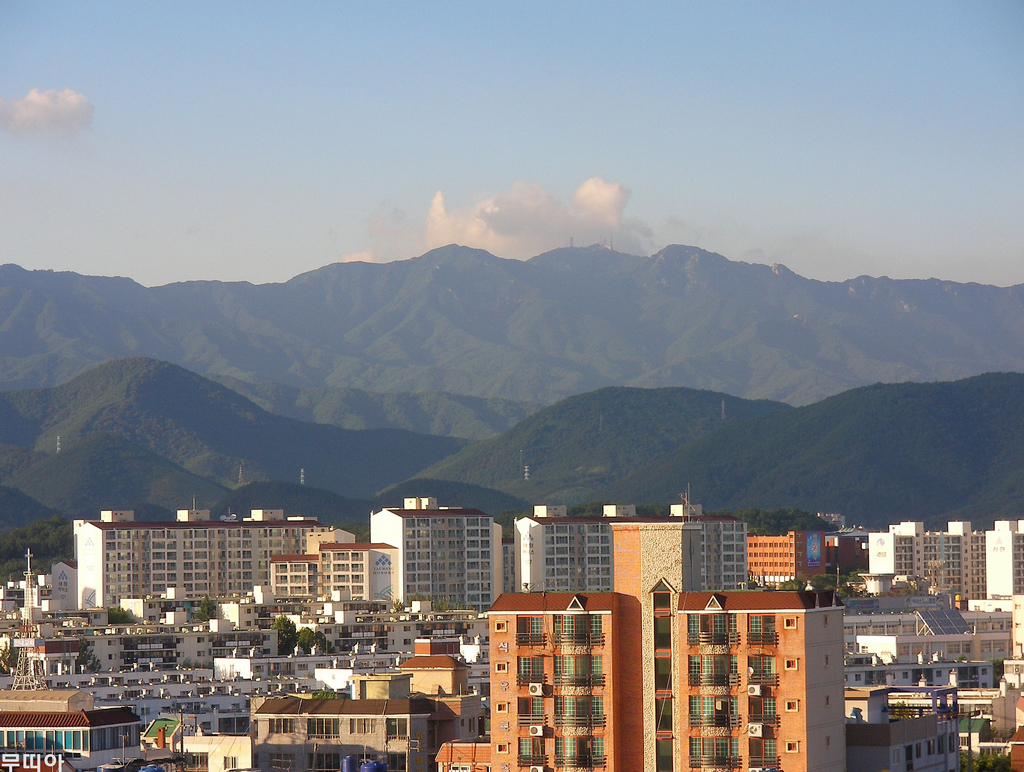
Palgongsan Provincial Park
35.8901° N · 128.6845° E · Park
Palgongsan Provincial Park is a park in Daegu, South Korea. Mountain park northeast of the city with hiking trails, temple ruins, and observation decks. Most visitors spend 2–4 hours here. The free Lokali audio guide runs 5 minutes.
✓ Verified August 2026 · how we write these guides
Visitor facts
| Time needed | 2–4 hours |
|---|---|
| Lokali audio guide | 5 min · free |
| Type | Park |
| Best for | Photography |
| Location | Daegu, South Korea |
| Coordinates | 35.8901, 128.6845 |
| Languages | 45, in the Lokali app |
The story
The air grows cooler as you climb. You smell pine and damp earth. Birds call from somewhere in the trees. Above you, grey ridges rise against the sky, peak after peak. This is Palgongsan, the great mountain that stands over Daegu to the northeast.
The name means eight peaks. The mountain spreads wide, and its highest point reaches one thousand one hundred ninety-two meters. From the city below, its long ridge marks the horizon. In 1980, a large part of the mountain was made a provincial park, to protect its forests, its temples, and its old stone carvings.
People do not come here only to walk. They come to pray. Palgongsan has been a holy mountain for well over a thousand years. Temples sit folded into its valleys. Shrines and pagodas and carved Buddhas wait along its paths. On weekends, hikers in bright gear share the trails with pilgrims who have come to bow and pray. For many visitors, this is a place of faith as much as a place of nature.
The best known temple is Donghwasa. It was first established in the year 493. That gives it a history of around fifteen hundred years. Fire and time have damaged it more than once, and it has been rebuilt again and again. Today it remains one of the leading Buddhist temples in the country. Walk its grounds slowly. Notice the painted wood and the old trees. Catch the smell of incense and the low sound of chanting from inside the halls. Monks still live and pray here.
Higher up the mountain sits its most famous figure. It is called Gatbawi. It is a stone Buddha, carved sitting, on a peak about eight hundred fifty meters high. On its head rests a wide flat slab of stone, shaped like a traditional hat. That stone hat gives the statue its name. The figure was carved during the time of Unified Silla, more than a thousand years ago, by hands we can no longer name.
There is a belief about Gatbawi. People say that if you climb to it and pray with a sincere heart, the Buddha will grant you one wish. And so, on many days, you will find people making the long climb. Students before exams. Parents. The old and the young. They light candles. They bow. They ask.
The walk up to Gatbawi is not easy. It is a long set of stone steps that rises steadily. Take it slowly. Rest when you need to. The effort is part of the offering, many would say. And from the top, the view stretches far across the ridges and valleys below.
If you would rather not climb every step, there is a cable car on another part of the mountain. It runs about one and a quarter kilometers and lifts you to around eight hundred meters above sea level. The ride takes about ten minutes. From the upper station, you can see Daegu spread out in the distance, small and quiet beyond the trees.
The mountain changes with the seasons. In spring, cherry blossoms open along the roads and paths, soft and pale, and the air turns sweet. In autumn, the slopes turn red and orange and gold, and the whole mountain seems to catch fire with color. Visitors come by the thousands in those weeks. Those two seasons draw the largest crowds, and for good reason.
Whatever the season, dress for the weather and wear good shoes. The paths can be steep and the stone can be slick after rain. Bring water. Move at your own pace. There is no need to rush a mountain that has stood here for so long.
Take time to simply stop and listen. Wind in the pines. Distant temple bells. The murmur of other walkers passing by. Palgongsan is full of life and yet deeply calm. It holds both at once.
Along the paths you will pass smaller shrines and weathered stone pagodas. Some are easy to miss. Coins rest on their ledges, left by people who paused to wish or to give thanks. Stop a moment at one of them. You do not need to share the faith to feel the care that has gathered here over many centuries.
Before you turn back down, look out once more at the ridges fading into the haze. People have climbed this mountain for over a thousand years, carrying their hopes up its stone steps. The peaks do not answer. They simply remain, patient and grey, as the seasons turn around them.
Key facts
What to look for
Practical tips
Common questions
How long do you need at Palgongsan Provincial Park?
Plan 2–4 hours. That is the time most visitors spend at Palgongsan Provincial Park. The free Lokali audio guide adds about 5 minutes of narration you can listen to as you walk, so it fits inside your visit rather than adding to it.
Is there a free audio guide to Palgongsan Provincial Park?
Yes — the Lokali app narrates Palgongsan Provincial Park free of charge in 50+ languages. It covers the history, what to look for on site and practical tips, and it works offline once downloaded.
Where is Palgongsan Provincial Park?
Palgongsan Provincial Park is in Daegu, South Korea, at 35.8901, 128.6845. Tap the map link on this page for directions from where you are.
What should you know before visiting Palgongsan Provincial Park?
Climb the stone steps to Gatbawi for the view.
What is Palgongsan Provincial Park known for?
Highest peak reaches 1,192 meters above sea level.
What is the best time to visit Palgongsan Provincial Park?
The cable car ascends 800 metres in under 10 minutes.
On the map
Opens directions to Palgongsan Provincial Park from your location.
More to see in Daegu


Hear Palgongsan Provincial Park in your language
The full story, narrated, in 50+ languages. Download it before you go and it plays offline, at your own pace, with no ticket and no tour group.