
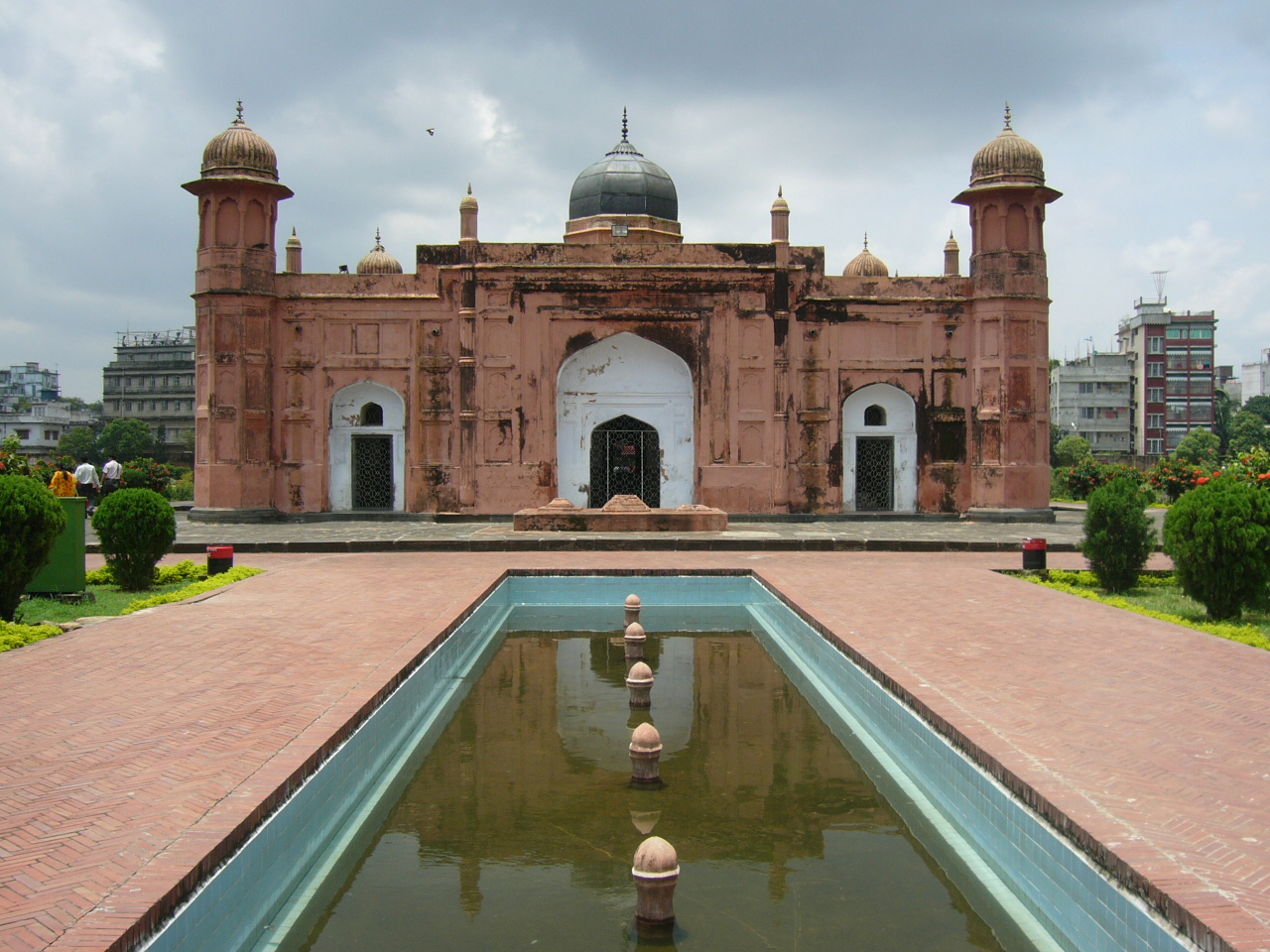
Photo: Md. Ahsanul Haque Nayem · CC BY-SA 4.0 · Wikimedia Commons
Ahsan Manzil is a national museum in Bangladesh. Built by Nawab Abdul Ghani for the Nawabs of Dhaka. The free Lokali audio guide runs 6 minutes.
✓ Published October 2026 · how we write these guides
Visitor facts
| Lokali audio guide | 6 min · free |
|---|---|
| Type | Palace |
| Location | Dhaka, Bangladesh |
| Coordinates | 23.7086, 90.4061 |
| Official website | bangladeshmuseum.gov.bd |
| Languages | 50+, in the Lokali app |
The story
Listen first. Somewhere behind you, boat horns sound across the Buriganga River. Rickshaw bells ring in the lanes, and a vendor calls out over the noise. Then you turn, and a long pink building sits above a green lawn, with a broad staircase running down toward the water. This is Ahsan Manzil, often called the Pink Palace. For a moment, the noise of Old Dhaka seems to fall back a little.
You are standing in one of the oldest parts of the city. For centuries, the Buriganga was the main road of Dhaka. Goods, news and people arrived by water, and the riverfront was the place to be seen. That is why the palace faces the river, not the street behind it. Its grand front was built for people arriving by boat. Today you probably came through the crowded lanes instead, so you entered from what was once the back.
The story of this site begins before the palace. In the early nineteenth century, a French trading house stood here. Europeans traded along this river for generations, and the French kept a modest post on this bank. In the 1830s, the property passed to Khwaja Alimullah, a wealthy local landowner. His family would become the Nawabs of Dhaka, one of the most powerful landholding families in eastern Bengal under British rule.
It was his son, Nawab Abdul Ghani, who built the palace you see. Work began in the late 1850s and finished in the early 1870s. He named it after his own son, Khwaja Ahsanullah. So the name Ahsan Manzil simply means the house of Ahsan. It is a family home named with a father's pride. That is an intimate gesture for a building of this size.
Now look at the shape of the building. It stands on a raised platform, so it looks tall even from the lawn. Long verandas with arches run along the front, and they give shade from the hard Bengal sun. Above the centre rises a ribbed dome on a tall drum. The style is often described as Indo-Saracenic. That term means a European building plan with decoration from Islamic and South Asian traditions. Here, the mix looks calm rather than crowded.
Here is a detail many visitors miss. The famous dome was not part of the palace in its earliest form. In 1888, a violent tornado hit Dhaka and badly damaged the building. During the rebuilding, the palace took on much of its present look, including the dome. A few years later, in 1897, a strong earthquake shook the region and caused more damage. So the palace you see survived the weather twice, and each repair left a mark.
The palace has two main parts. The eastern block, with the dome, held the formal rooms. This was where the family received guests, held banquets and hosted music and dance. The western block was the private side, where family life went on away from visitors. This split between a public world and a private world was common in large houses of the period. Walk along the front, and you can feel where one world ends and the other begins.
Inside, many rooms have been restored and furnished to show the palace at its height. You may see a formal reception hall, a dining room and a ballroom, with chandeliers, mirrors and heavy carved furniture. Portraits of the Nawabs look down from the walls. Old photographs show the riverfront when boats crowded the bank below the stairs. These images help you see how much the river has changed.
Here is a second surprise. This house was more than a place of parties. For decades, it was a centre of political life in Bengal. Governors, officials and community leaders came here. In 1906, the Nawab family, led by Nawab Salimullah, hosted a major gathering in Dhaka. The All-India Muslim League was founded at that gathering. That party later shaped the history of the whole subcontinent. Few visitors expect such a turning point to connect to a pink house by the river.
The twentieth century was harder for the palace. As the family's fortunes declined, the great rooms emptied. Over time, parts of the building were rented out and fell into disrepair. For a while, this house of chandeliers was crowded and run-down. Then the government of Bangladesh took over the site. After major restoration work, it opened as a museum in 1992, under the care of the Bangladesh National Museum.
As you walk, notice the colour. The pink is warm and soft, and it changes through the day. In the morning it looks pale, almost peach. In the late afternoon it turns deeper, close to rose. The white trim around the arches and railings makes the pink seem brighter. If you have a moment, stand on the lawn and watch how the shadows move across the verandas.
The lawn and the great staircase are where local families come to rest. You will see students, couples and grandparents taking photographs on the steps. School groups move through in uniform, and their voices echo under the arches. For many people in Bangladesh, this is not a distant monument. It is part of their own national story, a place they visit with their children.
Before you leave, walk toward the river side of the grounds. Imagine the view without the modern buildings and the crowded docks. Picture wooden boats with tall sails, and guests in fine clothes climbing the stairs at dusk. Then come back to the present. The boat horns still sound. The rickshaw bells still ring. Ahsan Manzil sits quietly in the middle of it all, pink against the sky.
Key facts
What to look for
Practical tips
Common questions
Is there a free audio guide to Ahsan Manzil?
Yes — the Lokali app narrates Ahsan Manzil free of charge in 50+ languages. The guide runs about 6 minutes, covers the history, what to look for on site and practical tips, and works offline once downloaded.
Where is Ahsan Manzil?
Ahsan Manzil is near Dhaka, Bangladesh, at 23.7086, 90.4061. Tap the map link on this page for directions from where you are.
What is Ahsan Manzil known for?
Built by Nawab Abdul Ghani for the Nawabs of Dhaka. Named after the Nawab's son, Khwaja Ahsanullah.
What should you look for at Ahsan Manzil?
The ribbed dome rising above the central block. The broad staircase running down toward the river side. White trim framing the arches against the pink walls.
What should you know before visiting Ahsan Manzil?
Visit in late afternoon when the pink walls glow warmest. Allow extra time for traffic through Old Dhaka lanes.
When is the best time to visit Ahsan Manzil?
Visit in late afternoon when the pink walls glow warmest.
On the map
Opens directions to Ahsan Manzil from your location.
More to see in Dhaka



Hear Ahsan Manzil in your language
The full story, narrated, in 50+ languages. Download it before you go and it plays offline, at your own pace, with no ticket and no tour group.