
Central Shaheed Minar, Dhaka
23.7222° N · 90.3950° E · Memorial
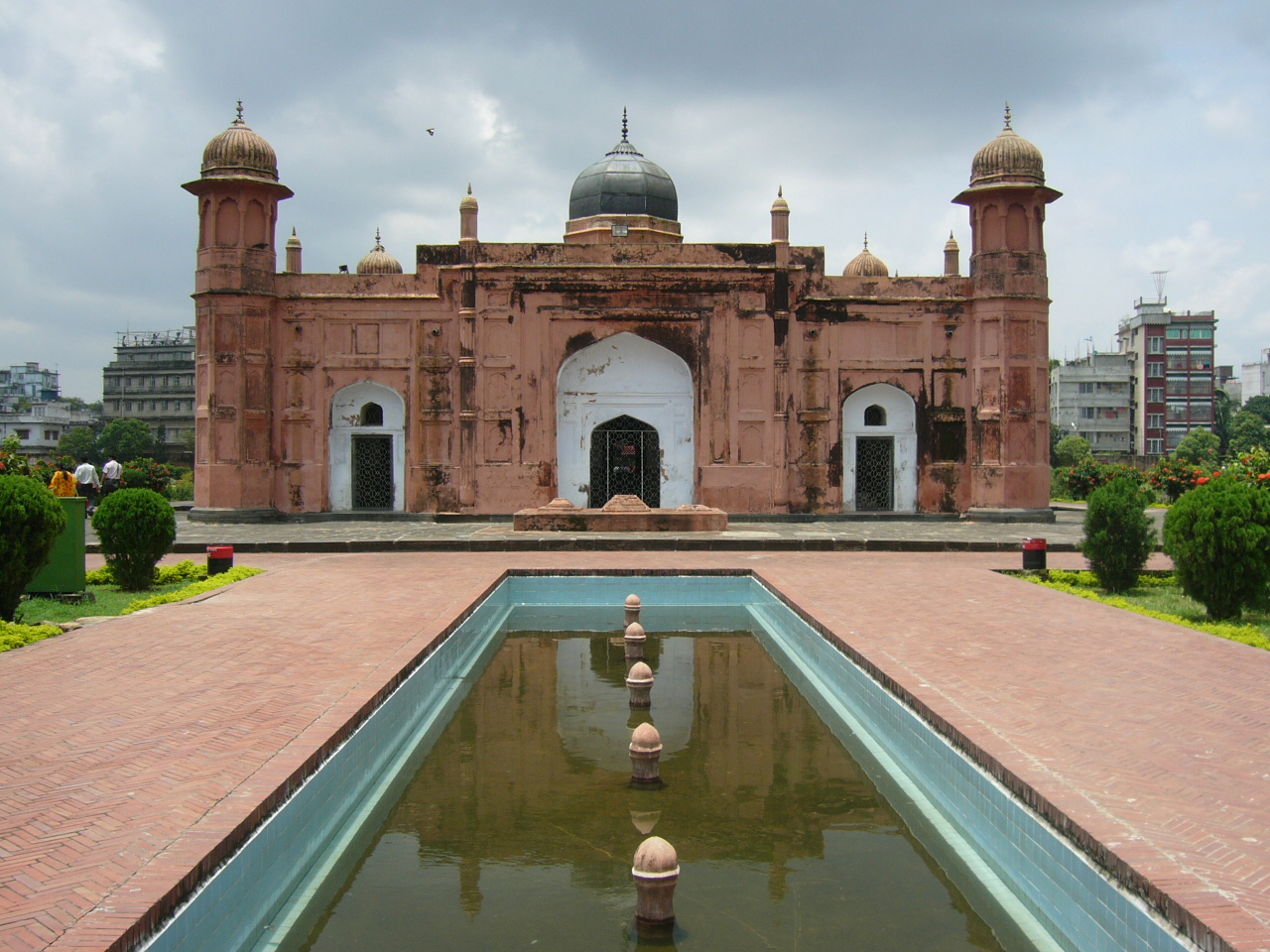
Photo: Mostaque Ahammed · CC BY-SA 2.0 · Wikimedia Commons
Central Shaheed Minar, Dhaka is a monument to the deaths incurred in the Bangladesh for Language Movement in 1952. Commemorates Language Movement martyrs killed on 21 February 1952. The free Lokali audio guide runs 7 minutes.
✓ Published October 2026 · how we write these guides
Visitor facts
| Lokali audio guide | 7 min · free |
|---|---|
| Type | Memorial |
| Location | Dhaka, Bangladesh |
| Coordinates | 23.7222, 90.3950 |
| Languages | 50+, in the Lokali app |
The story
Start with your feet. Many people who come here take off their shoes before they step onto the wide platform. The stone is smooth and cool in the early morning. By midday it holds the heat of the Dhaka sun. Around you, the city keeps moving: rickshaw bells, the hum of traffic, students crossing from the nearby university. Up here, the noise softens. In front of you stand a set of tall white columns, with a red circle glowing behind them.
This is the Central Shaheed Minar. In Bengali, shaheed means martyr and minar means tower or monument. It honours people who died for a language. That may sound strange at first. Few countries build their national memorials around grammar and vocabulary. But here, the right to speak and write in your mother tongue became a question of life and death. The story begins only a few steps from where you are standing.
When British India was divided in 1947, this region became East Pakistan. It was part of a new country, but separated from West Pakistan by more than a thousand miles of Indian territory. Most people in the east spoke Bengali. Yet leaders in the new state pushed for Urdu as the single national language. For millions of Bengali speakers, this felt like being told their own voice did not count. Protests began within months, led largely by students.
The crisis peaked on 21 February 1952. The authorities had banned public gatherings. Students from Dhaka University and Dhaka Medical College decided to march anyway. Police opened fire near the medical college hostels — very close to this spot. Several people were killed, including students and ordinary residents. Names such as Abul Barkat, Rafiquddin Ahmed, Abdul Jabbar and Abdus Salam are remembered across Bangladesh today. More deaths followed in the days after.
Here is a detail many visitors miss. The first Shaheed Minar was not built by the state at all. Within days of the shooting, students put up a small memorial themselves, working through the night with whatever materials they could find. It stood near the place where people had fallen. The police soon tore it down. But the idea could not be torn down so easily. Small memorials appeared again and again, in schools and towns across the region.
The Bengali language movement eventually won official recognition. Bengali was accepted as one of the state languages of Pakistan in the mid-1950s. A permanent monument was then planned for this site. The main design is credited to the artist Hamidur Rahman, who worked with the sculptor Novera Ahmed. Their original vision was larger than what you see now. It included murals and other elements that were never fully built. The main structure was finished in the early 1960s.
Now look closely at the shape. The columns are simple and white, with no statues and no inscriptions on their faces. The tallest column is in the centre, and its top bends forward. A popular reading says this central form is a mother, bowing her head over her children. The smaller columns on either side are often read as her sons, the martyrs. Behind them, the red disc is usually understood as a rising sun — and also as blood.
That red circle matters. Stand to one side and watch how it frames the columns. Against a pale sky, the white and red stand out clearly. These are strong, plain colours, and the design depends on them. There is no decoration to distract you. The monument asks you to look at shape, space and colour, and to think about what they stand for. Many Bangladeshis see it as a quiet, open symbol rather than a grand one.
The second surprise is darker. In March 1971, at the start of the Bangladesh Liberation War, the Pakistani army launched a brutal military crackdown in Dhaka. The Shaheed Minar was attacked and badly damaged. Soldiers understood that this simple structure carried enormous meaning. Destroying it was meant to destroy a symbol of Bengali identity. After the war ended and Bangladesh became independent, the monument was rebuilt. So the columns in front of you are a reconstruction — a second life for the memorial.
That link between language and nationhood runs deep. Many historians see the events of 1952 as an early step on the road to independence in 1971. The language movement gave people a shared cause and a shared memory. It showed that ordinary students could challenge state power. When you hear Bengali spoken around you today — in shops, on buses, in university corridors — you are hearing the language people here fought to protect.
Each year, the night of 20 February turns this plaza into the centre of the nation. Just after midnight, crowds walk here slowly, many of them barefoot, carrying flowers. This procession is called Prabhat Pheri, a dawn walk of mourning. Senior leaders lay wreaths first, then the public follows. A famous song plays everywhere: Amar Bhaier Rokte Rangano Ekushey February, which means roughly, the twenty-first of February, stained with my brother's blood. By morning, the base of the columns can disappear under flowers.
The date now belongs to the world as well. In 1999, UNESCO declared 21 February to be International Mother Language Day. It is observed in many countries, as a day to protect linguistic diversity and endangered languages. Copies and versions of the Shaheed Minar stand in other places, including cities with large Bangladeshi communities. So this small corner of Dhaka has shaped how people in many countries think about the value of their own language.
On an ordinary day, the mood here is much quieter. You may see students sitting on the steps with notebooks. Friends meet in the shade. Children run across the open space while parents watch. Sometimes small gatherings or cultural events take place on the platform, because the minar is still a place where people come to speak out. Treat the central area with respect. Remove your shoes if you climb onto the main platform, as local visitors do.
Before you leave, take one more look at the bending central column. It does not shout. It leans, as if listening. Turn around and listen too. You will hear Bengali all around you — in a vendor's call, a student's laugh, a phone conversation drifting past. That sound is the real monument. The white columns simply remind everyone that it was once paid for, and that it should never be taken for granted.
Key facts
What to look for
Practical tips
Common questions
Is there a free audio guide to Central Shaheed Minar, Dhaka?
Yes — the Lokali app narrates Central Shaheed Minar, Dhaka free of charge in 50+ languages. The guide runs about 7 minutes, covers the history, what to look for on site and practical tips, and works offline once downloaded.
Where is Central Shaheed Minar, Dhaka?
Central Shaheed Minar, Dhaka is in Dhaka, Bangladesh, at 23.7222, 90.3950. Tap the map link on this page for directions from where you are.
What is Central Shaheed Minar, Dhaka known for?
Commemorates Language Movement martyrs killed on 21 February 1952. Main design is credited to artist Hamidur Rahman.
What should you look for at Central Shaheed Minar, Dhaka?
The tallest central column bending forward at its top. The red disc standing behind the white columns. Fresh flowers left at the base of the columns.
What should you know before visiting Central Shaheed Minar, Dhaka?
Remove your shoes before stepping onto the main platform. Visit early morning when the stone is cool.
When is the best time to visit Central Shaheed Minar, Dhaka?
Expect huge crowds around the night of 20 February.
On the map
Opens directions to Central Shaheed Minar, Dhaka from your location.
More to see in Dhaka


Hear Central Shaheed Minar, Dhaka in your language
The full story, narrated, in 50+ languages. Download it before you go and it plays offline, at your own pace, with no ticket and no tour group.