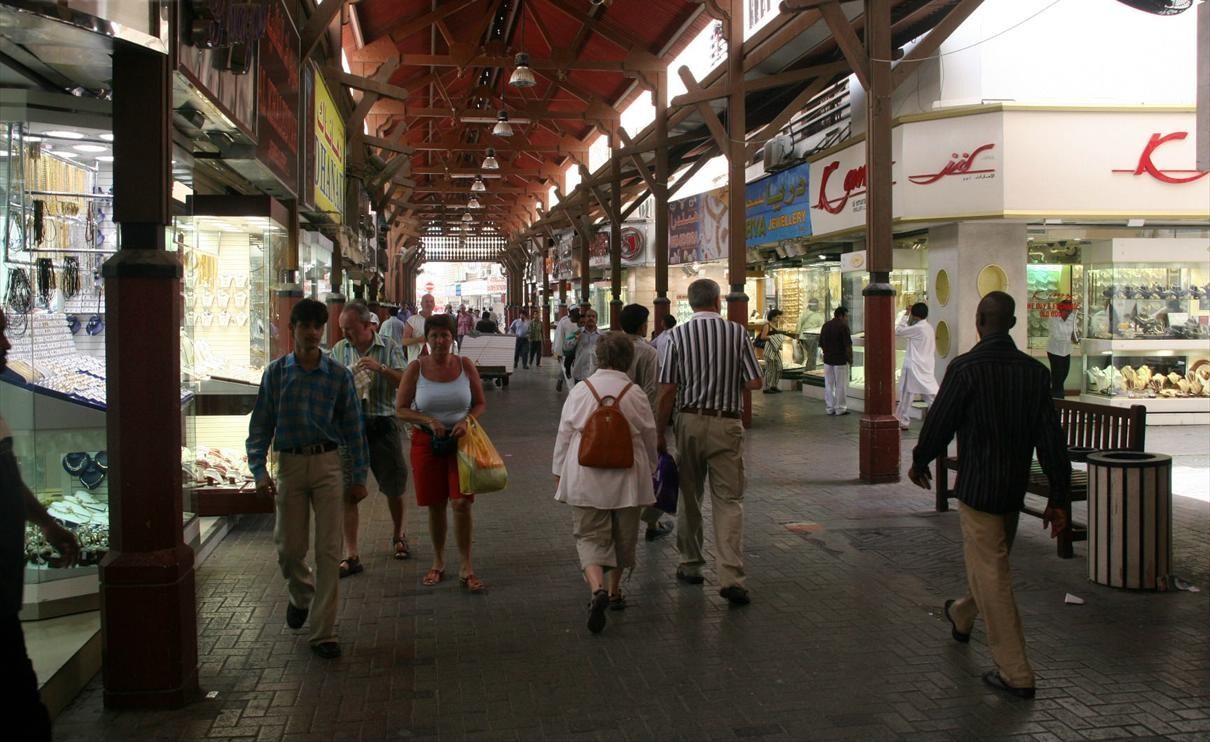
Deira Spice Souk is a historic spice market in Deira's old trading district, filled with stalls selling cardamom, saffron, frankincense, dried limes, and local herbs. It is in Dubai, United Arab Emirates. Most visitors spend 45–90 min here. The free Lokali audio guide runs 5 minutes.
✓ Verified August 2026 · how we write these guides
Visitor facts
| Time needed | 45–90 min |
|---|---|
| Lokali audio guide | 5 min · free |
| Type | Market |
| Best for | Local life |
| Location | Dubai, United Arab Emirates |
| Coordinates | 25.2679, 55.3162 |
| Languages | 45, in the Lokali app |
The story
Down a covered lane in the old quarter, the air thickens with the smell of cinnamon, cardamom, dried lemon, and incense, and sacks and bowls of spices in every colour spill from shop fronts. This is the Spice Souk of Deira, a small, fragrant traditional market near the creek, and one of the most atmospheric corners of the old city.
The souk sits in the old trading district on one side of the creek, the historic commercial heart of Dubai, where goods have been bought and sold for generations. Spices were among the staples of that trade, carried by sea from across the region and beyond.
It is small, just a few covered lanes, but the concentration of colour and smell is intense: heaps of saffron, chilli, turmeric, and dried herbs, strings of dried fruit, frankincense and other resins, and the tools to burn them, all crowded together.
Beyond cooking spices, the stalls sell incense and the burners for it, dried limes and roses, herbal remedies, nuts, and sweets, so the souk is as much about scent and tradition as about flavouring food. The smell alone is worth the visit.
As in any souk, bargaining is expected, and sellers will press samples and stories on you, offering tastes and explaining uses. A friendly haggle is part of the experience, and buying a small bag of saffron or a few dried limes makes an easy, light souvenir.
The souk is best understood alongside its neighbours. A short walk away lies the famous gold market, and the lanes between are full of shops selling textiles, household goods, and trinkets, so the whole quarter is a dense old marketplace.
The creek runs close by, and small wooden boats still carry goods and passengers across and along it, so the souk keeps its old connection to trade by water, the reason the quarter grew where it did.
It is touristy now, and some stalls push hard for a sale, but it remains a working market used by locals as well, and the genuine variety of spices and scents keeps it from feeling entirely staged.
The souk is most pleasant in the cooler evening, when the lanes fill and the smells hang in the warm air, though it is atmospheric at any time the shops are open. The covered lanes give shade from the worst of the sun.
Even with nothing to buy, the souk is a feast for the senses and a glimpse of the old trading town beneath the modern city, a short, rich stop on a walk through the historic quarter.
A few practical notes. The souk is free to wander; come in the evening for the best atmosphere, carry small cash, be ready to bargain, and keep a polite firmness with pushy sellers. It pairs naturally with the gold souk and a boat on the creek.
Breathe in the mingled scents, let a seller talk you through a heap of saffron, and pick up a small bag to take home, then step out toward the creek where it all once arrived by boat. The spice souk is the old trading city in miniature. When you leave, the smell lingers on your hands and in your memory.
Key facts
What to look for
Practical tips
Common questions
How long do you need at Deira Spice Souk?
Plan 45–90 min. That is the time most visitors spend at Deira Spice Souk. The free Lokali audio guide adds about 5 minutes of narration you can listen to as you walk, so it fits inside your visit rather than adding to it.
Is there a free audio guide to Deira Spice Souk?
Yes — the Lokali app narrates Deira Spice Souk free of charge in 50+ languages. It covers the history, what to look for on site and practical tips, and it works offline once downloaded.
Where is Deira Spice Souk?
Deira Spice Souk is in Dubai, United Arab Emirates, at 25.2679, 55.3162. Tap the map link on this page for directions from where you are.
What should you know before visiting Deira Spice Souk?
Come in the evening for the best atmosphere.
What is Deira Spice Souk known for?
A small, fragrant traditional spice market.
What is the best time to visit Deira Spice Souk?
The spice sellers are generous with samples.
On the map
Opens directions to Deira Spice Souk from your location.
More to see in Dubai


Hear Deira Spice Souk in your language
The full story, narrated, in 50+ languages. Download it before you go and it plays offline, at your own pace, with no ticket and no tour group.