
Photo: Diegoarielvega · CC BY-SA 4.0 · Wikimedia Commons
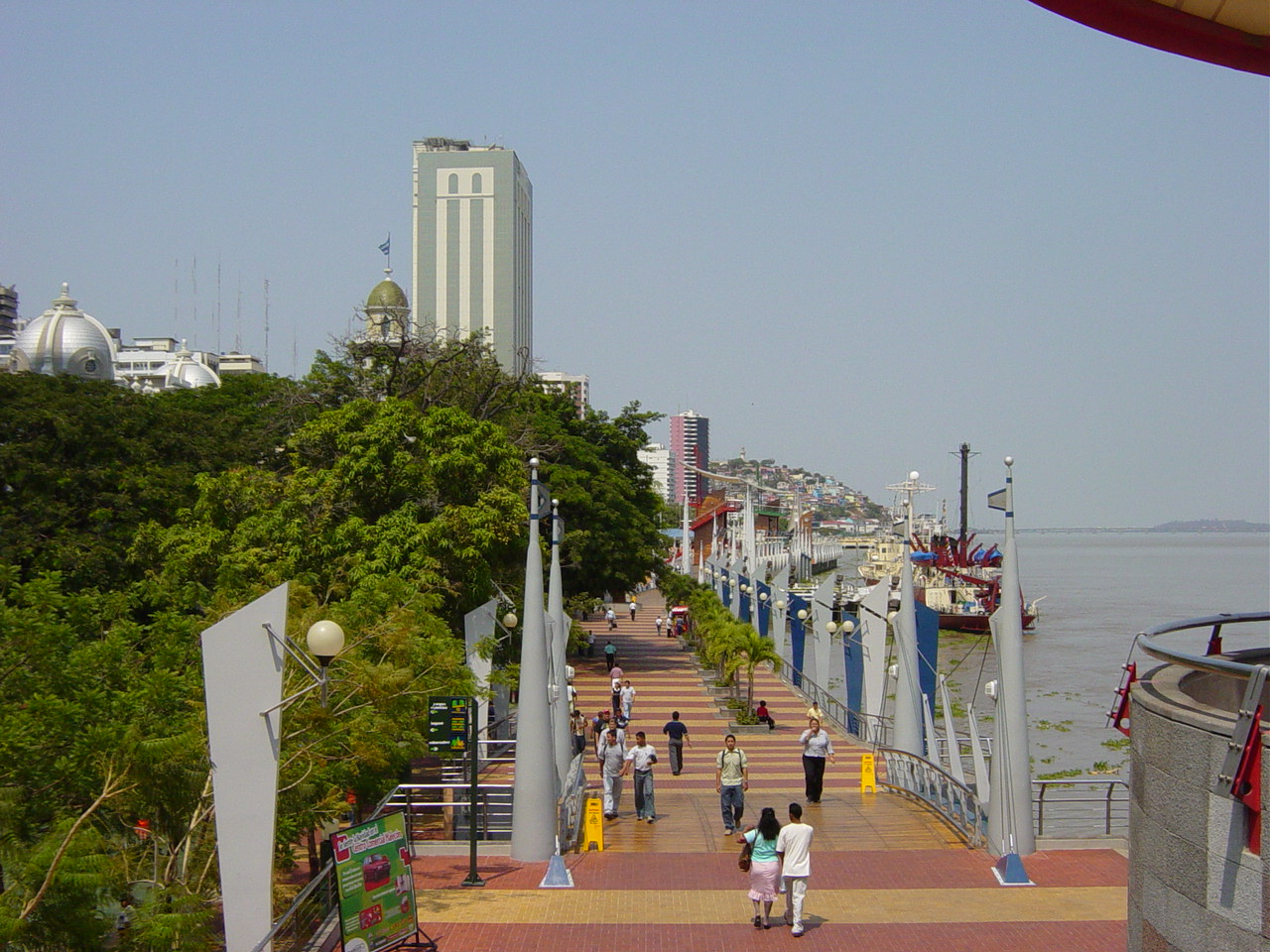
Las Peñas is the oldest neighbourhood in Guayaquil, clinging to a hillside with narrow cobbled streets, colonial wooden houses painted in bright colours, and small galleries and cafés. It is in Duran, Ecuador. Most visitors spend 1–2 hours here. The free Lokali audio guide runs 5 minutes.
✓ Verified August 2026 · how we write these guides
Visitor facts
| Time needed | 1–2 hours |
|---|---|
| Lokali audio guide | 5 min · free |
| Type | Neighborhood |
| Best for | Photography |
| Location | Duran, Ecuador |
| Coordinates | -2.2141, -79.8647 |
| Languages | 45, in the Lokali app |
The story
Color climbs the hill in front of you. Blue, yellow, green, and rose-painted wooden houses stack one above another on the slope. Music drifts from an open window. Laundry sways on a balcony rail. The air smells of the river and of fried plantain. This is Las Peñas, the oldest neighborhood of Guayaquil, still alive on its original ground.
The hill is called Cerro Santa Ana. At its foot, along the river, runs a single cobblestone lane named after Numa Pompilio Llona, a poet of the city born in 1832. The lane bends with the shore. The wooden houses stand close on both sides, near enough that neighbors can talk from balcony to balcony without raising their voices.
Guayaquil began here. Spanish settlers founded the city in 1538 beside this hill, next to deep water where ships could anchor. For centuries, Las Peñas watched vessels arrive with goods and leave loaded with cacao, timber, and tobacco. Pirates came too, more than once. A small shore battery called La Planchada was built at the water's edge to drive them off with cannon fire.
Fire shaped this city as much as water did. Guayaquil was a city of wood, and it burned many times. The great fire of 1896 destroyed a large part of the city in a single terrible night. The houses you see today keep the old style: wooden frames, tall shuttered windows that catch the river breeze, and zinc roofs that drum like an orchestra in the rain.
In 1982, Ecuador declared the neighborhood part of the national cultural heritage. Later, the city restored the lane and the hillside above it. Artists moved into the old houses. Today many homes along the lane hold small galleries and studios, and painters sell canvases from rooms where merchants and sailors once slept. Craft sellers spread jewelry on cloth near the lane's entrance.
Local memory says that presidents, poets, and revolutionaries lived on this short street over the years. It is hard to prove house by house, but it fits the place. For a long time, this was the address of the city's writers and politicians, drawn here by the water and the view. Even now, families who have lived here for generations greet each other by name across the lane.
Now find the stairway. From the base of the hill, 444 steps climb to the summit, and a painted number marks each one. Take them slowly, the way the hill intends. The stairs pass between houses and under balconies, past small shops selling cold drinks, past flower pots and sleeping cats. Children race ahead, counting out loud.
Small plazas open along the climb, made for catching your breath. Look back at each one. The view widens with every landing: first zinc rooftops, then the white line of the Malecón with its gardens, then the whole brown sweep of the river bending around the flat green island of Santay. Swallows cross the open air between the rooftops.
At the top stand a small white lighthouse and an open-air chapel, both added when the hill was restored in the early 2000s. The lighthouse is young, but the idea is old. This hill has always been the city's lookout. From this height, residents once scanned the river for pirate sails, for storms, and for the ships that carried their fortunes home.
Climb the lighthouse's short spiral stairs if the door is open. The city spreads in every direction. Glass towers rise to the north. Bridges reach across the wide river. Below you, ships still wait on the brown water, as ships have waited here for almost five centuries.
Come down by the same steps in the late afternoon, when the light turns gold on the painted wood. The neighborhood changes hour by hour. Mornings are quiet. In the evening, music returns, kitchens open their windows, and the small bars near the lower steps fill with voices and the clink of glasses.
Walk the cobblestone lane one more time before you leave. Touch the smooth wooden wall of a house that has survived fire, flood, and forgetting. Read the poet's name on the street sign. Look once more at the river that brought everyone here, merchant and pirate alike.
Las Peñas endured by being rebuilt, again and again, by people who refused to leave it behind. Cities begin in places like this. And when a city takes good care of such a place, the place quietly returns the favor. It helps the city remember who it is.
Key facts
What to look for
Practical tips
Common questions
How long do you need at Las Peñas?
Plan 1–2 hours. That is the time most visitors spend at Las Peñas. The free Lokali audio guide adds about 5 minutes of narration you can listen to as you walk, so it fits inside your visit rather than adding to it.
Is there a free audio guide to Las Peñas?
Yes — the Lokali app narrates Las Peñas free of charge in 50+ languages. It covers the history, what to look for on site and practical tips, and it works offline once downloaded.
Where is Las Peñas?
Las Peñas is in Duran, Ecuador, at -2.2141, -79.8647. Tap the map link on this page for directions from where you are.
What should you know before visiting Las Peñas?
Climb early morning or late afternoon to avoid heat.
What is Las Peñas known for?
Guayaquil was founded beside this hill in 1538.
What is the best time to visit Las Peñas?
Climb to the top for a view over the river and city.
On the map
Opens directions to Las Peñas from your location.
More to see in Duran

Hear Las Peñas in your language
The full story, narrated, in 50+ languages. Download it before you go and it plays offline, at your own pace, with no ticket and no tour group.