
Edirne Palace
41.6911° N · 26.5557° E · Archaeological Site
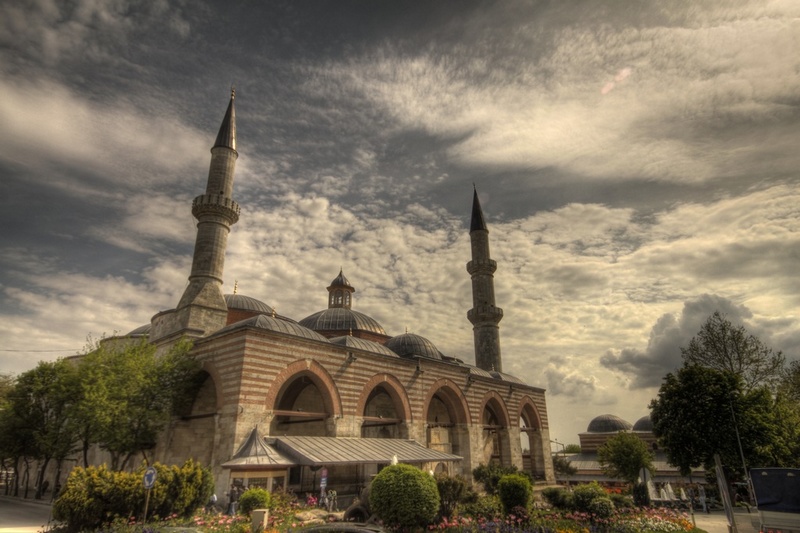
Photo: CeeGee · CC BY-SA 4.0 · Wikimedia Commons
Edirne Palace is a former Ottoman palace in Turkey. Begun under Sultan Murad the Second in the fifteenth century. The free Lokali audio guide runs 7 minutes.
✓ Published October 2026 · how we write these guides
Visitor facts
| Lokali audio guide | 7 min · free |
|---|---|
| Type | Archaeological Site |
| Location | Edirne, Türkiye |
| Coordinates | 41.6911, 26.5557 |
| Languages | 50+, in the Lokali app |
The story
Listen first. Somewhere close by, the Tunca River slides past, slow and green, under old stone bridges. The grass here is soft and wide, and the air smells of cut meadow and damp earth. On a quiet morning you may hear only birds, a distant car, and the crunch of gravel under your shoes. It is hard to believe that this calm stretch of riverbank once held one of the largest royal palaces of the Ottoman world.
This is Edirne Palace. In Turkish it is often called the New Imperial Palace, a name that made sense when it was built in the fifteenth century. Before Istanbul became the Ottoman capital, Edirne held that role. The city was the seat of the sultans for nearly a century. So the palace you are standing in, or what remains of it, belongs to the years when Edirne was the centre of an expanding empire.
The palace was begun under Sultan Murad the Second, around the middle of the fifteenth century. His son, Mehmed the Second, carried the work forward. Mehmed is the sultan who later conquered Constantinople in 1453. Much of his youth and early reign were tied to Edirne. It is widely believed that plans for that famous siege took shape in this city. Think about that as you look across the meadow. Decisions made near this river changed the map of Europe and Asia.
Why build here, on the edge of the city and not in its heart? The answer is in the landscape around you. The Tunca curves through this area and creates open, fertile land with water on several sides. It was ideal for gardens, pavilions, and hunting grounds. Ottoman sultans loved the hunt, and the forests and fields around Edirne were famous for it. This palace was not one single building. It was a spread-out complex of pavilions, courtyards, baths, kitchens, and gardens.
Here is the first surprise. Even after the capital moved to Istanbul, the sultans did not abandon this place. For about two more centuries, many rulers came back to Edirne for long stays. Some preferred it to Istanbul, with its crowds and court politics. The palace grew over time as new sultans added their own pavilions and rooms. At its peak, it covered a very large area and housed a great number of people, from officials to servants to guards.
So where did it all go? This is the hardest part of the story. During the Russo-Turkish War of 1877 and 1878, Russian forces advanced toward Edirne. The palace had been used to store ammunition. Historical accounts say the Ottoman side detonated these stores rather than let them fall into enemy hands. The explosions and the fires that followed destroyed most of the complex. After that, much of the remaining stone was carried away and reused in other buildings around the region.
That is why you see open ground where a palace once stood. Walk slowly and look closely at the earth. Low walls, foundations, and the outlines of lost rooms appear here and there. In recent decades, archaeologists have excavated parts of the site. They have uncovered building plans, tiles, and everyday objects. Some structures, such as the palace kitchens, have been rebuilt on their old foundations. The work is ongoing, so what you see may change from one visit to the next.
One of the buildings that did survive is the Justice Pavilion, known in Turkish as the Adalet Kasrı. It is a square stone tower with a steep pointed roof, built in the sixteenth century during the reign of Suleiman the Magnificent. Its name tells you its purpose. This was a place connected to the imperial council and to matters of law and petition. Its solid stone walls have outlasted almost everything around them.
In front of the pavilion, look for two stone columns. Tradition gives them two names: the Stone of Respect and the Stone of Warning. According to the popular story, people placed their petitions to the sultan on the first stone. On the second, the story says, the heads of executed officials were displayed as a lesson to others. Treat this as local tradition rather than fully documented history. Still, the two plain columns make the idea of royal justice very real.
Near the pavilion, the river is crossed by old stone bridges. Their low arches carry you over the water toward the city. Pause on one of them. From here you can see how the river shaped the palace grounds. In spring the water can run high and fast. In late summer it often slows and turns quiet. The bridges have stood through floods, wars, and centuries of daily traffic. They give you the clearest sense of the palace's original setting.
Here is the second surprise. This same riverside meadow is the home of Kırkpınar, the famous oil wrestling festival. Each summer, wrestlers coat themselves in olive oil and compete on the grass, wearing heavy leather trousers. The tradition is very old, and locals take great pride in it. The modern arena stands close to the palace site. So this ground is not only a place of ruins. Every year it fills again with drums, crowds, and the shouts of fans.
As you explore, notice the scale of the open space. The emptiness is part of the story. It helps you imagine how many buildings once filled it. Look at the reconstructed sections and compare them with the bare foundations. The rebuilt parts show the shape and materials of Ottoman palace architecture: cut stone, brick, wooden roofs, and tiled interiors. The foundations show what time and war took away. Together they give you a fair picture of both the glory and the loss.
Before you leave, stand still for a moment near the river. Feel the breeze move across the grass. Look toward the stone bridges, the square tower, and the low walls in the ground. A palace of sultans once rose here, and an empire was planned from these rooms. Now there is mostly sky and meadow. As you walk back toward the city, keep listening to the water. It is one of the few things here that has not changed.
Key facts
What to look for
Practical tips
Common questions
Is there a free audio guide to Edirne Palace?
Yes — the Lokali app narrates Edirne Palace free of charge in 50+ languages. The guide runs about 7 minutes, covers the history, what to look for on site and practical tips, and works offline once downloaded.
Where is Edirne Palace?
Edirne Palace is in Edirne, Türkiye, at 41.6911, 26.5557. Tap the map link on this page for directions from where you are.
What is Edirne Palace known for?
Begun under Sultan Murad the Second in the fifteenth century. Edirne was the Ottoman capital before Istanbul.
What should you look for at Edirne Palace?
Two stone columns standing in front of the Justice Pavilion. Steep pointed roof on the square stone Justice Pavilion. Low arched stone bridges crossing the slow Tunca River.
What should you know before visiting Edirne Palace?
Walk the site slowly to spot foundations in the grass. Bring comfortable shoes for uneven ground and gravel paths.
When is the best time to visit Edirne Palace?
Visit early morning for quiet and soft light by the river.
On the map
Opens directions to Edirne Palace from your location.
More to see in Edirne

Hear Edirne Palace in your language
The full story, narrated, in 50+ languages. Download it before you go and it plays offline, at your own pace, with no ticket and no tour group.