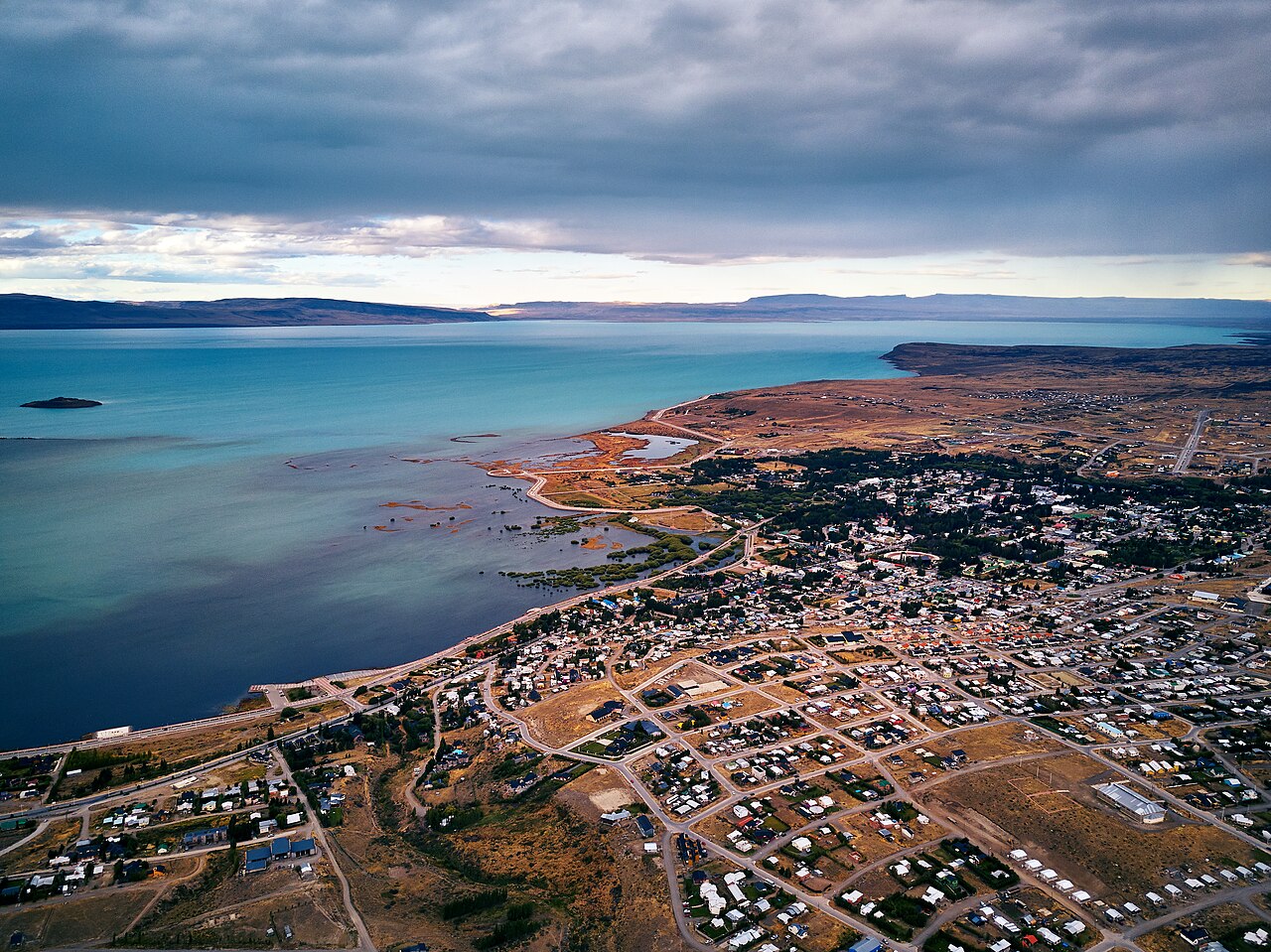
El Calafate Town is a small Patagonian settlement of 17,000 people built on tourism and sheep farming. It is in El Calafate, Argentina. Most visitors spend 1–2 hours here. The free Lokali audio guide runs 5 minutes.
✓ Verified August 2026 · how we write these guides
Visitor facts
| Time needed | 1–2 hours |
|---|---|
| Lokali audio guide | 5 min · free |
| Type | Town |
| Best for | Local life |
| Location | El Calafate, Argentina |
| Coordinates | -50.3387, -72.2641 |
| Languages | 45, in the Lokali app |
The story
The wind meets you the moment you step outside. It comes off the steppe, steady and dry, and it carries the smell of dust and low scrub. Around you the land is wide and almost bare, pale gold grass running to distant hills. And there, at the foot of it all, lies a strip of town along a milky lake. This is El Calafate.
El Calafate is a small town in the province of Santa Cruz, in the south of Argentina. It stands on the southern shore of Lago Argentino, the largest lake in the country. For most travelers it is a base, the place you sleep and eat between trips out to the glaciers. But the town has a character of its own.
The town takes its name from a plant. The calafate is a low, thorny shrub that grows across Patagonia. In summer it carries small dark berries, deep blue and sweet. People gather them to make jam and to flavor drinks. You will see the berry on labels and menus all over town.
There is an old saying tied to the plant. Whoever eats the calafate berry, the saying goes, will return to Patagonia one day. Whether or not you believe it, the words capture something true about this place. Many people who come once find a reason to come back.
El Calafate did not begin as a town for visitors. It started in the early twentieth century as a stop for sheep ranchers. Wool was the trade then. Ranchers from the surrounding land would gather here to rest, to buy supplies, and to send their wool on toward the coast. The town grew slowly, far from any city.
The change came with the glaciers. As more people traveled to see the ice of Los Glaciares National Park, El Calafate became the gateway to it. Hotels and restaurants rose along the streets. In the year 2000 an airport opened nearby, and visitors could arrive in hours rather than days. The town has grown quickly ever since.
The heart of town is one long main street. It is named Avenida del Libertador, though most people simply call it the avenida. Along it stand shops selling wool, leather, and chocolate, along with cafes and travel desks. Wooden buildings give the street a low, frontier feeling, even where they are new. In the high season the avenida stays busy late into the evening, as people drift between dinner, shops, and the desks that sell the next day's tours.
Step into a cafe and the local flavors appear. There is lamb, slow-cooked over open flame, a tradition carried from the ranching days. There is the dark calafate berry in jam and ice cream. And there is mate, the bitter green tea that people across Argentina share from a shared cup and metal straw.
The land around the town is called the steppe. It is dry, open, and swept by wind for much of the year. Few trees grow here on their own. The colors are soft, pale grass and grey-green scrub, under a very large sky. After the white of the glaciers, the steppe feels warm and earth-toned.
At the edge of town, where the streets meet the lake, lies the Laguna Nimez reserve. It is a set of shallow lagoons crossed by walking paths. Birds gather here in good numbers. Flamingos wade in the shallows, and ducks and geese rest among the reeds. It makes a calm walk within reach of the main street.
The town has a clear rhythm through the year. The southern summer, from December to February, brings long days and the largest crowds. Rooms are hard to find then without a booking made well ahead. In winter the days grow short and snow can dust the hills, and the town turns quiet. Many travelers choose spring or autumn, when the weather is mild and the streets are calmer.
Evening is a fine time to be in town. The wind often eases as the sun drops. The lake turns gold, then grey. Lights come on along the avenida, and the smell of grilled lamb drifts out of the doorways. Travelers compare their days, and plan the next trip out to the ice.
El Calafate is not the reason most people come to Patagonia. The glaciers are. But the town gives the journey a center, a warm room at the end of a cold and open day. Eat the dark berry before you leave, just in case the old saying turns out to be true.
Key facts
What to look for
Practical tips
Common questions
How long do you need at El Calafate Town?
Plan 1–2 hours. That is the time most visitors spend at El Calafate Town. The free Lokali audio guide adds about 5 minutes of narration you can listen to as you walk, so it fits inside your visit rather than adding to it.
Is there a free audio guide to El Calafate Town?
Yes — the Lokali app narrates El Calafate Town free of charge in 50+ languages. It covers the history, what to look for on site and practical tips, and it works offline once downloaded.
Where is El Calafate Town?
El Calafate Town is in El Calafate, Argentina, at -50.3387, -72.2641. Tap the map link on this page for directions from where you are.
What should you know before visiting El Calafate Town?
Use the town as a base for glacier trips.
What is El Calafate Town known for?
Located in Santa Cruz Province on Lago Argentino's southern shore.
What is the best time to visit El Calafate Town?
The town itself is functional rather than charming—but the outlying estancias (ranches) offer horseback riding and gaucho culture.
On the map
Opens directions to El Calafate Town from your location.
More to see in El Calafate


Hear El Calafate Town in your language
The full story, narrated, in 50+ languages. Download it before you go and it plays offline, at your own pace, with no ticket and no tour group.