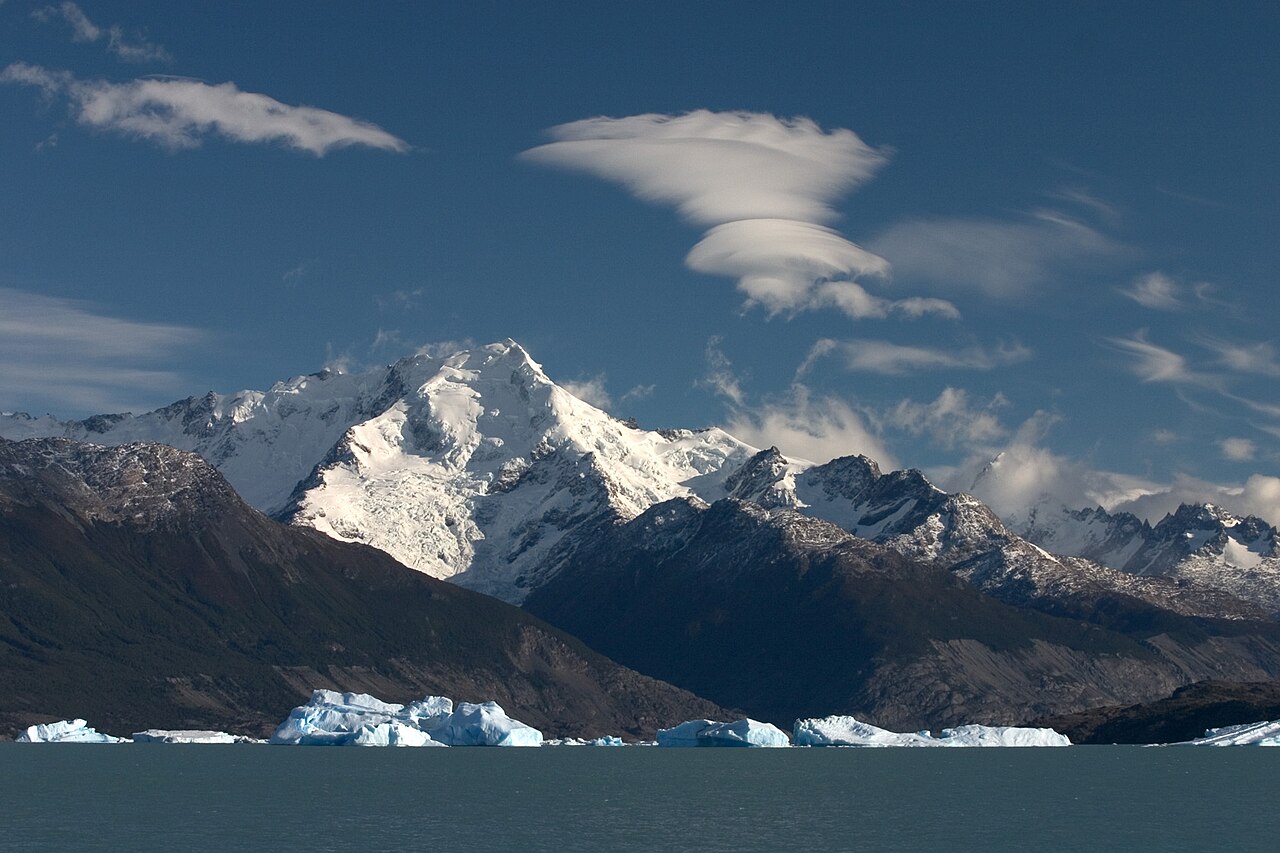
Lago Argentino is a lake in El Calafate, Argentina. South America's largest lake by area, a glacial meltwater body spanning 1,500 square kilometres. Most visitors spend 2–4 hours here. The free Lokali audio guide runs 5 minutes.
✓ Verified August 2026 · how we write these guides
Visitor facts
| Time needed | 2–4 hours |
|---|---|
| Lokali audio guide | 5 min · free |
| Type | Lake |
| Best for | Photography |
| Location | El Calafate, Argentina |
| Coordinates | -50.2167, -72.4167 |
| Languages | 45, in the Lokali app |
The story
The water is the first surprise. It is not blue like the sea or clear like a mountain stream. It is pale and milky, somewhere between turquoise and soft grey, as if someone had stirred milk into the lake. On a bright day it almost glows. This is Lago Argentino, and its strange color has a simple cause.
Lago Argentino is the largest lake in El Calafate. It spreads across about one thousand four hundred square kilometers in the province of Santa Cruz, in the south of Patagonia. The town of El Calafate sits on its southern shore. From the lakefront you can look out and lose sight of the far side on a hazy day.
The color comes from the glaciers that feed the lake. High in the mountains, slow rivers of ice grind against the rock beneath them. They crush stone into a fine powder, as fine as flour. Meltwater carries this powder down into the lake. The tiny grains hang in the water and scatter the light, and that turns the lake its pale milky shade. People often call the powder rock flour.
Several large glaciers send their water here. The Perito Moreno Glacier feeds one arm. Further north, the Upsala and Spegazzini glaciers reach down toward other arms of the same lake. The water you see at El Calafate may have been ice in the mountains not long before.
The lake is also deep and cold. In places the bottom lies hundreds of meters below the surface. The water rarely warms, even in summer, because fresh cold meltwater keeps arriving. Swimming is not the point here. The lake is for looking, and for traveling across. Strong winds can rise in an instant and turn the calm surface rough, so boat crews watch the sky with care.
Many visitors see the lake from a boat. Tour boats leave from a small port and head north into the long arms of the lake. As they go, the water fills with ice. Small white fragments drift by at first. Then larger shapes appear, pale blue and worn smooth, floating slowly on the current.
These floating shapes are icebergs. They break from the fronts of the glaciers and drift out into the lake. Some are small enough to hold in your hand. Others are larger than the boat. Their blue color, like the glaciers, comes from dense old ice that sends only blue light back to you.
The arms of the lake lead to the glacier fronts. On the Upsala route, the boat threads between icebergs toward a wide wall of ice. On the Spegazzini route, the ice face stands among steep dark mountains. The boat holds its place at a safe distance, and from the deck the scale of the ice becomes clear. Sound travels far over the water, and now and then a sharp crack reaches the deck as a piece of the distant wall lets go.
Back on shore, the lake shapes the town as well. El Calafate grew up along this water as a stop for sheep ranchers, and later as a base for visitors to the glaciers. The main street runs roughly parallel to the shore, a short walk from the water.
Near the edge of town lies a quiet nature reserve called Laguna Nimez. It sits between the town and the lakeshore, on a set of shallow lagoons. Paths lead among the reeds, and birds gather here in numbers. Flamingos wade in the shallows, pink against the pale water.
The land around the lake has its own life. On the dry slopes above the shore, herds of guanaco move slowly as they graze. The guanaco is a wild relative of the llama, tan and lean, and well suited to the wind. Overhead, large birds ride the rising air. With luck you may see an Andean condor, its long wings held flat as it circles without a single beat.
The lake does not keep all of its water. At its eastern end it drains into the Santa Cruz River. That river runs east across the dry Patagonian plain and finally reaches the Atlantic Ocean. The melt of distant glaciers makes the whole journey to the sea.
Stand at the shore in the late day, when the wind drops for a moment. The milky water turns soft gold. Somewhere out of sight, ice is still breaking from a glacier and beginning its slow drift toward you. The lake is quiet, and always moving, fed by mountains you cannot see.
Key facts
What to look for
Practical tips
Common questions
How long do you need at Lago Argentino?
Plan 2–4 hours. That is the time most visitors spend at Lago Argentino. The free Lokali audio guide adds about 5 minutes of narration you can listen to as you walk, so it fits inside your visit rather than adding to it.
Is there a free audio guide to Lago Argentino?
Yes — the Lokali app narrates Lago Argentino free of charge in 50+ languages. It covers the history, what to look for on site and practical tips, and it works offline once downloaded.
Where is Lago Argentino?
Lago Argentino is in El Calafate, Argentina, at -50.2167, -72.4167 Tap the map link on this page for directions from where you are.
What should you know before visiting Lago Argentino?
Take a boat tour to reach the glacier arms.
What is Lago Argentino known for?
Largest lake in El Calafate, about one thousand four hundred square kilometers.
What is the best time to visit Lago Argentino?
The colour shifts throughout the day—pale grey at dawn, brilliant turquoise by noon.
On the map
Opens directions to Lago Argentino from your location.
More to see in El Calafate


Hear Lago Argentino in your language
The full story, narrated, in 50+ languages. Download it before you go and it plays offline, at your own pace, with no ticket and no tour group.