
Basilica of San Lorenzo
43.7750° N · 11.2539° E · Museum
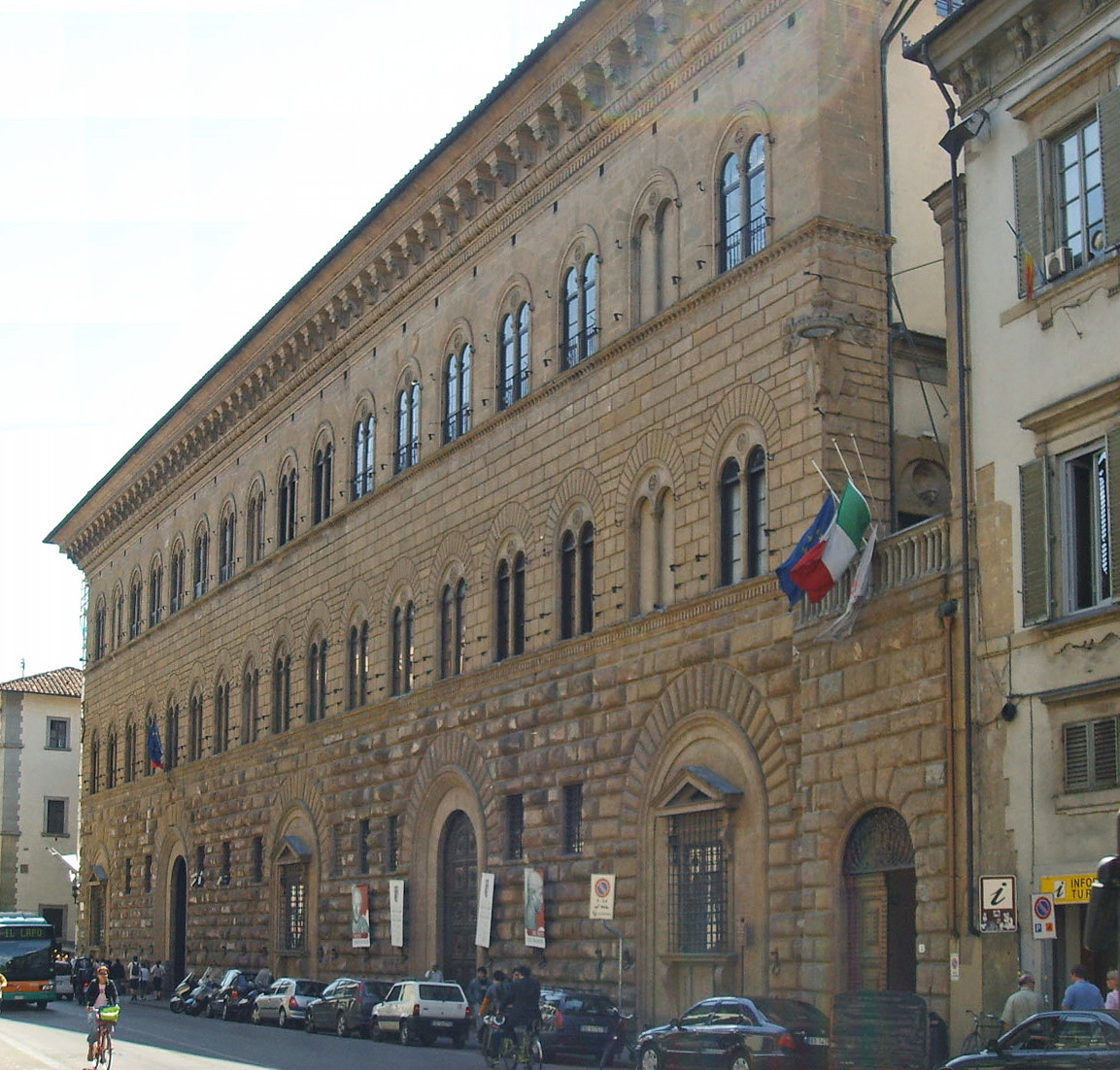
Photo: Nelson Pérez · CC BY-SA 3.0 · Wikimedia Commons
Basilica of San Lorenzo is a church in Florence, Italy. Tradition says Saint Ambrose consecrated a church here. The free Lokali audio guide runs 7 minutes.
✓ Published October 2026 · how we write these guides
Visitor facts
| Lokali audio guide | 7 min · free |
|---|---|
| Type | Museum |
| Location | Florence, Italy |
| Coordinates | 43.7750, 11.2539 |
| Official website | sanlorenzofirenze.it |
| Languages | 50+, in the Lokali app |
The story
Stand in the square for a moment and look up at the front of the church. There is no marble here, no carved saints, no gleaming stripes of green and white. Instead you see a wall of rough brown stone, pitted and uneven, with holes where builders once fixed their scaffolding. In a city of polished facades, this one looks unfinished. That is because it is. The story of that bare wall leads straight to the family that shaped Florence.
This is the Basilica of San Lorenzo, and it is one of the oldest church sites in the city. Tradition holds that a church stood here in the late fourth century and that Saint Ambrose, the bishop of Milan, consecrated it. For a long period it served as the city's main church, before the cathedral took that role. So when you walk in, you are standing on ground that has been sacred to Florentines for well over a thousand years.
The building you see today belongs to the fifteenth century. Its patron was the Medici family, the bankers who became the unofficial rulers of Florence. This was their parish church. They lived just a short walk away, and they paid to rebuild San Lorenzo on a grand scale. In return, the church became their showcase and, in the end, their tomb. Almost every major Medici is buried somewhere inside this complex.
The architect was Filippo Brunelleschi, the same man who solved the problem of the cathedral dome. Here he took a different challenge. He wanted to build a church using clear rules of proportion, inspired by ancient Rome. Step through the doors and you will feel it at once. The space is calm and orderly. Rows of columns march toward the altar, and the arches repeat in a steady rhythm, like a measured breath.
Notice the colours. Almost everything is grey and white. The grey stone is called pietra serena, a local sandstone quarried in the hills around Florence. Brunelleschi used it for the columns, arches, and frames, and he set it against smooth white plaster. The effect is like a drawing in ink on paper. It became the signature look of the Florentine Renaissance — and once you know it, you will spot it all over the city.
Now, back to that bare facade. In the early sixteenth century, a Medici pope, Leo the Tenth, asked Michelangelo to design a marble front worthy of the family. Michelangelo threw himself into the work. He spent long months choosing marble in the quarries. He even made a wooden model, which survives today in a museum in Florence. Then the contract was cancelled. The marble front was never built, and the rough stone has waited ever since.
Inside, look for two raised bronze pulpits standing on columns in the nave. These are late works by Donatello, the great sculptor of early Renaissance Florence. Their panels show scenes of the Passion and the Resurrection, crowded with figures in deep emotion. Here is a detail many visitors miss. Donatello himself is buried in this church, close to his friend and patron, Cosimo de' Medici. The artist and the banker rest only a few steps apart.
Cosimo the Elder lies in the crypt beneath the main altar. Look at the floor in front of the altar. You will see a marker set into the pavement, with a Latin title meaning "Father of his Country". The Florentines gave Cosimo that name after his death. It tells you how much power one banking family held over a republic that still claimed to rule itself.
Off the left transept is the Old Sacristy, a small square room crowned by a dome. Brunelleschi designed it, and Donatello added much of the decoration, including round reliefs and bronze doors. It was built for Giovanni di Bicci de' Medici, Cosimo's father, who is buried here. For many people this little room is the purest expression of the Renaissance idea — a perfect cube and a perfect hemisphere, joined in harmony.
As you walk the aisles, keep an eye out for paintings. On the left wall, a huge fresco by Bronzino shows the martyrdom of Saint Lawrence, the church's patron. Legend says Lawrence was put to death on a gridiron over a fire, and the gridiron became his symbol. In one side chapel, there is also a gentle Annunciation by Filippo Lippi, with soft light and a quiet garden behind the angel.
Next to the church, up a flight of stairs from the cloister, is the Laurentian Library, also designed by Michelangelo. It was built to hold the Medici collection of manuscripts. The entrance hall is famous for its staircase. It seems to pour down into the room like flowing stone, filling almost the whole floor. Michelangelo designed it, and other builders completed it after he left Florence. It still feels strange and daring today.
At the back of the complex, with its own entrance, are the Medici Chapels. Here you find the New Sacristy, where Michelangelo carved tombs with figures of Night, Day, Dawn, and Dusk. You also find the Chapel of the Princes, a great octagonal hall lined with coloured stone inlay. These spaces form a separate museum, so the church ticket does not cover them. Plan for both if you can.
When you come back outside, take in the life around the church. Stalls selling leather bags and belts fill the nearby streets, and the large covered Central Market is close by, with its smells of cheese, bread, and coffee. In the square, a seated marble statue honours a Medici soldier. This was always a working neighbourhood, and it still is. The church sits among ordinary Florentine life, not above it.
Before you go, look once more at that rough stone front. Run your eyes across the gaps and the uneven blocks. It is easy to read it as a failure, but you might see it differently now. Behind this plain wall stand Brunelleschi's columns, Donatello's bronzes, and Michelangelo's staircase. Sometimes the unfinished things tell the truest story. Take that thought with you as you step back into the streets of Florence.
Key facts
What to look for
Practical tips
Common questions
Is there a free audio guide to Basilica of San Lorenzo?
Yes — the Lokali app narrates Basilica of San Lorenzo free of charge in 50+ languages. The guide runs about 7 minutes, covers the history, what to look for on site and practical tips, and works offline once downloaded.
Where is Basilica of San Lorenzo?
Basilica of San Lorenzo is in Florence, Italy, at 43.7750, 11.2539. Tap the map link on this page for directions from where you are.
What is Basilica of San Lorenzo known for?
Tradition says Saint Ambrose consecrated a church here. Filippo Brunelleschi redesigned the church in the fifteenth century.
What should you look for at Basilica of San Lorenzo?
Scaffolding holes in the rough brown stone facade. Grey pietra serena columns against white plaster walls. Donatello's two bronze pulpits standing in the nave.
What should you know before visiting Basilica of San Lorenzo?
Buy a separate ticket for the Medici Chapels museum. Visit the Laurentian Library through the church cloister.
When is the best time to visit Basilica of San Lorenzo?
Arrive early to enjoy the nave in relative quiet.
On the map
Opens directions to Basilica of San Lorenzo from your location.
More to see in Florence


Hear Basilica of San Lorenzo in your language
The full story, narrated, in 50+ languages. Download it before you go and it plays offline, at your own pace, with no ticket and no tour group.