
Galleria dell'Accademia
43.7769° N · 11.2589° E · Museum
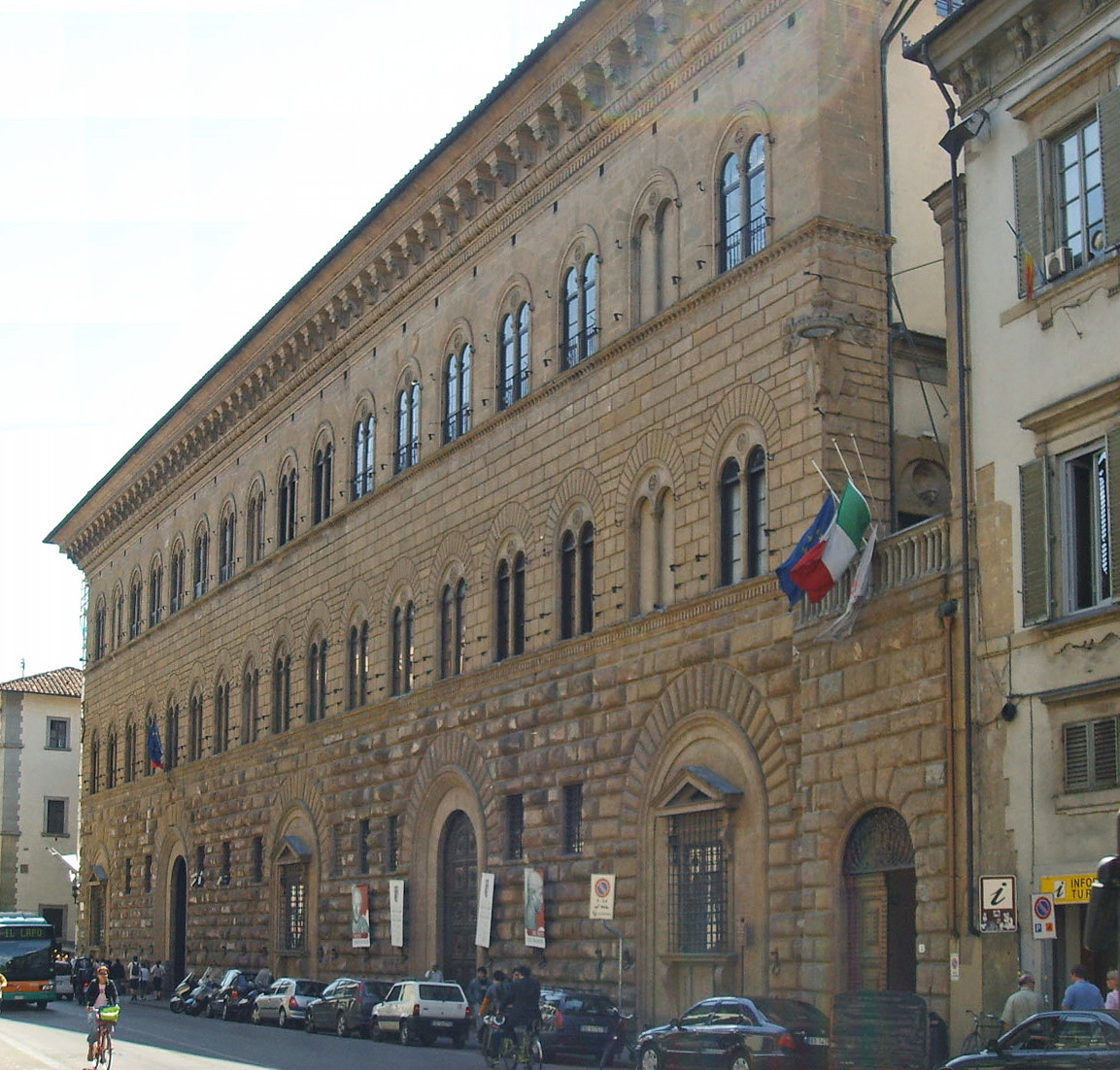
Photo: Robot8A · CC BY-SA 4.0 · Wikimedia Commons
Galleria dell'Accademia is an art museum in Florence, Italy. Michelangelo carved David between 1501 and 1504. The free Lokali audio guide runs 7 minutes.
✓ Published October 2026 · how we write these guides
Visitor facts
| Lokali audio guide | 7 min · free |
|---|---|
| Type | Museum |
| Location | Florence, Italy |
| Coordinates | 43.7769, 11.2589 |
| Official website | galleriaaccademiafirenze.it |
| Languages | 50+, in the Lokali app |
The story
Listen for a moment. The voices around you drop as people walk down the long hall. Feet shuffle on the stone floor. Phones rise slowly, almost politely. At the far end, under a pale wash of daylight from above, a white figure stands on a high plinth. You have seen this body a thousand times on postcards and fridge magnets. But nothing prepares you for the scale of it — or for the quiet it creates in a crowded room.
Welcome to the Galleria dell'Accademia in Florence. The building began life as part of an art academy. In 1784, the Grand Duke of Tuscany, Pietro Leopoldo, reorganised the city's academy of fine arts. Students needed models to study. So paintings and sculptures were gathered here as teaching tools. For decades, this was a working place for young artists, not a destination for travellers. That changed when one statue moved in.
That statue, of course, is Michelangelo's David. Michelangelo carved it between 1501 and 1504, when he was still in his twenties. Here is the first surprise. He did not start with a fresh block. The marble had been quarried decades earlier, and other sculptors had already worked on it and given up. It lay in the cathedral workshop yard, exposed to the weather, for years. Michelangelo took on a damaged, narrow, awkward stone — and found a hero inside it.
The statue was first meant for a high position on Florence Cathedral. But when the city saw it finished, a committee of artists debated where it should go. They chose a place in front of the Palazzo Vecchio, the seat of government, in Piazza della Signoria. For Florentines, David was a political symbol. A small young man defeats a giant. A small republic stands up to powerful neighbours. The message was not subtle, and it was not meant to be.
David stood outdoors for more than three and a half centuries. Rain, wind, and city life wore at the marble. In 1873, the statue was moved here, to protect it. A special hall, the tribune you see now, was designed around it. Its domed skylight lets natural light fall on the stone from above. The copy in Piazza della Signoria arrived later, in 1910. So if you saw a David in the square today, you saw a replica.
Now walk slowly around the statue. Look at it from the side, not only from the front. Michelangelo shows the moment before the fight, not the victory. The brow is tense. The eyes look out with focus. The veins stand out on the right hand and lower arm. The weight rests on one leg, so the hips and shoulders tilt in opposite directions. This classical pose, called contrapposto, makes still marble look ready to move.
Here is the second surprise. The proportions are not natural. The head and hands are larger than they would be on a real young man. Many scholars think this is deliberate. The statue was planned to be seen from below, at a height. Enlarging the head and hands helps them read clearly from the ground. Notice also that the sling hangs over the left shoulder and down the back. Walk behind the figure to follow it.
The statue has survived real dangers. In 1991, a man attacked it with a hammer and damaged a toe on the left foot. The fragments were recovered, and the toe was restored. Look closely at the feet and ankles, too. Conservators watch them carefully, because they carry the whole weight of the marble. Today the area around the base is protected, and the statue is monitored. It is fragile in a way its confident pose does not suggest.
Before you reached David, you walked past four rough, half-formed figures. Many visitors hurry past them. Please go back. These are the so-called Prisoners, or Slaves. Michelangelo began them for the enormous tomb of Pope Julius the Second, a project that troubled him for decades. They were never finished. Bodies twist and push out of raw stone. Chisel marks are still clear on the surface. Some feel like they are struggling to escape the block itself.
For many artists, these unfinished figures matter as much as David. They show how Michelangelo worked. He did not build up a form. He cut away, layer by layer, from the front of the block toward the back. Nearby you will also find an unfinished Saint Matthew, begun for the cathedral. Standing between these rough figures and the polished David, you see both ends of the same process — the beginning and the end.
The Galleria holds much more than Michelangelo. Side rooms contain Florentine paintings from the thirteenth and fourteenth centuries, many on gold backgrounds. Gold ground means the artist covered the panel with thin gold leaf before painting the figures. In candlelit churches, that gold would shine. Look for tooled patterns pressed into the halos. There is also a section with musical instruments from the collections of the Medici and later Tuscan rulers, including instruments made by the famous violin maker Antonio Stradivari.
Do not miss the plaster hall, the Gipsoteca. It is a long room filled from floor to ceiling with white plaster models, many by the nineteenth century sculptor Lorenzo Bartolini. Look closely at the surfaces. You will see small dark metal points dotted across faces and shoulders. These were reference marks. Workshop assistants used them to measure and copy the plaster into marble. It is a rare view inside a sculptor's studio, and it is often much quieter than the main hall.
Before you leave, return to the tribune once more. Stand a little further back this time, near the Prisoners. Watch how other people react — the pause, the tilt of the head, the lowered voices. Then look up at the light falling on the marble from the skylight. When you step out onto the street, the city noise returns quickly. But as you walk through Florence, notice how many walls, doorways, and squares carry the same pale stone and the same confidence.
Key facts
What to look for
Practical tips
Common questions
Is there a free audio guide to Galleria dell'Accademia?
Yes — the Lokali app narrates Galleria dell'Accademia free of charge in 50+ languages. The guide runs about 7 minutes, covers the history, what to look for on site and practical tips, and works offline once downloaded.
Where is Galleria dell'Accademia?
Galleria dell'Accademia is in Florence, Italy, at 43.7769, 11.2589. Tap the map link on this page for directions from where you are.
What is Galleria dell'Accademia known for?
Michelangelo carved David between 1501 and 1504. David moved indoors from Piazza della Signoria in 1873.
What should you look for at Galleria dell'Accademia?
Raised veins on David's right hand and forearm. The sling running down David's back. Chisel marks on the unfinished Prisoners.
What should you know before visiting Galleria dell'Accademia?
Reserve a timed entry in advance to avoid long queues. Visit early morning or late afternoon for a calmer tribune.
When is the best time to visit Galleria dell'Accademia?
Visit early morning or late afternoon for a calmer tribune.
On the map
Opens directions to Galleria dell'Accademia from your location.
More to see in Florence


Hear Galleria dell'Accademia in your language
The full story, narrated, in 50+ languages. Download it before you go and it plays offline, at your own pace, with no ticket and no tour group.