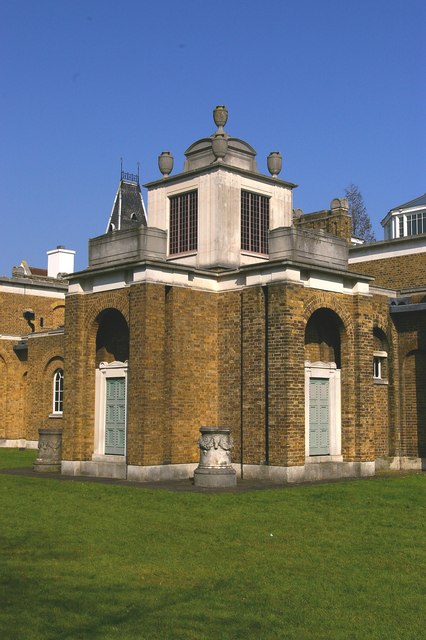
Photo: Julian Osley · CC BY-SA 2.0 · Wikimedia Commons
Dulwich Picture Gallery is an art gallery in Dulwich, South London, United Kingdom. Opened to the public in 1817. The free Lokali audio guide runs 7 minutes.
✓ Published October 2026 · how we write these guides
Visitor facts
| Lokali audio guide | 7 min · free |
|---|---|
| Type | Museum |
| Location | London, United Kingdom |
| Coordinates | 51.4461, -0.0864 |
| Official website | dulwichpicturegallery.org.uk |
| Languages | 50+, in the Lokali app |
The story
Listen for a moment. Traffic fades here. You may hear birdsong from the lawns, and gravel crunching softly underfoot. In front of you stands a low building of warm brown brick, almost plain. No grand columns, no sweeping staircase. It looks more like a quiet country house than a temple of art. Yet this modest building in south London changed how the world shows paintings. Welcome to Dulwich Picture Gallery.
This is widely described as the oldest purpose-built public art gallery in England. It opened to visitors in 1817, at a time when great paintings usually hung in private palaces. Ordinary people rarely saw them. Here, the idea was different. A collection of Old Master paintings would sit in a building designed only for looking at art. That idea seems normal to us today. Two centuries ago, it was something new.
The story of the collection begins with a king who never received it. In the late eighteenth century, two London art dealers were buying paintings for King Stanisław August of Poland. He wanted a royal gallery in Warsaw. The dealers were Noel Desenfans and his younger partner, the painter Francis Bourgeois. But Poland was divided by its powerful neighbours, and in 1795 the king gave up his throne. Suddenly, the dealers held a royal collection with no royal buyer.
They kept the paintings. Desenfans tried to sell the collection, but he did not find a suitable home for it. When he died, the paintings passed to Bourgeois. Bourgeois then made a careful choice. He left the collection to Dulwich College, the old school nearby. The school was founded in the early seventeenth century by Edward Alleyn, a famous actor of Shakespeare's era. Alleyn had left some paintings of his own, so the college already had a small collection.
To design the new gallery, Bourgeois's estate turned to Sir John Soane. Soane was one of the most original architects in Georgian London. He also designed much of the Bank of England. Here, he had a limited budget, so he worked mostly in plain brick. Look at the outside walls. You will see simple shapes, recessed panels and narrow strips of stone. The building gets its effect from proportion and shadow, not from decoration. Soane made very little look like a great deal.
Now comes the first surprise. This gallery is also a tomb. At the centre of the building sits a small mausoleum. Inside it lie Noel Desenfans, his wife Margaret, and Francis Bourgeois. The three people who made this collection possible rest among the paintings they loved. As you walk through, look for the doorway into this space. The light changes there. Soane used tinted glass high above, so a soft golden glow falls over the stone tombs. It feels calm and solemn.
The second big idea is overhead. Look up in the main rooms. There are no side windows on the walls. Instead, the light comes from long roof lanterns above. Daylight falls evenly from the top, and the walls stay free for hanging pictures. This top-lit design became a model for many later galleries around the world. When you visit a large museum with skylit rooms, you may be seeing an echo of this building in Dulwich.
The rooms run in a long line, one opening into the next. This layout is called an enfilade, meaning the doors are aligned along a single axis. Stand at one end and look through the whole sequence. The doorways frame each other, and the rooms seem to go on and on. The walls are painted a deep red. That strong colour makes the gilded frames glow, and it helps the darker Old Master canvases stand out.
The collection is especially strong in European painting from the seventeenth and eighteenth centuries. You can find works associated with Rembrandt, Rubens, Poussin, Murillo, Van Dyck and Canaletto, along with British painters such as Gainsborough. Many pictures hang close together, in the style of a grand private collection. Take your time. Some of the most rewarding paintings here are small, and they reward a close look at the brushwork.
One small portrait by Rembrandt carries a famous story. It shows a young man named Jacob de Gheyn. This little panel has been stolen several times in the twentieth century. It is often called one of the most frequently stolen paintings in the world, and some people have nicknamed it the takeaway Rembrandt. Each time, it came back. Its small size made it easy to carry. Today, it hangs safely here again, and its calm face shows no sign of all that drama.
The building has survived its own hard times. During the Second World War, a German flying bomb fell nearby and badly damaged the gallery. Fortunately, the paintings had already been moved to safety. After the war, the building was carefully restored to Soane's design, and it reopened in the 1950s. Later, a modern extension was added with a glass-and-bronze cloister, a café and new spaces. It sits respectfully beside the old brick, without trying to copy it.
Here is a small surprise for anyone who loves London. The red telephone box, a classic symbol of Britain, has a link to Soane. Its designer, Giles Gilbert Scott, took inspiration from a tomb that Soane designed for his own wife. When you see the curved top of a red phone box on a London street, you are seeing a little of Soane's style. You can see that same taste for simple, strong geometry here.
Take a moment outside, too. The gallery stands in Dulwich Village, a green corner of south London with old trees, wide lawns and quiet streets. The setting feels far from the centre of the city, though it is not far at all. Many visitors walk in the gardens after seeing the paintings. On a bright day, the brick turns warm and almost orange, and the shadows of the trees move slowly across the walls.
Before you leave, stand back and look at the building once more. It is low, modest and plain. Yet inside, a king's lost collection hangs under falling daylight, beside the people who saved it. Notice the light on the brick, the sound of your steps on the path, and the quiet of the lawns. This gallery was built so that anyone could walk in and look. Today, that includes you.
Key facts
What to look for
Practical tips
Common questions
Is there a free audio guide to Dulwich Picture Gallery?
Yes — the Lokali app narrates Dulwich Picture Gallery free of charge in 50+ languages. The guide runs about 7 minutes, covers the history, what to look for on site and practical tips, and works offline once downloaded.
Where is Dulwich Picture Gallery?
Dulwich Picture Gallery is in London, United Kingdom, at 51.4461, -0.0864. Tap the map link on this page for directions from where you are.
What is Dulwich Picture Gallery known for?
Opened to the public in 1817. Designed by the architect Sir John Soane.
What should you look for at Dulwich Picture Gallery?
Golden light falling inside the founders' mausoleum. Long roof lanterns above the main rooms. Deep red walls behind the gilded frames.
What should you know before visiting Dulwich Picture Gallery?
Walk the full enfilade from one end first. Visit on a bright day for the best skylight.
On the map
Opens directions to Dulwich Picture Gallery from your location.
More to see in London


Hear Dulwich Picture Gallery in your language
The full story, narrated, in 50+ languages. Download it before you go and it plays offline, at your own pace, with no ticket and no tour group.