
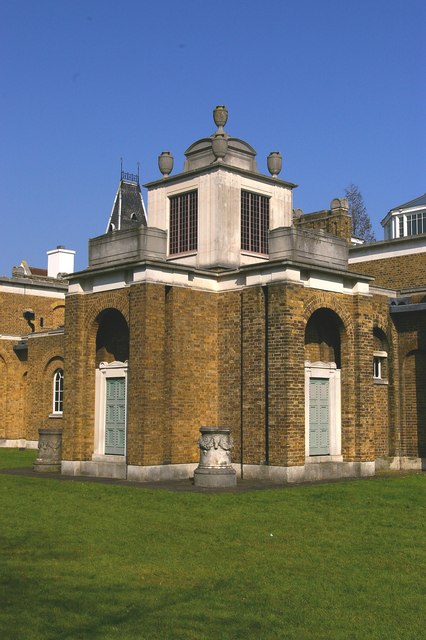
Photo: No Swan So Fine · CC BY-SA 4.0 · Wikimedia Commons
Horniman Museum is a museum in Forest Hill, London, England, United Kingdom. Founded by Victorian tea merchant Frederick John Horniman. The free Lokali audio guide runs 7 minutes.
✓ Published October 2026 · how we write these guides
Visitor facts
| Lokali audio guide | 7 min · free |
|---|---|
| Type | Museum |
| Location | London, United Kingdom |
| Coordinates | 51.4406, -0.0608 |
| Official website | horniman.ac.uk |
| Languages | 50+, in the Lokali app |
The story
Listen for a moment. Up here on the hill, the traffic of London Road fades behind you. In its place comes birdsong, the crunch of gravel, and the faint clink of cups from somewhere nearby. The air smells of cut grass and damp earth. Ahead of you rises a building of warm, honey-coloured stone, with a tall clock tower and a band of bright mosaic. This is the Horniman Museum, in Forest Hill, south-east London. It is one of the strangest and most generous museums in the city.
To understand it, start with a cup of tea. Frederick John Horniman was a Victorian tea merchant. His family firm, Horniman's Tea, was known for selling tea in sealed packets. At the time, loose tea was often bulked out with cheaper leaves or dust, so sealed packets gave buyers a promise of honest weight. That business made the family rich. The money gave Frederick the freedom to travel, and to collect.
And he collected almost everything. Insects and birds. Masks and musical instruments. Carvings, tools, textiles, and objects of daily life from across the world. At first he kept them in his own family home on this site. By the late nineteenth century, so many curious visitors were coming to see them that his house had become a museum in all but name. So he decided to build a proper one, and to give it away.
The building in front of you opened in 1901. It was designed by the architect Charles Harrison Townsend. He worked in a style that sits between the Arts and Crafts movement and Art Nouveau. Arts and Crafts valued honest materials and handwork. Art Nouveau loved flowing, natural curves. Look at the tower. It has soft, rounded corners and carved details that look like trees and leaves. Nothing here is sharp or grand in the classical way. The building feels almost organic, as if it grew out of the hill.
Now find the large mosaic on the front of the building. It was designed by the artist Robert Anning Bell. Its figures stand for the stages of human life, from youth to old age, in rich blues, golds and greens. Many people walk straight past it on the way to the entrance. Stop for a minute instead. It sums up the whole idea of this place. The museum is not only about objects. It is about people, and how they live their lives.
Here is the first surprise. Horniman did not sell this museum or charge the public for it. He gave the building, the collections and the gardens to the people of London, through the London County Council of the day. His idea was simple. Ordinary people, not only scholars or the wealthy, should be able to wander in and look closely at the world. More than a century later, that spirit of open doors still shapes how the museum feels.
Inside, the most loved resident of the museum waits in the Natural History Gallery. It is a walrus. And it is very, very fat. Here is why. The walrus was preserved in the nineteenth century. The taxidermist who stuffed it had probably never seen a live walrus. He did not know that walruses have deep folds of skin. So he filled the skin until it was completely smooth and round. The result is a huge, tight, slightly puzzled-looking animal. It has become the unofficial mascot of the museum.
The Natural History Gallery itself is worth a slow look. It still has the feel of a Victorian display hall, with tall wooden cases, a long balcony above, and rows of skeletons, birds and specimens behind glass. It shows how people in Horniman's time tried to sort and understand the natural world. Below, in the basement, a small aquarium brings things back to life, with jellyfish, coral and tiny creatures moving in blue-lit tanks.
Then there is music. The museum holds a large collection of musical instruments from many cultures and centuries. You will find drums, horns, flutes, stringed instruments, and machines that play themselves. Some displays let you listen to the instruments as well as look at them. It is a good reminder that a museum can be heard, not only seen. If you find a space with instruments you can try, take your chance. The sound fills the room quickly.
A museum built from one man's collecting also carries hard questions. Some objects arrived here through the violence of empire. In 2022 the Horniman agreed to transfer ownership of objects taken from Benin City, in what is now Nigeria, during a British military attack in 1897. It was one of the first British museums to make that decision. Today the galleries try to tell these stories more honestly, and to include the voices of the communities the objects came from.
Now step outside again, into the gardens. They spread across the slope of the hill, with lawns, flower beds, a bandstand and small animal enclosures. Walk up towards the bandstand and turn around. On a clear day you can see across London to the towers of the City, small and grey on the horizon. It is the second surprise of the visit. Few people expect such a wide view from a quiet street in Forest Hill.
Look too for the Victorian glass conservatory. It did not start life here. It once stood at a Horniman family house in Croydon, and in the 1980s it was taken apart and rebuilt on this site. Nearby stands a tall carved totem pole. It was made by the Tlingit carver Nathan Jackson, from the Pacific coast of Alaska. Its faces and figures look out over the gardens, a living tradition in a London park.
Before you leave, pause once more by the stone tower. Listen again to the birds, the voices of families on the lawn, the soft hum of the city far below. Frederick Horniman wanted people to come here, look closely and feel a little wonder. As you walk back down the hill, notice the mosaic catching the light one last time. Then think of that oversized walrus inside, still keeping watch over the gallery, round, patient and slightly wrong, exactly as visitors have loved it for generations.
Key facts
What to look for
Practical tips
Common questions
Is there a free audio guide to Horniman Museum?
Yes — the Lokali app narrates Horniman Museum free of charge in 50+ languages. The guide runs about 7 minutes, covers the history, what to look for on site and practical tips, and works offline once downloaded.
Where is Horniman Museum?
Horniman Museum is in London, United Kingdom, at 51.4406, -0.0608. Tap the map link on this page for directions from where you are.
What is Horniman Museum known for?
Founded by Victorian tea merchant Frederick John Horniman. Current building opened in 1901.
What should you look for at Horniman Museum?
The overstuffed walrus in the Natural History Gallery. Robert Anning Bell's mosaic across the main facade. Rounded, leaf-carved corners of the clock tower.
What should you know before visiting Horniman Museum?
Climb to the bandstand for long views across London. Visit on a clear day for the best skyline view.
On the map
Opens directions to Horniman Museum from your location.
More to see in London


Hear Horniman Museum in your language
The full story, narrated, in 50+ languages. Download it before you go and it plays offline, at your own pace, with no ticket and no tour group.