
Photo: Photograher and original uploader was Sebjarod at fr.wikipedia · Public domain · Wikimedia Commons
Greenwich Park is a Royal Park and former hunting park in Greenwich, London. Oldest enclosed Royal Park in London, enclosed in 1433. The free Lokali audio guide runs 7 minutes.
✓ Published October 2026 · how we write these guides
Visitor facts
| Lokali audio guide | 7 min · free |
|---|---|
| Type | Park |
| Location | London, United Kingdom |
| Coordinates | 51.4767, 0.0001 |
| Official website | royalparks.org.uk |
| Languages | 50+, in the Lokali app |
The story
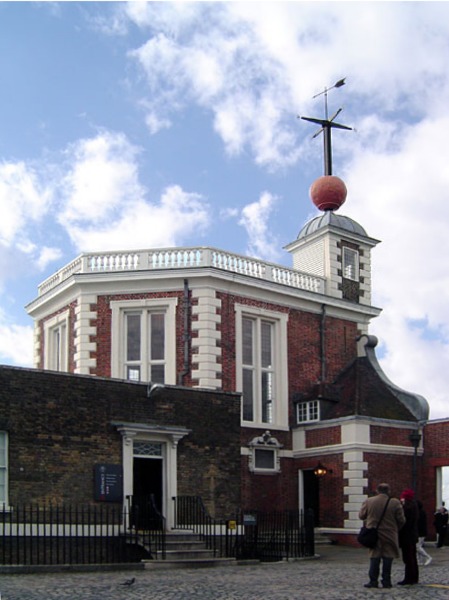
Start with the slope under your feet. The grass here tilts upward, steep enough that you feel it in your calves after a few minutes. Gravel crunches on the paths. Somewhere behind you, a dog chases a ball down the hill and does not quite stop in time. Above, on the ridge, a red ball sits on a pole on the roof of an old brick house. Across the river, glass towers catch the light. You are standing in the oldest enclosed Royal Park in London.
The story of this land goes back far beyond any king. Look for low, rounded humps in the grass on the western side of the park. These are burial mounds, and archaeologists believe they date from the Anglo-Saxon period, well over a thousand years ago. On the eastern side, near Maze Hill, excavations found the remains of a Roman building, often described as a temple. So long before the palaces, people came to this hilltop. It is easy to see why. The view is the reason.
The park as a royal space began in 1433. Humphrey, Duke of Gloucester, brother of King Henry the Fifth, enclosed the land for hunting. Below the hill, beside the river, a royal palace grew over the following century. It became a favourite of the Tudor monarchs. Henry the Eighth was born there. So were his daughters, Mary and Elizabeth. That palace is gone now. But the hunting ground stayed, and later kings shaped it into the park you are walking through.
Here is a detail most visitors walk straight past. Find the hollow stump of an ancient oak tree, fenced off and lying near a path in the centre of the park. This is known as Queen Elizabeth's Oak. Local tradition says that Henry the Eighth and Anne Boleyn danced around it, and that the young Elizabeth played in its shade. Those stories are legend, not record. What is certain is that the tree lived for centuries, and finally fell during a storm in the early 1990s.
After the monarchy returned in 1660, King Charles the Second wanted a grand, formal landscape. The design is linked with André Le Nôtre, the French gardener who planned the gardens at Versailles, the great palace near Paris. Historians debate how much he was involved, and he probably never visited. But you can still see the ambition. Long avenues of trees run in straight lines. Giant grass terraces were cut into the hillside like steps for a giant. Most of the steps are softened now, but the lines remain.
Now look up to the top of the hill. In 1675, Charles the Second founded the Royal Observatory there. The purpose was practical. Sailors could find their latitude from the sun and stars, but longitude, their east-west position, was a deadly puzzle. Ships were lost because of it. The king wanted the stars mapped precisely, to help navigation. Sir Christopher Wren, the architect of Saint Paul's Cathedral, designed the original building. He was an astronomer too, so the job suited him.
That red ball on the roof is a time ball. Since 1833, it has risen up its mast and then dropped at exactly one o'clock in the afternoon. Ships on the Thames used it to set their clocks before going to sea. Why one o'clock and not noon? Astronomers were busy at noon, taking readings of the sun. So the ball drops an hour later. If you are here near one, keep your eyes on the roof. The fall takes only a moment.
Beside the Observatory gate, look at the clock set into the wall. Count the numbers on its face. There are twenty-four, not twelve. This is the Shepherd Gate Clock, and it shows Greenwich Mean Time on a twenty-four hour dial, so noon sits at the bottom and midnight at the top. Close by, brass markers on the wall show official measures of length, such as the yard and the foot. In the past, anyone could come here and check a ruler against them.
Then there is the line. In 1851, the Astronomer Royal, George Airy, set up a new telescope here. The line running through it became the Prime Meridian of the World, agreed at an international conference in 1884. It is zero degrees longitude. Every place on Earth is measured east or west of it. In the Observatory courtyard, a metal strip marks the line, and visitors stand with one foot in each hemisphere. You need a ticket for the courtyard itself. But the idea belongs to the whole hill.
Stand by the statue of General James Wolfe, near the Observatory, and turn toward the river. This is the view that people climb for. Directly below sits the Queen's House, white and simple. Inigo Jones designed it in the early seventeenth century, and it is often called the first classical building in England. Behind it rise the twin domes of the Old Royal Naval College, by Wren. Then the Thames. Then Canary Wharf, the financial district, with its towers of steel and glass.
Think about what that single view holds. Tudor birthplaces, Stuart palaces, a naval hospital, a river that carried an empire's trade, and a modern banking centre, all in one line of sight. In 1997, this area was named a World Heritage Site, called Maritime Greenwich. The park is the green frame for all of it. And in 2012, the park took on a new role. It hosted the equestrian events of the London Olympic Games, with horses jumping on this historic ground.
Not every corner is about history or science. In the south-eastern part of the park, a fenced area called the Wilderness is home to a small herd of deer. Deer have lived in the park since its hunting days. There is a flower garden with a lake, a rose garden near the edge, and wide lawns where families spread out blankets. On summer weekends the hill fills with picnics. On grey winter mornings it belongs to runners, dog walkers, and the crows.
Before you leave, pause on the slope one more time. Feel the gravel under your shoes and the wind that comes up from the river. The trees around you stand in lines that a king ordered more than three centuries ago. The line of zero longitude runs a few steps away, invisible on the grass. As you walk down toward the river, look back once at the red ball on the roof. It has marked the hour here for nearly two centuries... and it will keep doing so after you are gone.
Key facts
What to look for
Practical tips
Common questions
Is there a free audio guide to Greenwich Park?
Yes — the Lokali app narrates Greenwich Park free of charge in 50+ languages. The guide runs about 7 minutes, covers the history, what to look for on site and practical tips, and works offline once downloaded.
Where is Greenwich Park?
Greenwich Park is in London, United Kingdom, at 51.4767, 0.0001. Tap the map link on this page for directions from where you are.
What is Greenwich Park known for?
Oldest enclosed Royal Park in London, enclosed in 1433. Royal Observatory founded by Charles the Second in 1675.
What should you look for at Greenwich Park?
The red time ball on the Observatory roof. Twenty-four hour dial on the Shepherd Gate Clock. Brass length measures fixed into the Observatory wall.
What should you know before visiting Greenwich Park?
Arrive just before one o'clock to watch the time ball drop. Wear sturdy shoes for the steep climb to the Observatory.
When is the best time to visit Greenwich Park?
Visit early morning for a quiet view across the Thames.
On the map
Opens directions to Greenwich Park from your location.
More to see in London


Hear Greenwich Park in your language
The full story, narrated, in 50+ languages. Download it before you go and it plays offline, at your own pace, with no ticket and no tour group.