
Photo: Diego Delso · CC BY-SA 4.0 · Wikimedia Commons
Shakespeare's Globe is a theatre in London, reconstruction of the Globe Theatre. The original Globe opened on Bankside in 1599. The free Lokali audio guide runs 7 minutes.
✓ Published October 2026 · how we write these guides
Visitor facts
| Lokali audio guide | 7 min · free |
|---|---|
| Type | Theatre |
| Location | London, United Kingdom |
| Coordinates | 51.5081, -0.0972 |
| Official website | shakespearesglobe.com |
| Languages | 50+, in the Lokali app |
The story
Listen for a moment. Gulls call over the Thames. Footsteps ring on the river path. Then you notice the building itself: pale lime plaster, dark oak beams, and a roof of thick, golden thatch. In a city of glass towers, that thatch looks almost impossible. It sits low and round on the south bank of the river, like something from another century. In a way, that is exactly what it is. This is Shakespeare's Globe, a careful reconstruction of the open-air theatre where many of his plays first met an audience.
First, an honest note. The building in front of you is not the original. It opened in the 1990s. The first Globe stood a short walk from here, a few hundred metres away, closer to Southwark Bridge. Its remains were found in 1989, partly beneath a row of later buildings, so most of the site could never be dug up. This new Globe is a reconstruction. It is based on archaeology, old drawings, and centuries of scholarly argument about what the original looked like.
The story of the first Globe begins with a theft — or something close to one. In the late 1590s, Shakespeare's acting company, the Lord Chamberlain's Men, had a problem with their landlord in Shoreditch, north of the river. They owned their theatre building, but not the land under it. So, around Christmas of 1598, they took the building apart. They carried its timbers across the Thames and used them to raise a new playhouse here on Bankside. It opened in 1599.
Why Bankside? This stretch of the south bank sat outside the control of the City of London authorities. Rules here were looser. The neighbourhood was known for bear-baiting arenas, taverns, gambling, and brothels. Londoners crossed the river by boat or over London Bridge for a day of noise and entertainment. A theatre fitted in perfectly. Plays such as Hamlet, Macbeth, and King Lear are thought to have had early performances at the Globe, in front of crowds that ate, drank, and shouted back at the actors.
Then came the fire. In 1613, during a performance of Henry the Eighth, a small cannon was fired for dramatic effect. A spark landed in the thatched roof. Within about an hour, the whole theatre burned to the ground. One account from the time says nobody died. A man's breeches caught fire, and someone put out the flames with a bottle of ale. The company rebuilt the Globe the following year, this time with a tiled roof instead of thatch.
That second Globe did not last long either. In 1642, the Puritan-led Parliament closed the theatres of England. Plays were seen as sinful and a source of public disorder. A few years later, the building was pulled down, and houses rose on the site. For more than three hundred years, the Globe existed only in books, in a few old engravings of the London skyline, and in the plays themselves.
The theatre you see today exists because of one stubborn visitor. Sam Wanamaker was an American actor and director. When he came to London in the late 1940s, he went looking for the site of the Globe. He found very little — only a plaque on a brewery wall. He spent decades raising money and fighting for permission to build a faithful reconstruction. Sadly, he died in 1993, a few years before the theatre opened. His name lives on inside the building.
Now look closely at how the Globe is made. The frame is green oak, joined with wooden pegs rather than steel bolts, using techniques from Shakespeare's time. The walls are covered in lime plaster. The roof is thatched with water reed. Here is a surprise most visitors miss: this was the first thatched roof allowed in London since the Great Fire of 1666. The builders needed special permission. Modern fire protection is hidden in the roof to keep history from repeating itself.
Step inside, and the shape becomes clear. The theatre is a many-sided ring, close to a circle, with three levels of wooden galleries around an open yard. The centre has no roof at all. Rain falls straight onto the audience standing in the yard. These standing spectators are called groundlings, a word from Shakespeare's own era. They stand closest to the stage, often near enough to lean on it. Actors talk to them, point at them, and sometimes walk among them.
Look up above the stage. Two tall painted columns hold up a canopy. Its underside is decorated with a painted sky, and this area is traditionally called the heavens. Beneath the stage boards, out of sight, lies the space actors once called hell. A trapdoor allowed ghosts and devils to rise up from below. The columns look like marble, but they are wood, painted to fool the eye. That was a common trick in Elizabethan theatres — rich-looking decoration on a working budget.
Performances here follow the old conditions in many ways. Plays run in daylight or under simple lighting, with no roof over the yard. Actors work without microphones, so voices must carry across the open space. The audience can see each other, which changes the feel of a play completely. Here is the second surprise. Beside the main theatre is a small indoor playhouse lit by real candles. It is named after Sam Wanamaker, and it recreates the feel of an indoor theatre from the early seventeenth century.
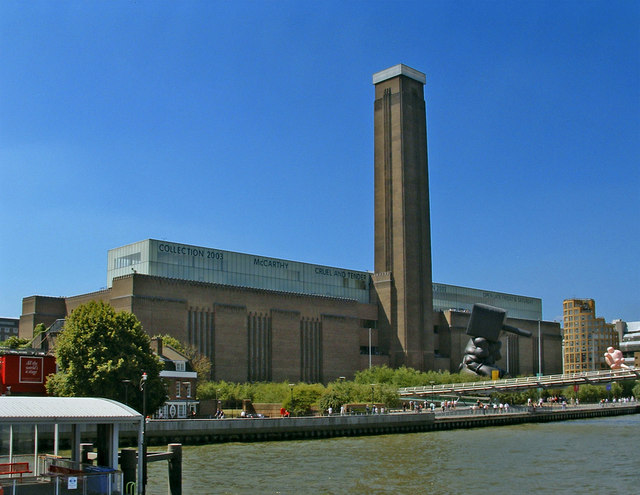
Step back outside and take in the neighbourhood. To one side, the Millennium Bridge crosses the river towards the dome of Saint Paul's Cathedral. Nearby stands the brick tower of Tate Modern, a former power station that is now an art gallery. The narrow lanes behind the river path still follow old routes through Southwark. On a summer evening, you may hear laughter or a single raised voice drifting over the wall from the yard. Plays have returned to Bankside.
Before you move on, look once more at the thatch and the oak. Somewhere under the streets nearby lie the chalk and brick foundations of the first Globe. Above them, the city has changed beyond recognition. Yet here, the same kind of crowd still gathers in the open air, standing shoulder to shoulder, waiting for an actor to step forward and speak. As you walk along the river, listen to the voices around you. This bank has always been a place for stories.
Key facts
What to look for
Practical tips
Common questions
Is there a free audio guide to Shakespeare's Globe?
Yes — the Lokali app narrates Shakespeare's Globe free of charge in 50+ languages. The guide runs about 7 minutes, covers the history, what to look for on site and practical tips, and works offline once downloaded.
Where is Shakespeare's Globe?
Shakespeare's Globe is in London, United Kingdom, at 51.5081, -0.0972. Tap the map link on this page for directions from where you are.
What is Shakespeare's Globe known for?
The original Globe opened on Bankside in 1599. Its timbers came from a dismantled Shoreditch theatre.
What should you look for at Shakespeare's Globe?
The thatched roof of golden water reed above the galleries. Wooden pegs joining the oak frame instead of metal bolts. The painted sky on the canopy above the stage.
What should you know before visiting Shakespeare's Globe?
Book a guided tour to see inside without a play. Bring a raincoat if you plan to stand in the yard.
When is the best time to visit Shakespeare's Globe?
Check the indoor candlelit playhouse programme for winter visits.
On the map
Opens directions to Shakespeare's Globe from your location.
More to see in London


Hear Shakespeare's Globe in your language
The full story, narrated, in 50+ languages. Download it before you go and it plays offline, at your own pace, with no ticket and no tour group.