
Ho Chi Minh City Opera House
10.7764° N · 106.7028° E · Opera House
Photo: Bahnfrend · CC BY-SA 4.0 · Wikimedia Commons
Ho Chi Minh City Opera House is an opera house in Ho Chi Minh City, Vietnam. The theatre opened in 1900 under French colonial rule. The free Lokali audio guide runs 7 minutes.
✓ Published October 2026 · how we write these guides
Visitor facts
| Lokali audio guide | 7 min · free |
|---|---|
| Type | Opera House |
| Location | Ho Chi Minh City, Vietnam |
| Coordinates | 10.7764, 106.7028 |
| Official website | hbso.org.vn |
| Languages | 50+, in the Lokali app |
The story
Stand at the foot of the steps and listen for a moment. Motorbikes pour around the square in a low, steady roar. Horns rise and fall like birdsong. In the middle of all this motion sits a pale, cream-coloured building that does not move at all. Its arched entrance faces you, calm and symmetrical. This is the Ho Chi Minh City Opera House, still called the Saigon Opera House by many locals, and it has stood here for more than a century.
The building belongs to the French colonial period. In the late nineteenth century, Saigon was the capital of French Cochinchina, the southern part of what is now Vietnam. The French wanted a city that looked like home. They laid out wide boulevards, planted rows of tropical trees, and built a cathedral, a post office, and a grand city hall. A proper theatre was part of that picture. Here, colonial officials and their families could watch French opera thousands of kilometres from Paris.
The theatre opened in 1900. Its architect was Eugène Ferret, and his design follows the flamboyant style of the French Third Republic, the government that ruled France from the 1870s until the Second World War. Look at the facade and you will see why people often compare it to the Petit Palais in Paris, which was built for the same year. The two buildings share an appetite for curves, arches, and sculpture. The difference is the setting. Here, the backdrop is humid air, tropical sun, and a sky that can turn to monsoon rain within minutes.
Now let your eyes travel up the front of the building. The centre is a great arch, framed by columns and crowned with decoration. On either side, smaller arched windows repeat the rhythm. Near the entrance stand two female figures in stone, posed as classical muses. High above, the roofline carries more sculpted ornament. Nothing here is plain. Every surface invites the eye to keep moving, much like the music the building was made to hold.
Here is a detail many visitors miss. The facade you see today is partly a restoration. During the twentieth century, some of the original decoration was removed, and for decades the front looked noticeably simpler. Then, in 1998, the city marked three hundred years since the founding of Saigon. As part of that anniversary, the theatre's front was restored, and much of its lost ornament returned. So when you admire the carving, you are looking at both the original vision and a deliberate act of remembering.
The building has not always been a theatre, either. After the French left in the mid nineteen-fifties, Saigon became the capital of the Republic of Vietnam, the state in the south. For years during that period, this hall did not host opera. Instead, it housed the lower house of the national assembly. Politicians debated where singers had once performed. It is a quiet reminder that buildings in this city have often changed roles as history moved around them.
After the war ended in 1975 and the country was reunified, the building returned to its first purpose. It became a stage again. Today it hosts classical concerts, ballet, traditional Vietnamese music, and contemporary productions. Among the best known is a performance called the A O Show, which uses long bamboo poles, acrobatics, and live music to tell stories of village and city life in the south. If you want to see the interior properly, buying a ticket to a show is the most reliable way in.
Inside, the scale changes. The auditorium is smaller and more intimate than the grand facade suggests. Ornate balconies curve around the hall, and the ceiling carries painted and gilded decoration. When the lights dim, the noise of the square disappears completely. That sudden silence is part of the experience. One moment you are surrounded by traffic. The next, you can hear a single string being tuned on stage.
Turn around now and look at the square in front of you. This is Lam Son Square, one of the most central points in the city. To one side stands the Hotel Continental, another survivor of the colonial era, where writers and journalists gathered over the decades. Across the way rises the Caravelle Hotel, famous as a base for foreign correspondents during the Vietnam War. Standing here, you are in a small circle of buildings that watched much of the city's twentieth century unfold.
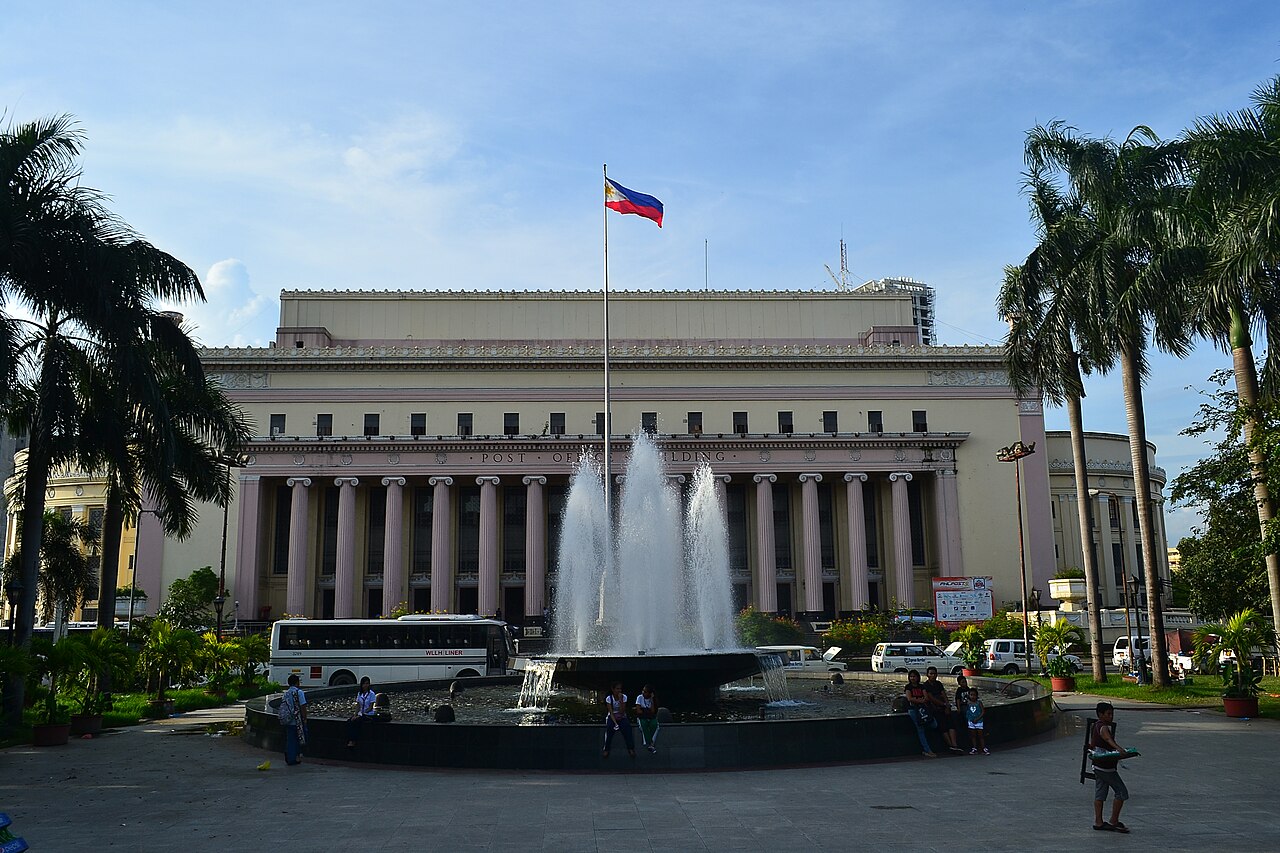
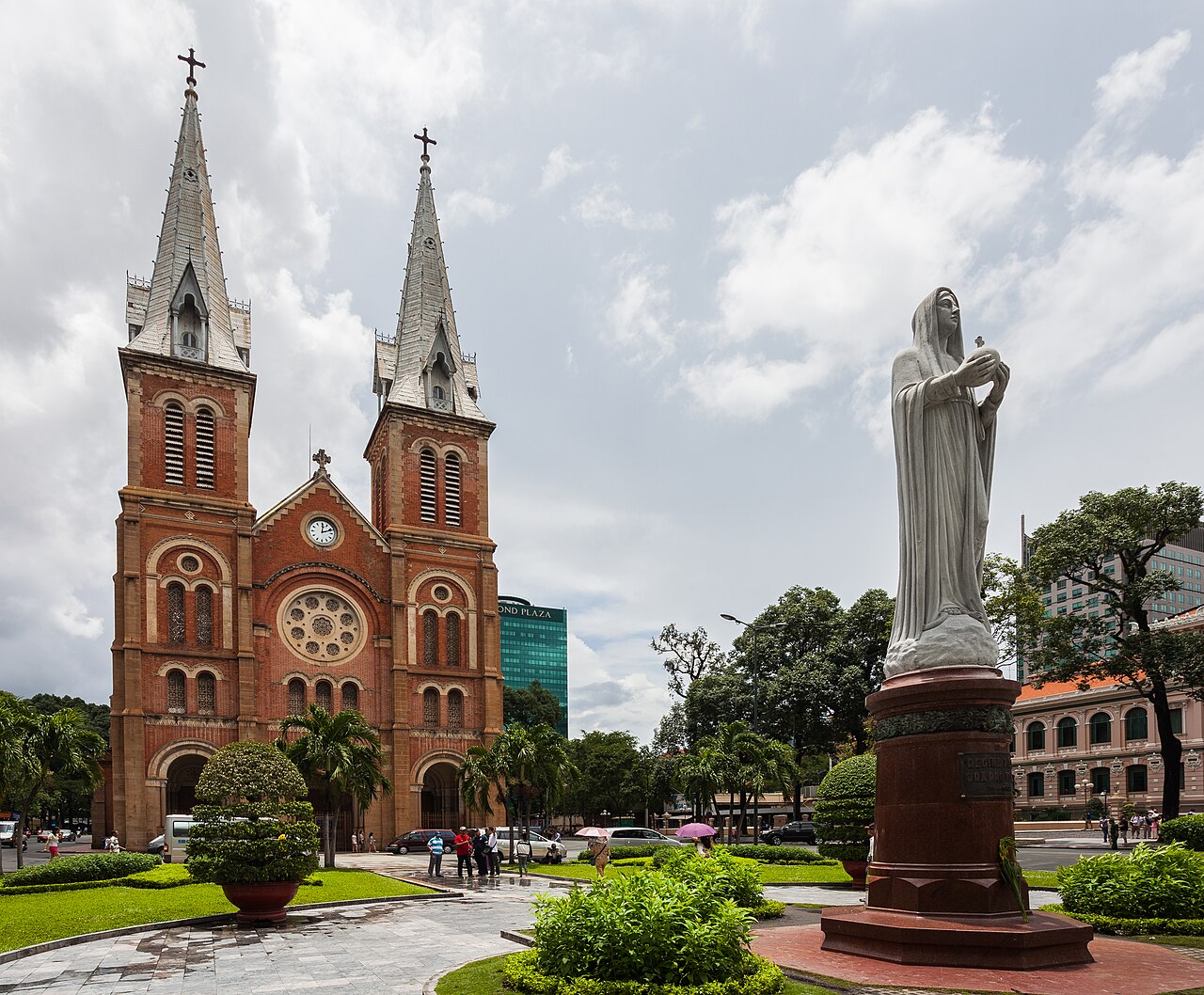
Stretching away from the theatre is Dong Khoi Street. Under French rule it was called Rue Catinat, and it was the elegant shopping street of colonial Saigon. Its name has changed with each era, and the new name, Dong Khoi, means uprising. Today it is lined with fashion boutiques, cafes, and souvenir shops. If you walk its length, you will reach the river. Walk the other way, and the street leads toward Notre Dame Cathedral and the old central post office.
Here is something newer that surprises many visitors. Beneath your feet runs the city's first metro line, and one of its stations is named after the theatre. For a building that opened in the age of horse-drawn carriages, this is quite a change. You can arrive by underground train, climb up into the daylight, and find this century-old facade waiting for you. Old and new sit very close together in this city.
The light here changes the building through the day. In the morning, the cream walls look cool and soft. At midday, the tropical sun flattens the detail. In the late afternoon, warmer light falls across the carving and the shadows grow deeper, making each sculpted figure easier to read. After dark, the facade is lit from below, and the arches glow against the night sky while traffic streams past like rivers of light.
Before you leave, take one more look at the steps. You will often see wedding couples posing here, photographers kneeling on the pavement, and families pausing for a picture. The building is not a museum piece behind glass. It is a working theatre and a backdrop for ordinary celebrations. Notice the curve of the great arch once more. Then step back into the sound of the motorbikes, and carry a little of that stillness with you down the street.
Key facts
What to look for
Practical tips
Common questions
Is there a free audio guide to Ho Chi Minh City Opera House?
Yes — the Lokali app narrates Ho Chi Minh City Opera House free of charge in 50+ languages. The guide runs about 7 minutes, covers the history, what to look for on site and practical tips, and works offline once downloaded.
Where is Ho Chi Minh City Opera House?
Ho Chi Minh City Opera House is in Ho Chi Minh City, Vietnam, at 10.7764, 106.7028. Tap the map link on this page for directions from where you are.
What is Ho Chi Minh City Opera House known for?
The theatre opened in 1900 under French colonial rule. Architect Eugène Ferret designed it in French Third Republic style.
What should you look for at Ho Chi Minh City Opera House?
Two stone female muses flanking the main entrance. The large central arch framing the doorway. Sculpted ornament running along the upper roofline.
What should you know before visiting Ho Chi Minh City Opera House?
Buy a performance ticket to see the auditorium interior. Come in late afternoon for warm light on the carving.
When is the best time to visit Ho Chi Minh City Opera House?
Come in late afternoon for warm light on the carving.
On the map
Opens directions to Ho Chi Minh City Opera House from your location.
More to see near Ho Chi Minh City Opera House

Hear Ho Chi Minh City Opera House in your language
The full story, narrated, in 50+ languages. Download it before you go and it plays offline, at your own pace, with no ticket and no tour group.