
Museum of Fine Arts, Houston
29.7256° N · 95.3905° W · Museum
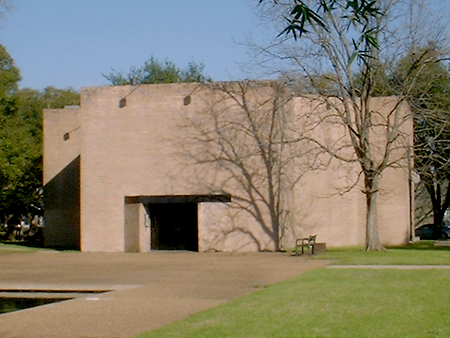
Photo: Judson Dunn from Houston, USA · CC BY-SA 2.0 · Wikimedia Commons
Museum of Fine Arts, Houston is an art museum in Houston, Texas. Often described as the first art museum in Texas. The free Lokali audio guide runs 7 minutes.
✓ Published October 2026 · how we write these guides
Visitor facts
| Lokali audio guide | 7 min · free |
|---|---|
| Type | Museum |
| Location | Houston, United States |
| Coordinates | 29.7256, -95.3905 |
| Official website | mfah.org |
| Languages | 50+, in the Lokali app |
The story
Stand still for a moment and feel the heat lift off the pavement. Houston air is thick and warm, and it carries the smell of cut grass from the lawns nearby. Then you step through a door, and the cool, dry silence of a gallery closes around you. That change, from humid street to quiet room, is the first thing many visitors notice here. Welcome to the Museum of Fine Arts, Houston, a campus of buildings that has grown across more than a century.
The museum's story starts with a group of local citizens around the turn of the twentieth century. They formed an art league to bring paintings and education to a young, fast-growing port city. Over the following decades, that small civic effort became a permanent institution. Its first purpose-built home opened in the 1920s. It is often described as the first art museum in Texas. Today the campus spreads across several city blocks in the heart of Houston's Museum District.
The oldest building is now called the Caroline Wiess Law Building. Look at its front, and you will see a calm, classical design with columns and pale stone. The local architect William Ward Watkin designed this original structure. It reflects a time when American cities wanted their museums to look like temples. The message was simple: art deserves a serious, dignified house. Here is the first surprise, though. Walk around the back of this same building, and the classical temple gives way to something completely different.
In the 1950s, the museum invited Ludwig Mies van der Rohe to extend the building. Mies was one of the leading modernist architects of the twentieth century, known for steel, glass, and open space. He added a broad, airy hall, and later a large pavilion facing the street behind. Inside, the space feels wide and almost weightless. Tall glass walls let the Texas daylight fall across the floor. It is rare to find classical stone and Mies-style steel joined together in one building.
Across the street stands the Audrey Jones Beck Building, which opened in 2000. The Spanish architect Rafael Moneo designed it. From outside, it looks solid and restrained, wrapped in warm-toned stone. The real effect is on the roof. Moneo placed lanterns along the top that pull soft natural light down into the galleries. Many of the museum's European paintings hang here. On a bright afternoon, the light inside changes slowly as clouds pass over the city.
Now comes the second surprise, and it is underground. The Law Building and the Beck Building are joined by a tunnel beneath the street. Most cities would leave a passage like this plain and practical. Houston turned it into a work of art. The American artist James Turrell, famous for working with light itself, created an installation called The Light Inside. As you walk through, the walls and ceiling glow and shift in colour. The tunnel stops being a corridor and becomes the destination.
The newest major gallery is the Nancy and Rich Kinder Building, which opened in 2020. The American architect Steven Holl designed it to hold art from the twentieth and twenty-first centuries. Look at its skin. The walls are wrapped in tubes of translucent glass that glow softly at night. The roof line curves and dips, almost like a set of gentle waves. These curves help bring filtered light into the galleries below. The building feels lighter and more playful than its older neighbours.
Just next door is the Glassell School of Art, also designed by Steven Holl. This is the museum's teaching arm, where students of all ages take classes in painting, sculpture, and other studio work. The building has a sloping roof that visitors can walk up, like a gentle ramp. From the top, you get a fresh view across the campus and the trees. It is a good reminder that this museum began with education. Making art and looking at art still sit side by side here.
Between these buildings lies the Lillie and Hugh Roy Cullen Sculpture Garden. The Japanese American artist Isamu Noguchi designed it as an outdoor room for sculpture. Curving walls, lawns, and planted trees divide the garden into smaller spaces. Each space frames a different work, so you discover the pieces one at a time. Noguchi thought carefully about how a person moves through space. Slow down here. Notice how the walls hide the next sculpture until you turn the corner.
Inside, the collection covers thousands of years and nearly every corner of the world. You can find antiquities, European old masters, Impressionist paintings, photography, decorative arts, and contemporary installations. The museum also has a strong focus on art from Latin America. It runs a research centre dedicated to the arts of the Americas, which studies and collects work from across the region. For a city with deep ties to Mexico and Central and South America, this focus feels natural and local.
The museum does not end at this campus. It also manages two house museums in other parts of Houston. Bayou Bend was the home of the philanthropist Ima Hogg, and it now displays American furniture, paintings, and decorative arts in a wooded setting. Rienzi, another former private home, holds European decorative arts and paintings. Both offer a quieter, more intimate experience. If you have time on another day, they show a very different side of the institution.
Step back outside and look at the neighbourhood around you. The Museum District holds many museums within walking distance, from science to contemporary art. Hermann Park and its long reflecting pool sit close by, along with oak trees that cast deep shade. Light rail runs along Main Street nearby. On weekends, families picnic on the grass, and joggers pass under the trees. The museum is part of a wider public landscape, not an island.
Before you leave, pause for a moment. Look again at the building in front of you — the stone, the glass, or the steel. Each part of this campus came from a different decade and a different idea of what a museum should be. Together they form a kind of timeline you can walk through. As you head back into the warm Houston air, listen for the cicadas in the trees... and notice how the light on these walls keeps changing as you go.
Key facts
What to look for
Practical tips
Common questions
Is there a free audio guide to Museum of Fine Arts, Houston?
Yes — the Lokali app narrates Museum of Fine Arts, Houston free of charge in 50+ languages. The guide runs about 7 minutes, covers the history, what to look for on site and practical tips, and works offline once downloaded.
Where is Museum of Fine Arts, Houston?
Museum of Fine Arts, Houston is in Houston, United States, at 29.7256, -95.3905. Tap the map link on this page for directions from where you are.
What is Museum of Fine Arts, Houston known for?
Often described as the first art museum in Texas. Original building designed by architect William Ward Watkin.
What should you look for at Museum of Fine Arts, Houston?
Classical columns on the front of the Law Building. Mies-style glass walls at the back of the Law Building. Roof lanterns that light the Beck Building galleries.
What should you know before visiting Museum of Fine Arts, Houston?
Walk the underground Turrell tunnel between the Law and Beck buildings. Visit the Noguchi sculpture garden in the cooler early morning.
When is the best time to visit Museum of Fine Arts, Houston?
Visit the Noguchi sculpture garden in the cooler early morning.
On the map
Opens directions to Museum of Fine Arts, Houston from your location.
More to see near Museum of Fine Arts, Houston
Hear Museum of Fine Arts, Houston in your language
The full story, narrated, in 50+ languages. Download it before you go and it plays offline, at your own pace, with no ticket and no tour group.